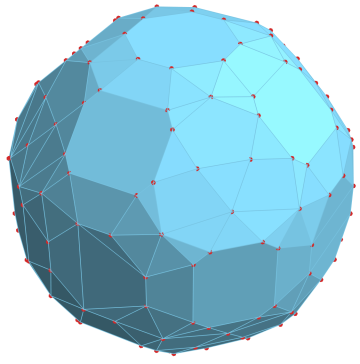
Jonathan Kirk’s Convex Regular Faced (CRF) Polytope

Links to information on this object are here and here.
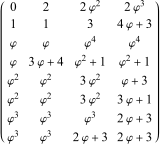
Jonathan Kirk’s CRF coordinate permutation

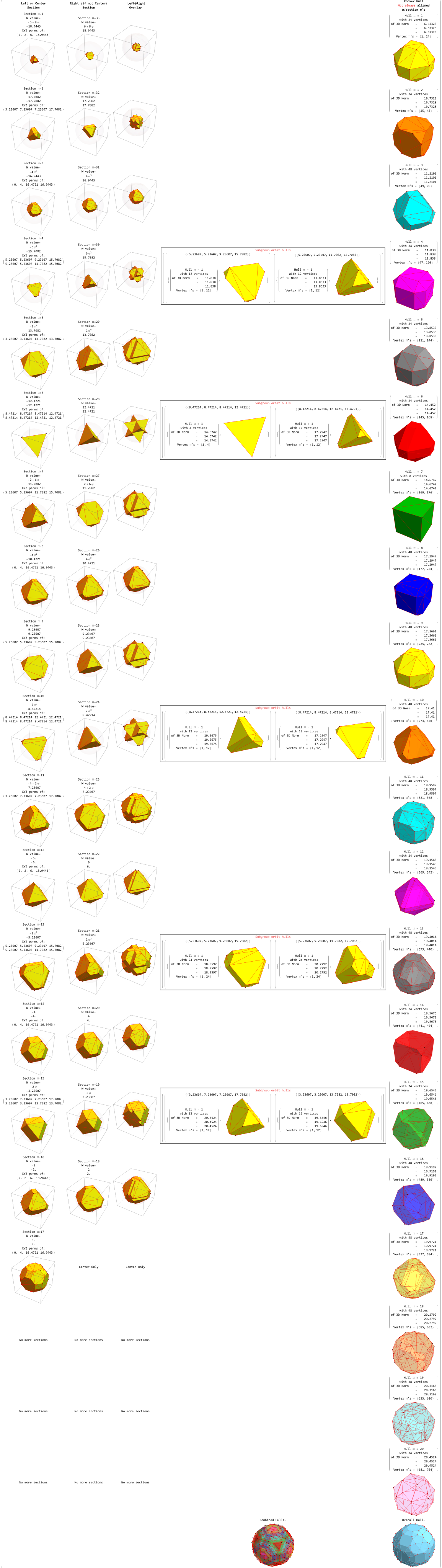
This post used a symbolic permutation list provided in the “rf-poytopes” Polytope Discord discussion thread to produce the Coxeter’s (cell-first, vertex-first, edge-first, and face-first) “simplified” sections shown below.

You can navigate the matrices of links below or simply download the ZIP files for the SVG sectioning for Jonathan Kirk’s Convex Regular Face (CRF) here (40 Mb). The overall convex hull of the cell-first sectioning is similar to, but not the same as, a (496-diminished form of) the H4 BiRectified 600-cell (sectioning of that is shown here).
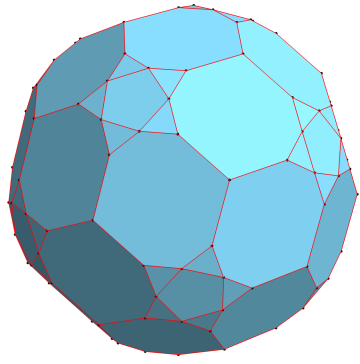
Overall Convex Hull of the H4 BiRectified 600-cell

For high quality 3D interactive Mathematica Notebook (NB), and SVG or PDF files, you can download them here: NB SVG  PDF

SVG section visualizations:

Orientations for Jonathan Kirk’s  CRF SVG section file links:

              Cell                          Vertex                             Edge                                 Face
MP3 section animations:

Orientations for Jonathan Kirk’s CRF MP3 section animation file links:

              Cell                          Vertex                             Edge                                 Face

Hypercomplex E8 as it relates to the Sedenions, Trigintaduonions, and beyond

This post will document some work I am doing related to E8, H4, and the hypercomplex forms of algebras and groups. So stay tuned….

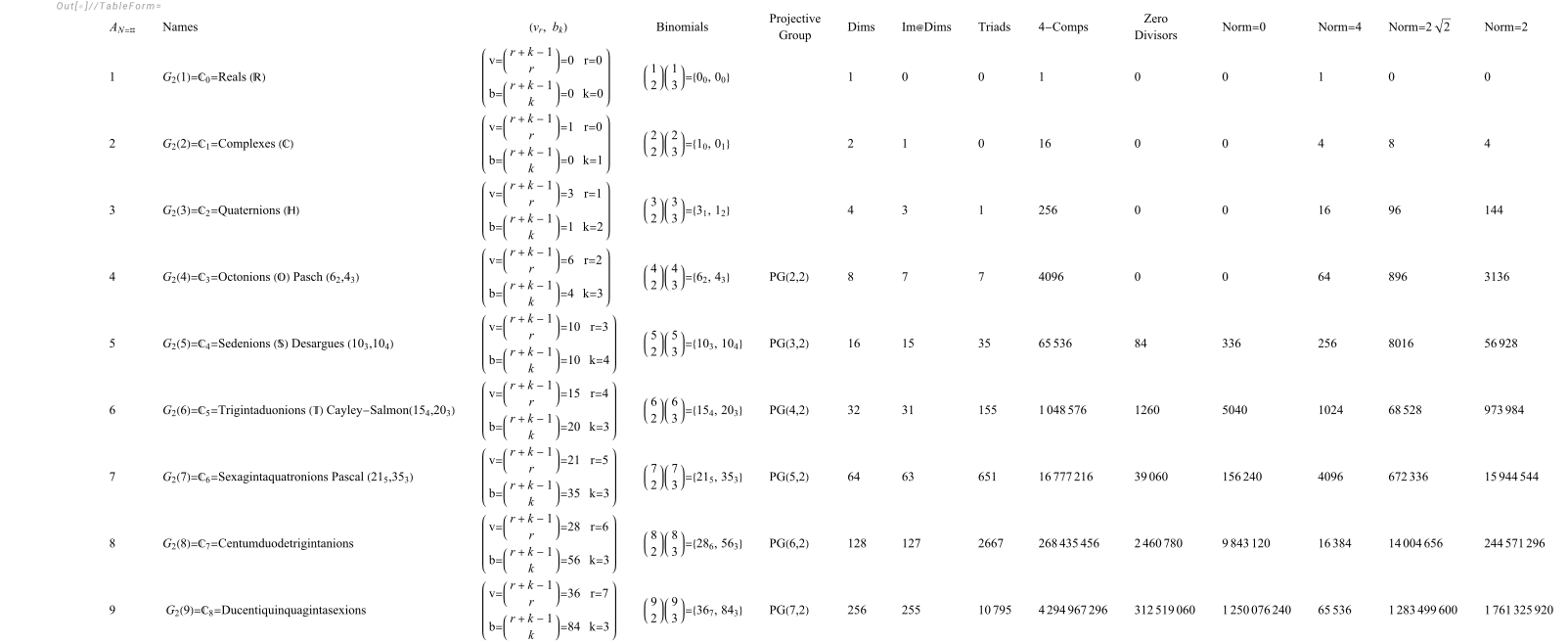
Hypercomplex numbers
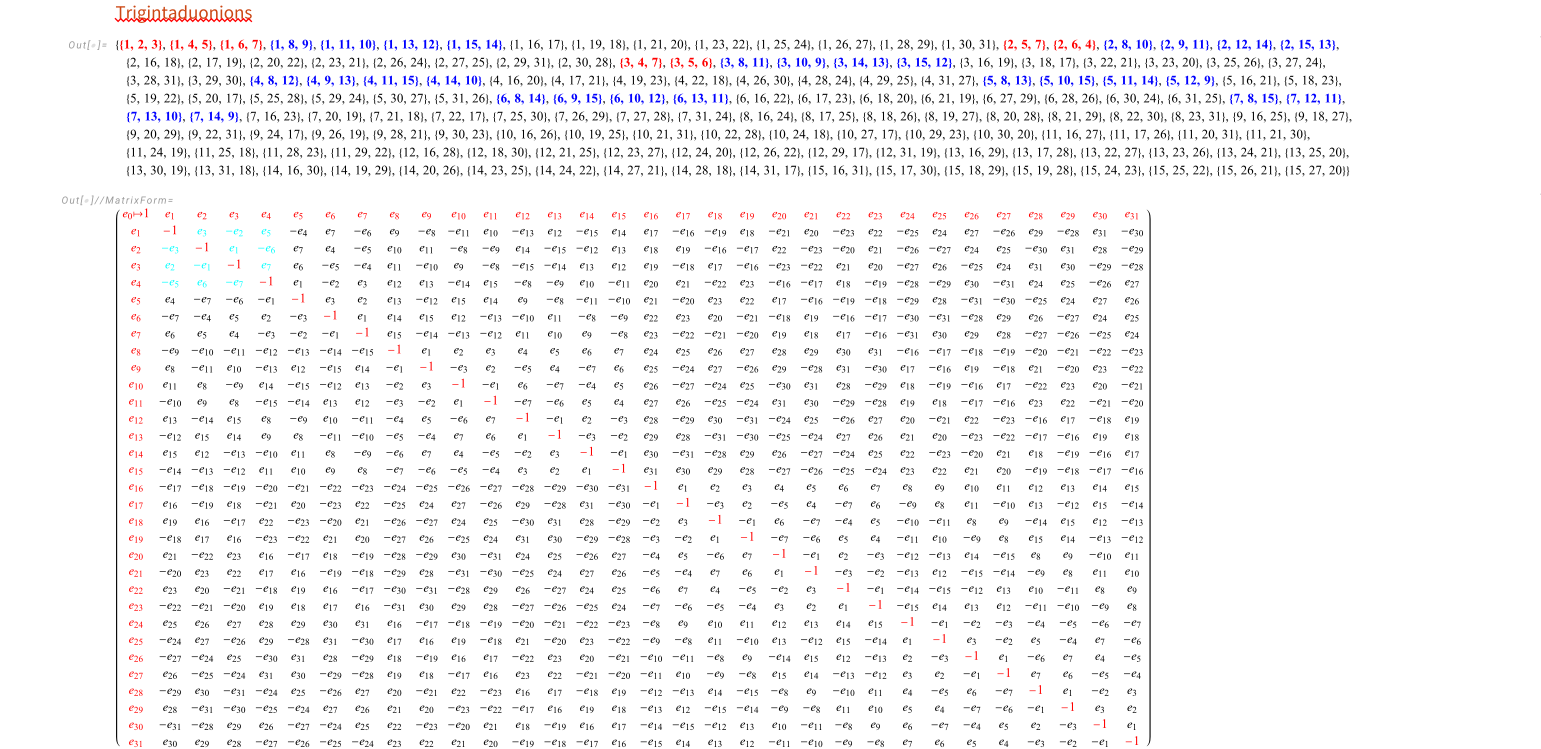
Trigintaduonions derived using repeated Cayley-Dickson doubling of my “Palindromic Octonions” (one of 480 possible) that creates a unique Derivation chart (as shown below). Red are the Octonion triads and Blue are Sedenions.
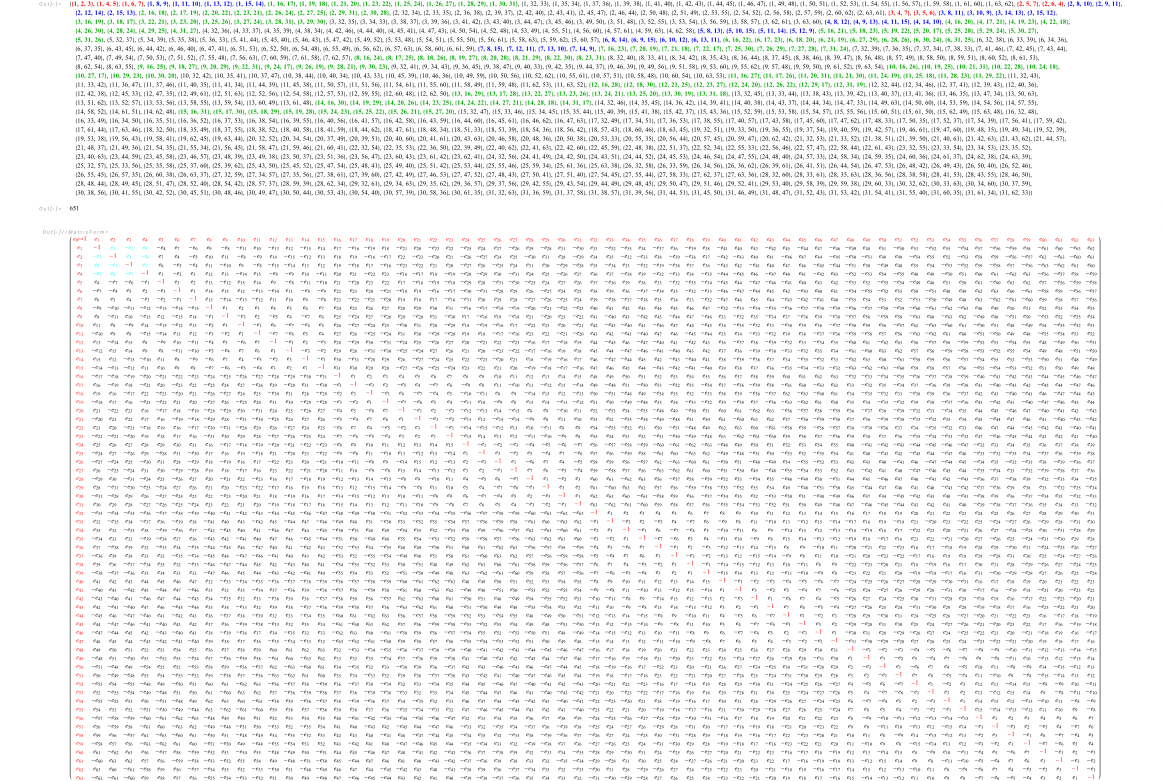
Sexagintaquatronions derived using repeated Cayley-Dickson doubling of my “Palindromic Octonions” (one of 480 possible) that creates a unique Derivation chart (as shown below). Red are the Octonion triads, Blue are Sedenion, and Green are Trigintaduonions.
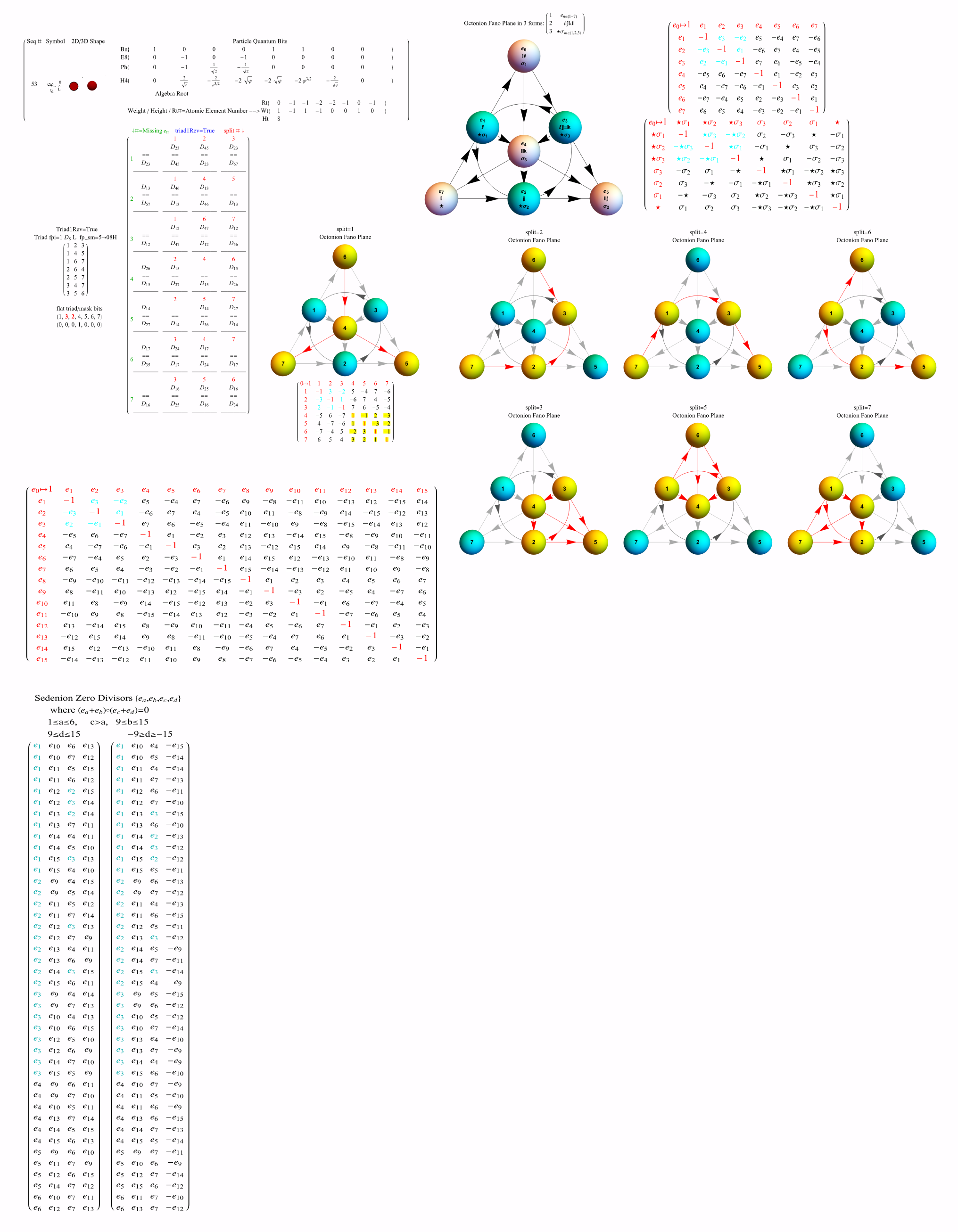
Palindromic Octonions (with 7 split forms) and their Cayley-Dickson generated Sedenions with uniquely symmetric Derivation chart and 84 Zero Divisors