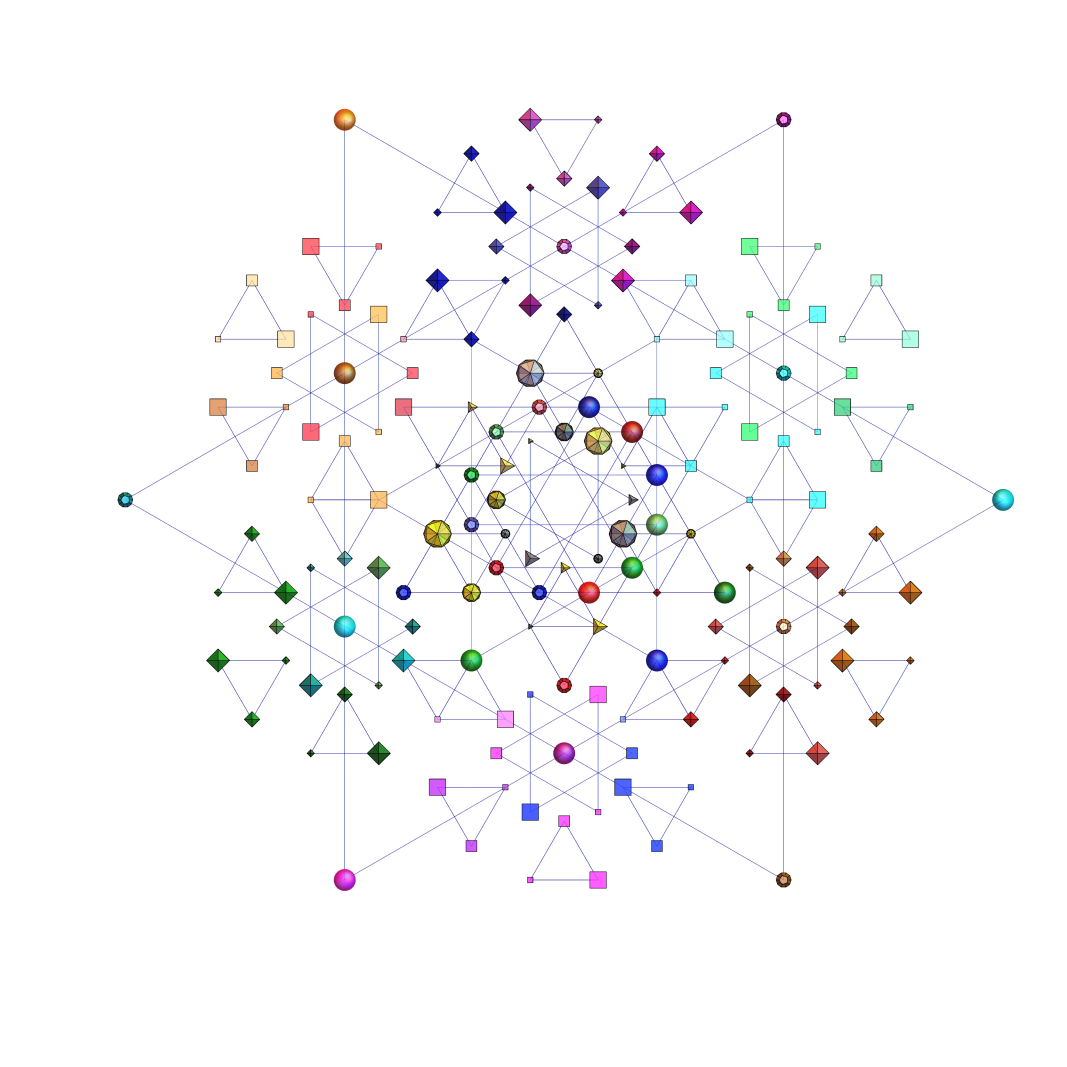
Stay tuned for more images. I think I will use this post to place my more beautiful works!
These use a better combination of specularity and opacity with both math and physics (theoretical assigned) 3D vertices. This is accomplished by actually projecting into 3D but using only X-Y basis vectors with Z={0,0,0,0,0,0,0,0} and the (virtual) camera at XYZ={0,0,∞}.
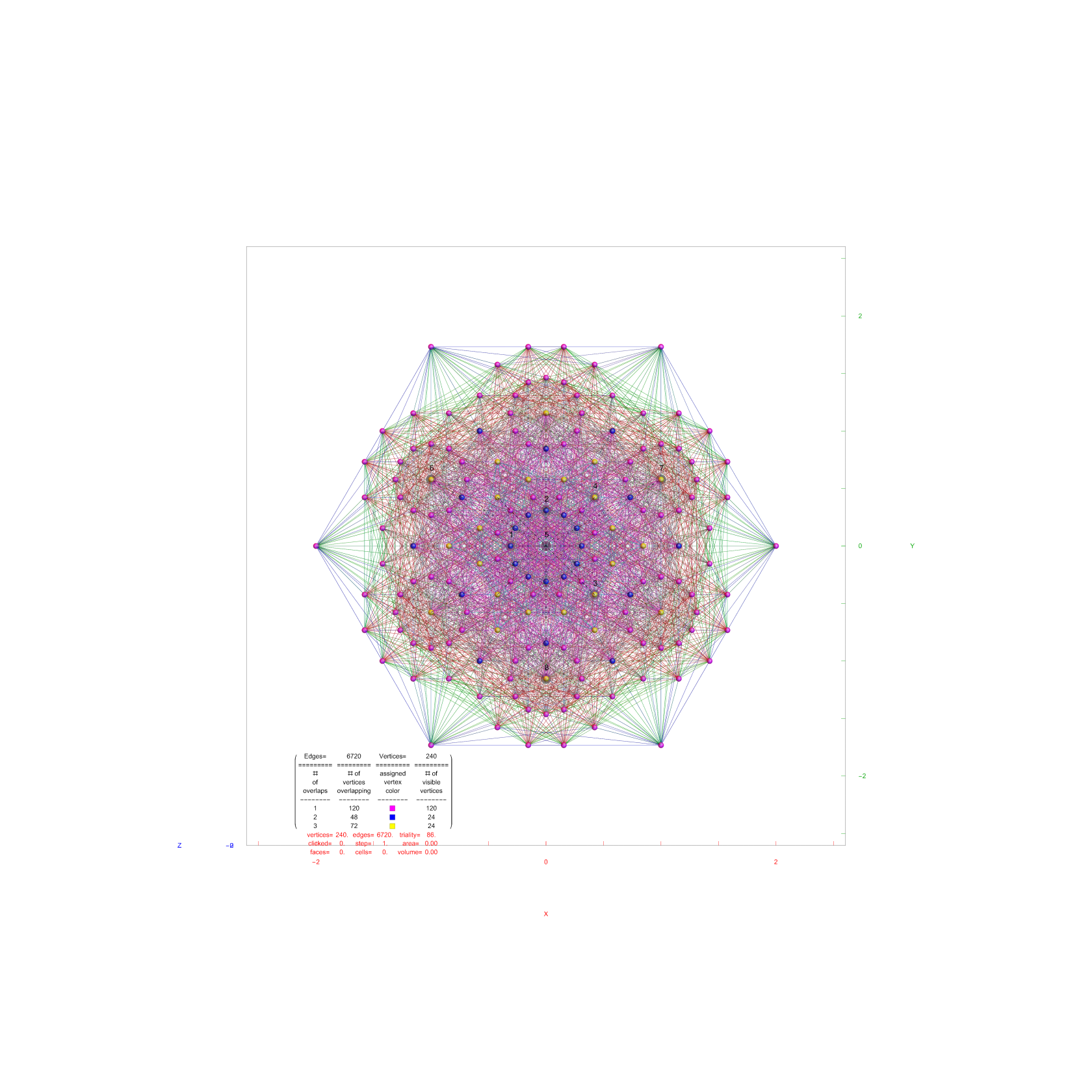
Some images use color coding for vertices that indicate overlaps (e.g. when in the spherical (math) vertices E8 hexagonal basis). The overlap number data may then be presented in the lower left. This data can be removed using SVG editors such as Inkscape.
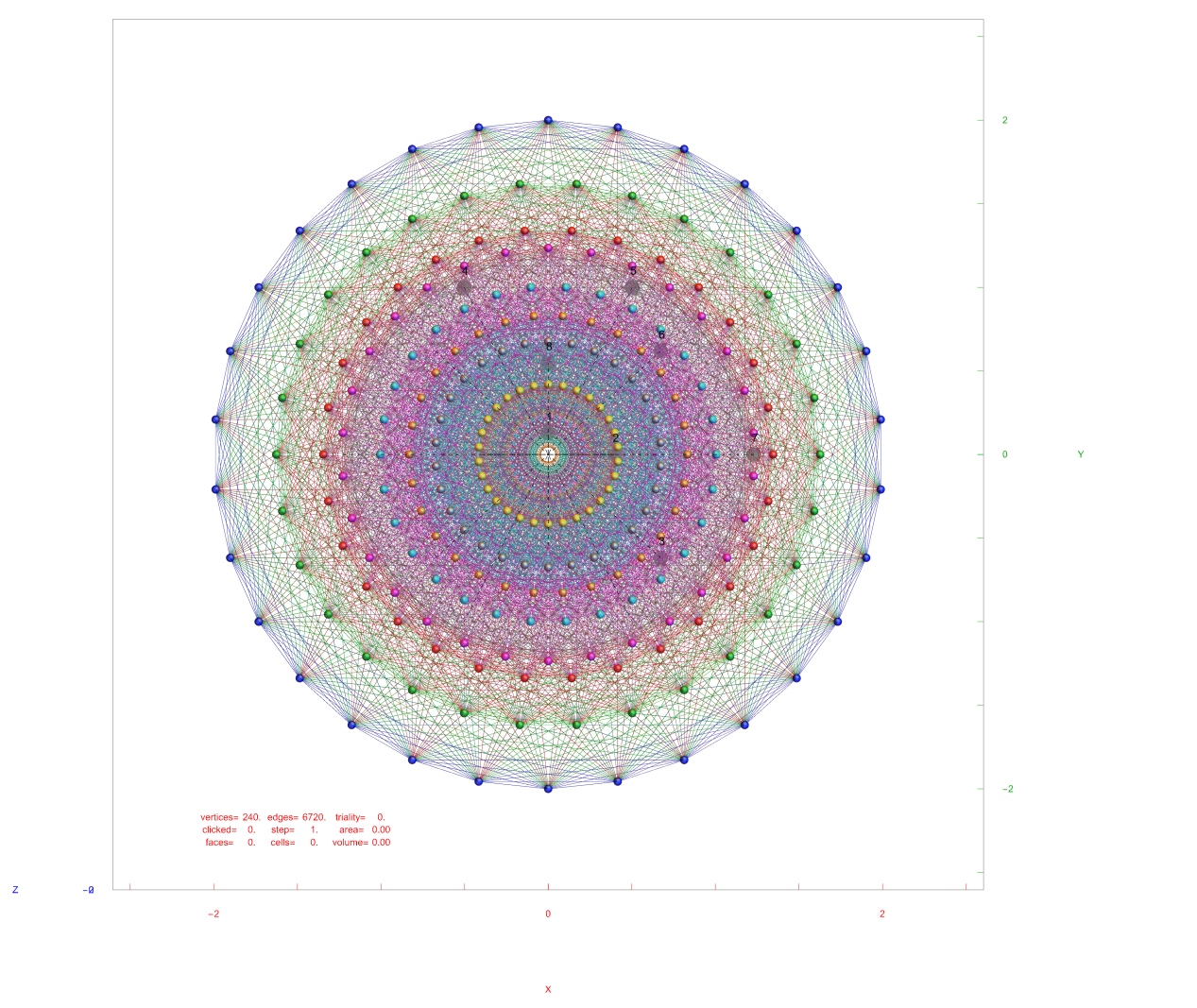
Some images also show the 3D technical axes (basis) projection vectors as well as the vertex, edge, and other data. Also, bear in mind that the PNG images shown below (so they are visible in Google Images after being crawled) tend to show pixelation artifacts and can present with black background vs. white. The SVG presentation (obtained by clicking the embedded image link) will be correct and the transparent background can be modified easily (e.g. with Inkscape).
Please note, these are provided under Creative Commons CC BY-SA 4.0 Attribution-ShareAlike 4.0 International license, so if you use them please cite me at this site (or me on the Wikipedia (WP) article or WP commons source):
Below is the well known PR photo for E8 in Petrie projection with basis vector axes and data presented (click the image for the downloadable SVG):
Below is the E8 hexagonal (aka. as the “E6/D4 Mox [6]” in Wikipedia) projection:
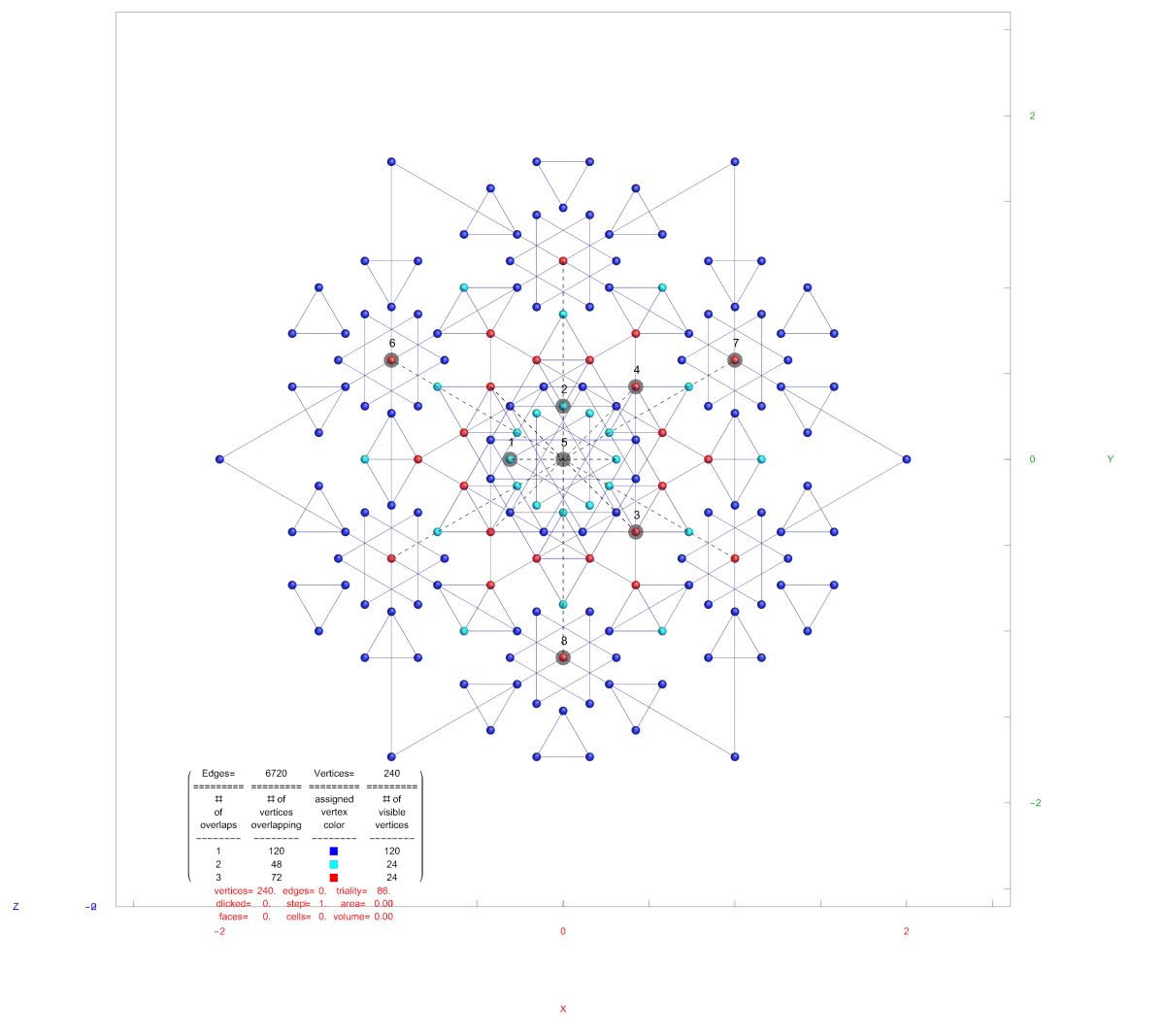
The E8 hexagonal with the 3D assigned theoretical physics vertices:
The E8 hexagonal projection with 6720 edges: