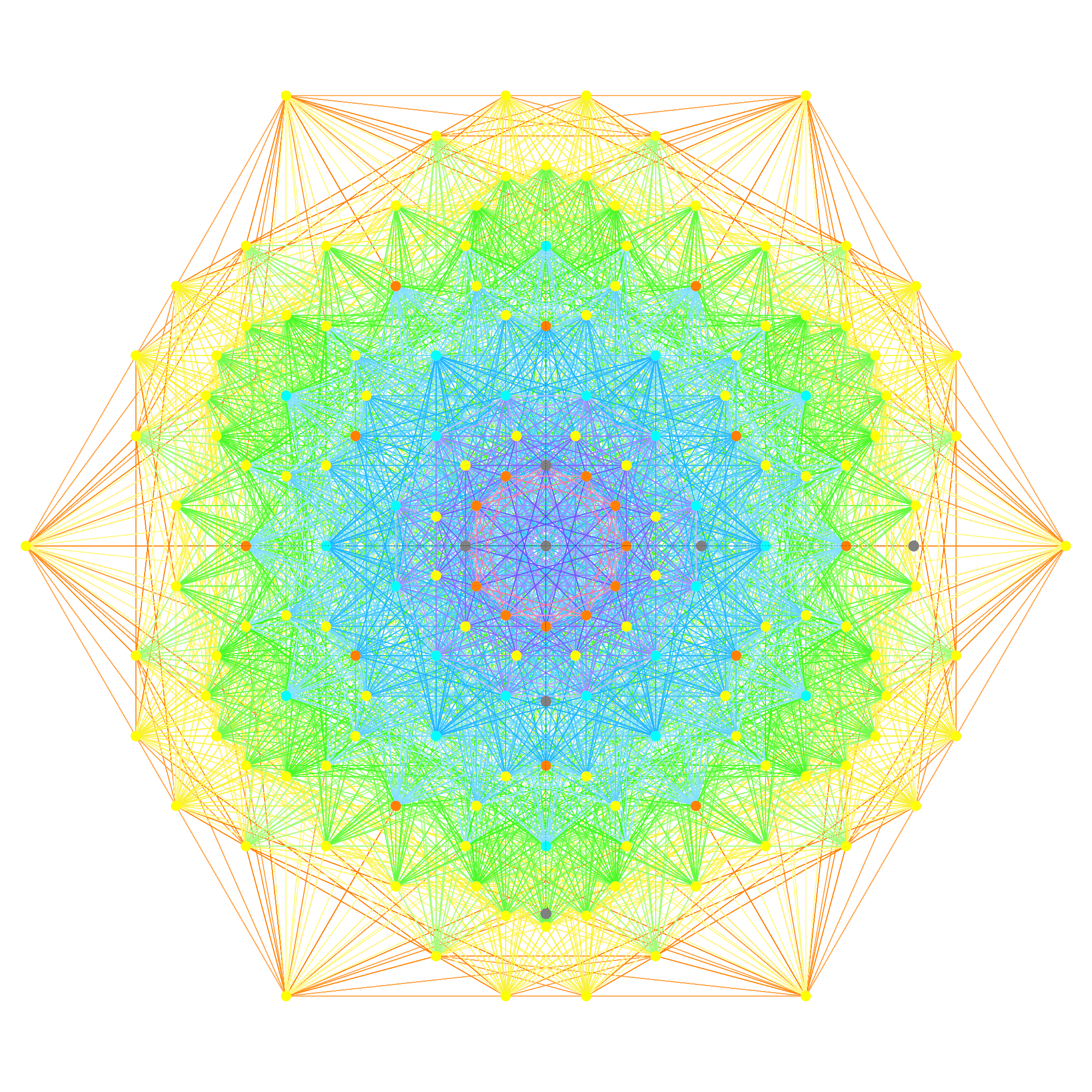
Tag Archives: E8

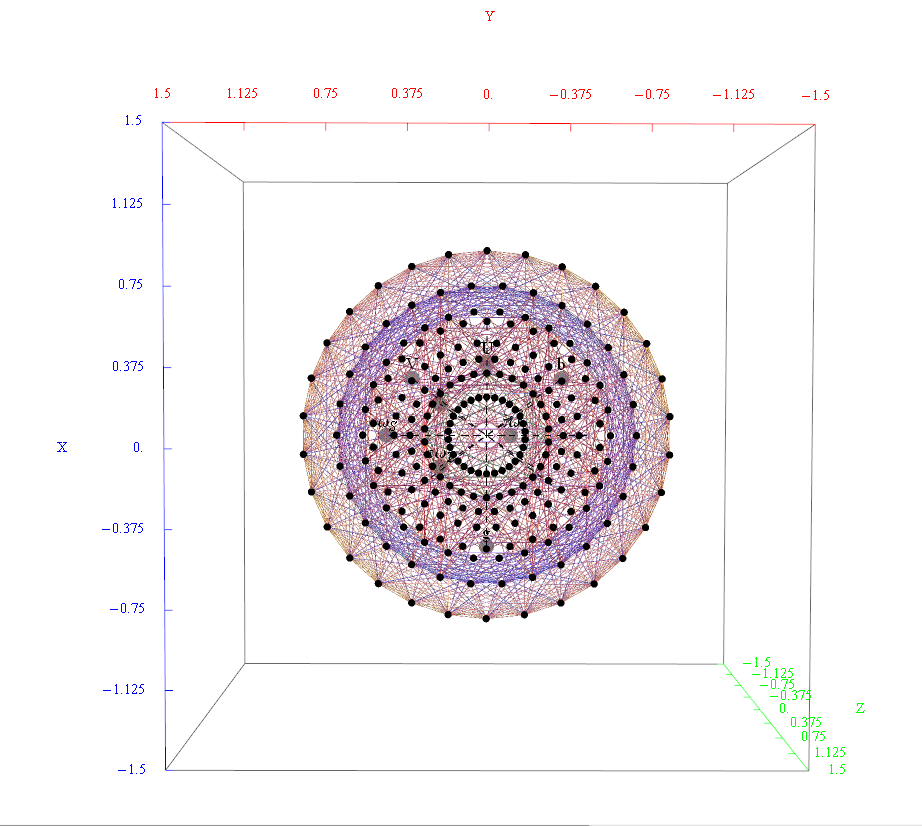
E8 to 3D projection using my H4 folding matrix

Best viewed in HD mode…

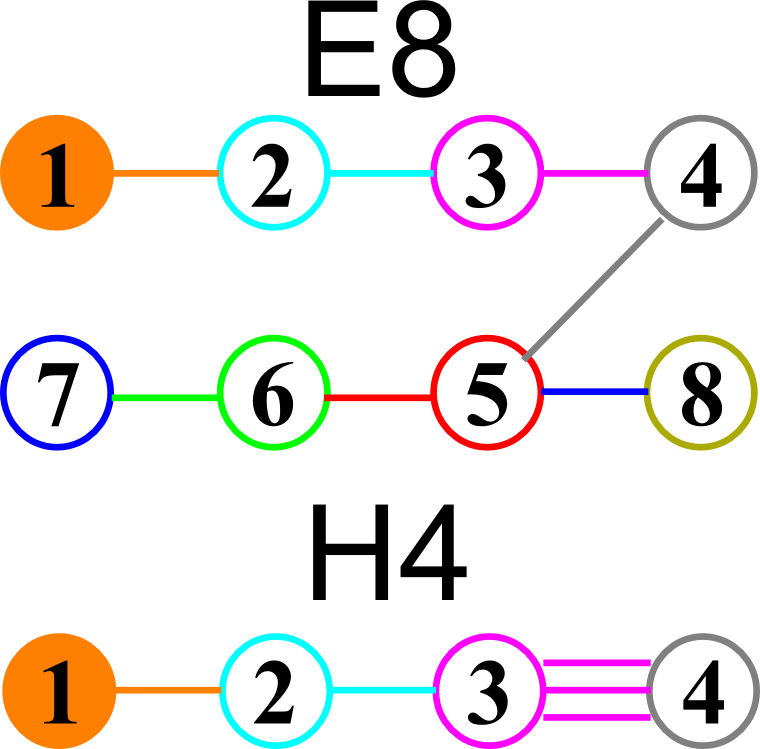
Last year I showed that the Dynkin diagram of the Lie Algebra, Group and Lattice of E8 is related to the Coxeter-Dynkin of the 600 Cell of H4 through a folding of their diagrams:
E8-H4-Fold

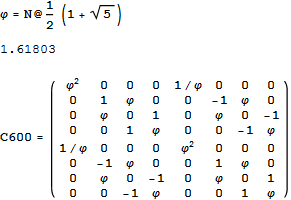
I had found the E8 to H4 folding matrix several years ago after reading several papers by Koca and another paper by Dechant, on the topic. The matrix I found is:
C600

Notice that C600=Transpose[C600] and the QuaternionOctonion like structure (ala. Cayley-Dickson) within the folding matrix. Only the first 4 rows are needed for folding, but I use the 8×8 matrix to rotate 8D vectors easily.

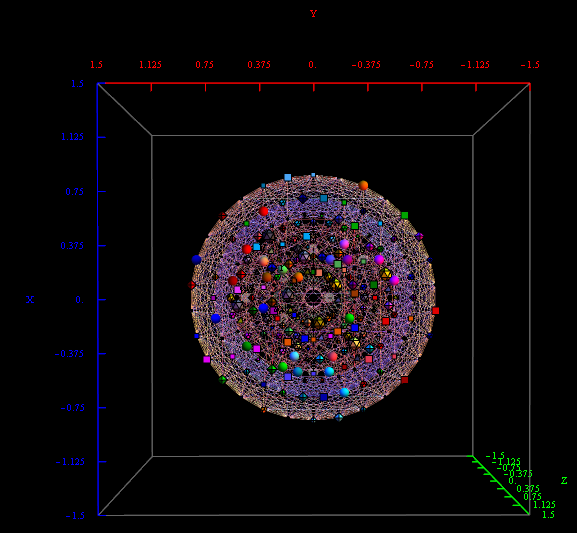
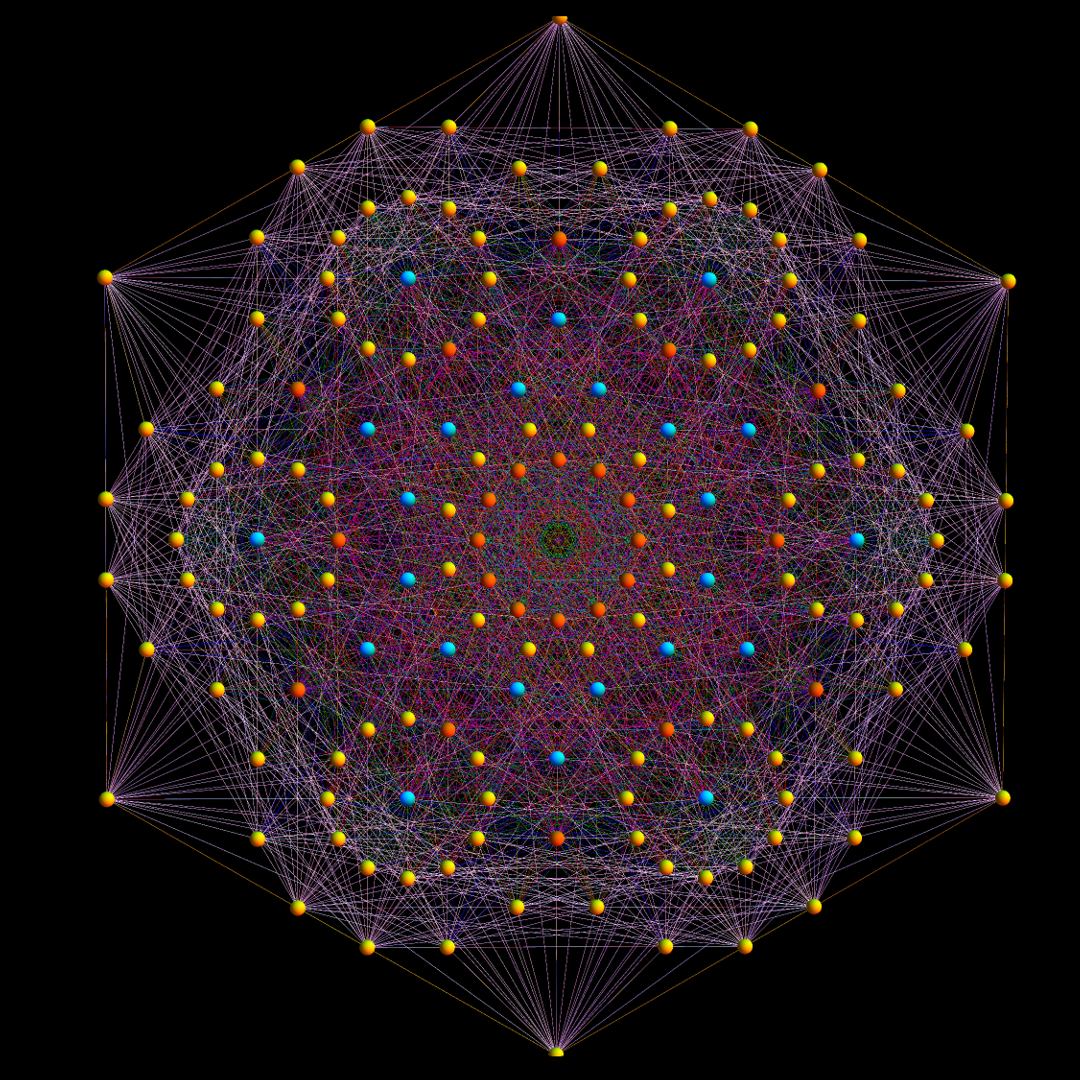
The following x,y,z vectors project E8 to its Petrie projection on one face (or 2 of 6 cubic faces, which are the same).
E8projection

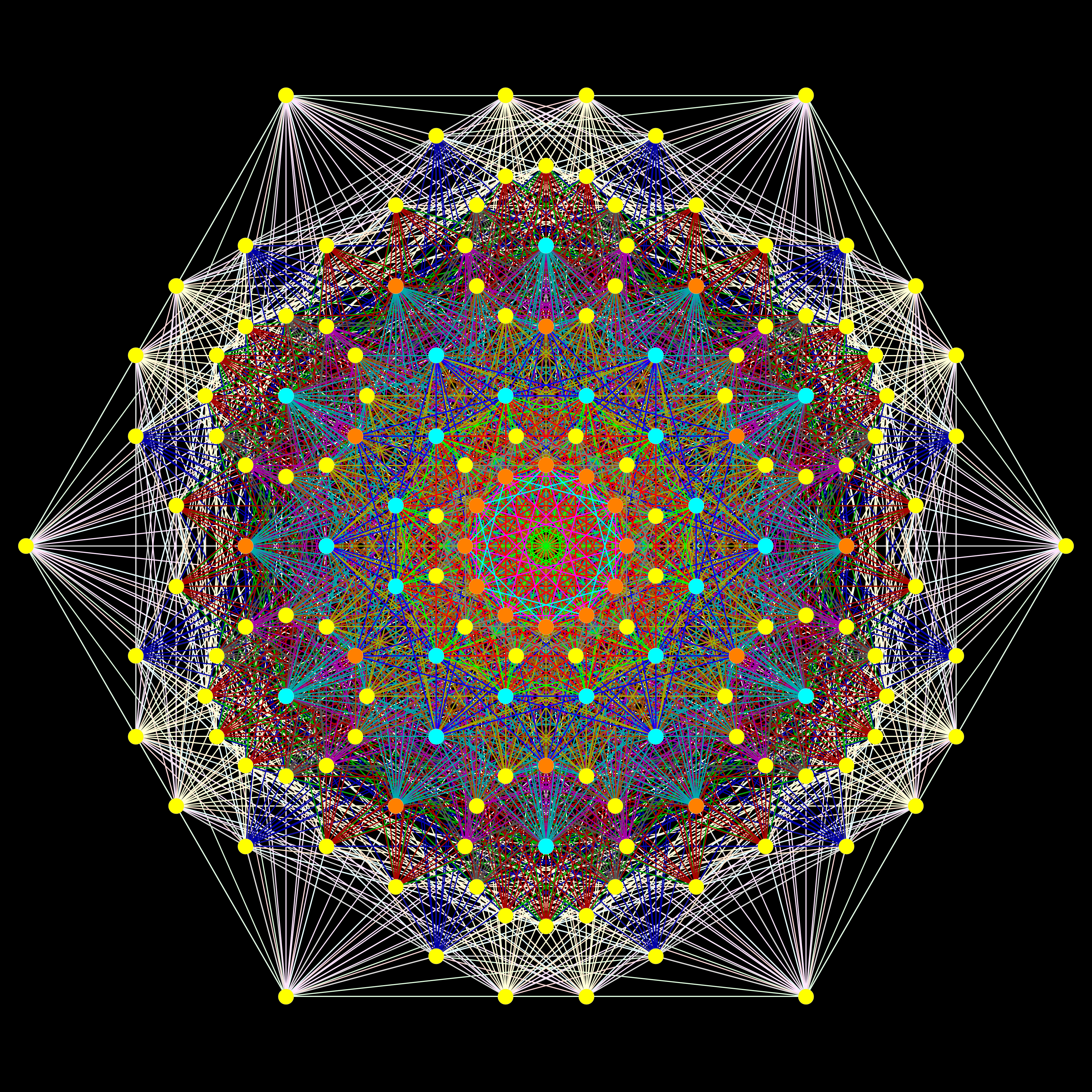
On another face are the orthonormal H4 600 cell and the concentric H4/Phi. There are 6720 edges with 8D Norm’d length of Sqrt[2], but I only show 1220 in order to prevent obscuring the nodes.

These values were calculated using the dot product of the Inverse[4*C600] with the following H4 Petrie projection vertices (aka. the Van Oss projection), where I’ve added the z vector for the proper 3D projection. Notice I am still using 8D basis vectors with the last 4 zero, as this maintains scaling due to the left-right symmetries in C600).
H4projection

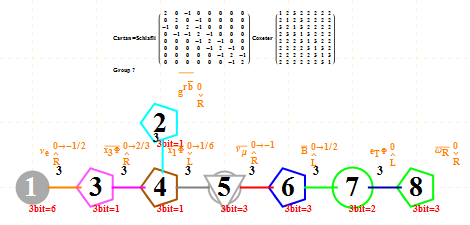
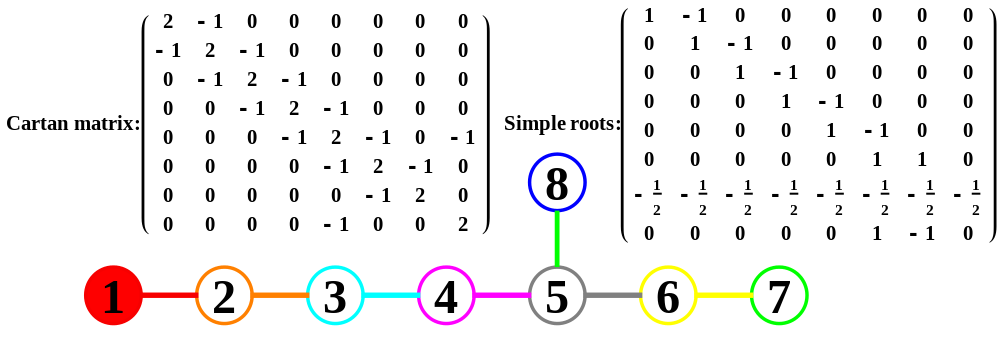
The Split Real Even (SRE) E8 vertices are generated from the root system for the E8 Dynkin diagram and its resulting Cartan matrix:
E8Dynkin

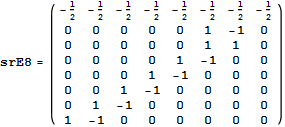
This is input from my Mathematica “VisibLie” application. It is shown with the assigned physics particles that make up the simple roots matrix entries:
srE8.
Please note, the Cartan matrix can also be generated by srE8.Transpose[srE8]

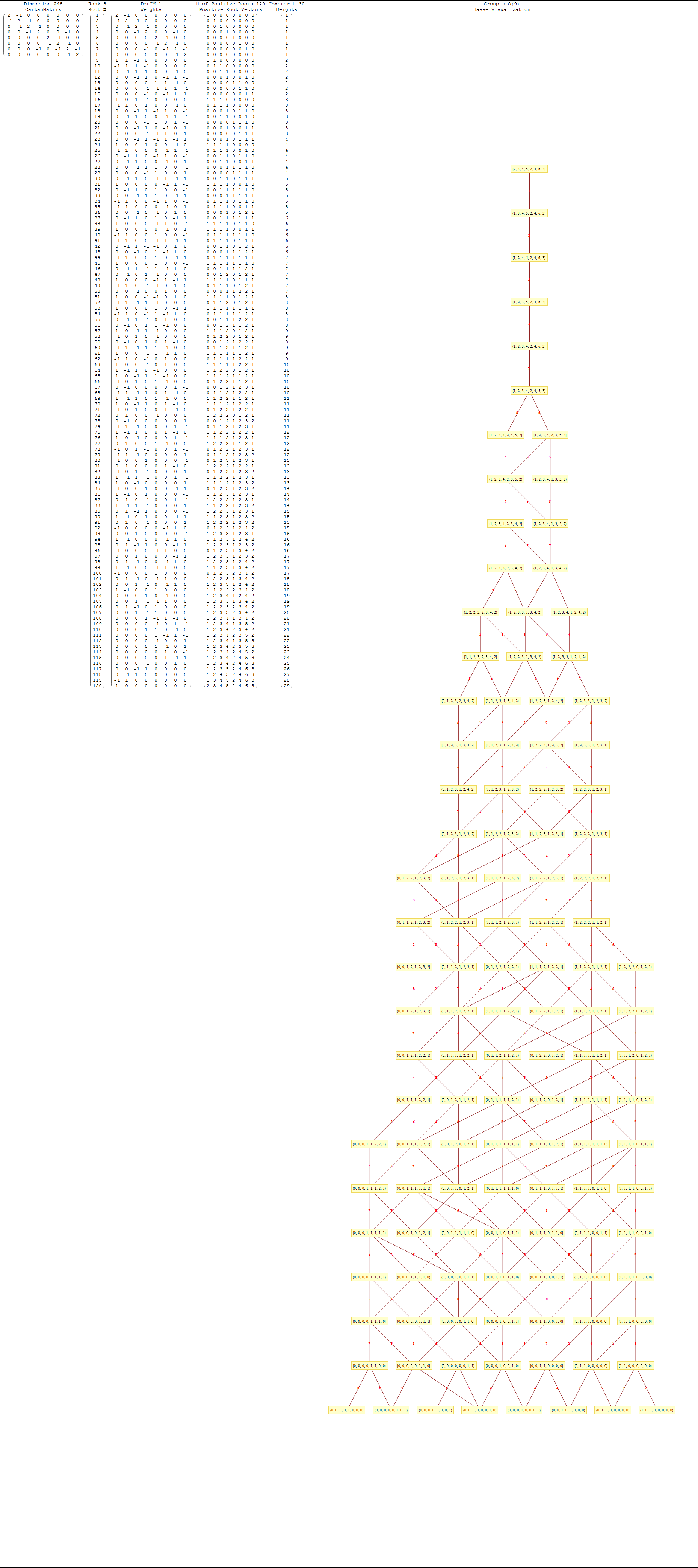
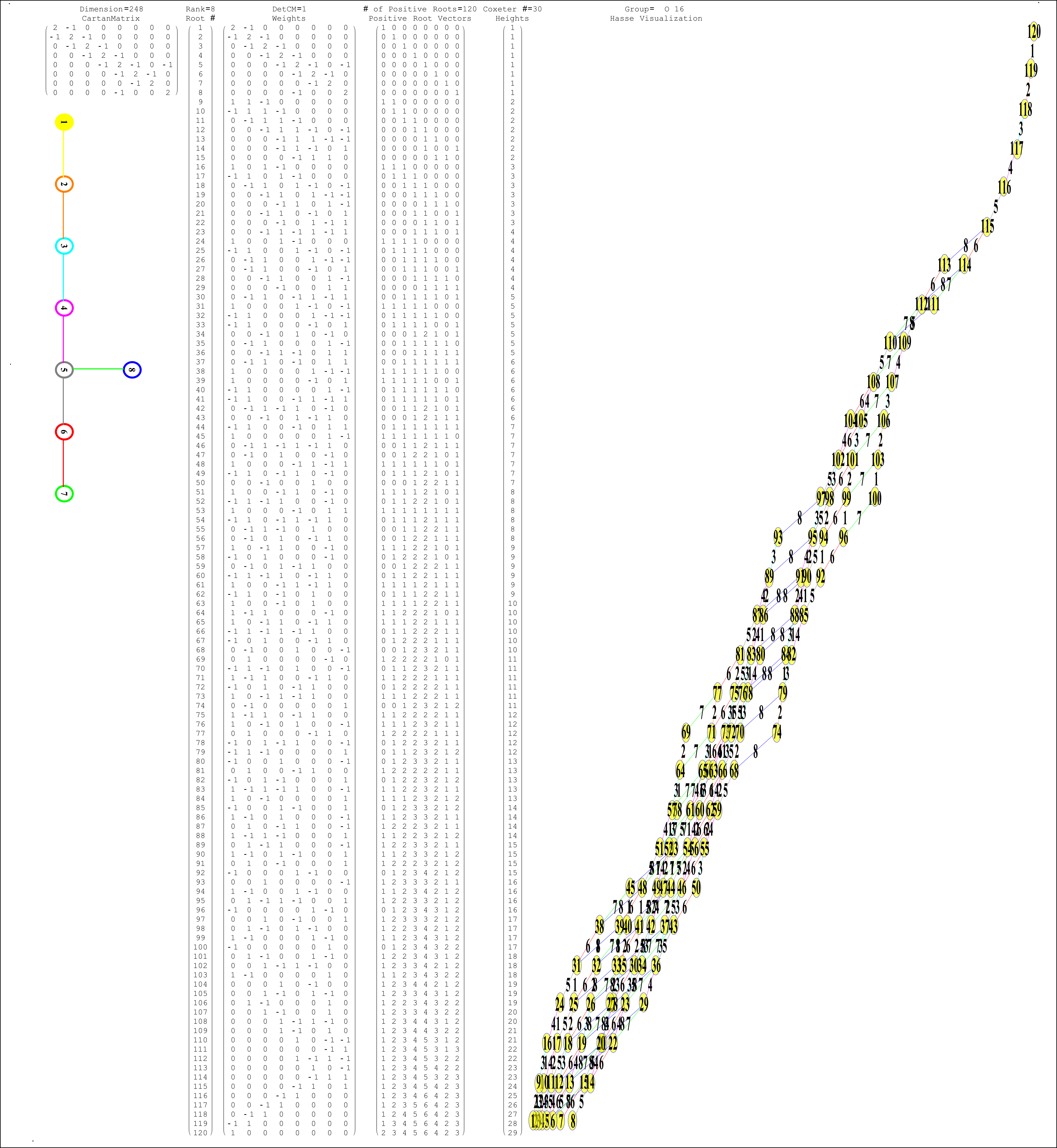
It takes Transpose[srE8] and applies the dot product against the 120 positive and 120 negative algebra roots generated by the Mathematica “SuperLie” package (shown along with its Hasse diagram, which I generate in the full version of my Mathematica notebook):
E8_Hasse

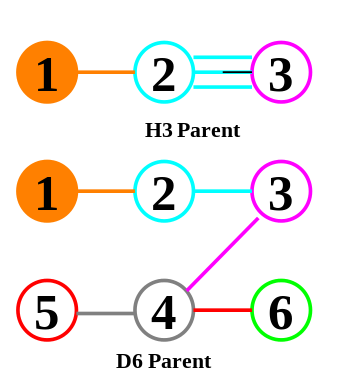
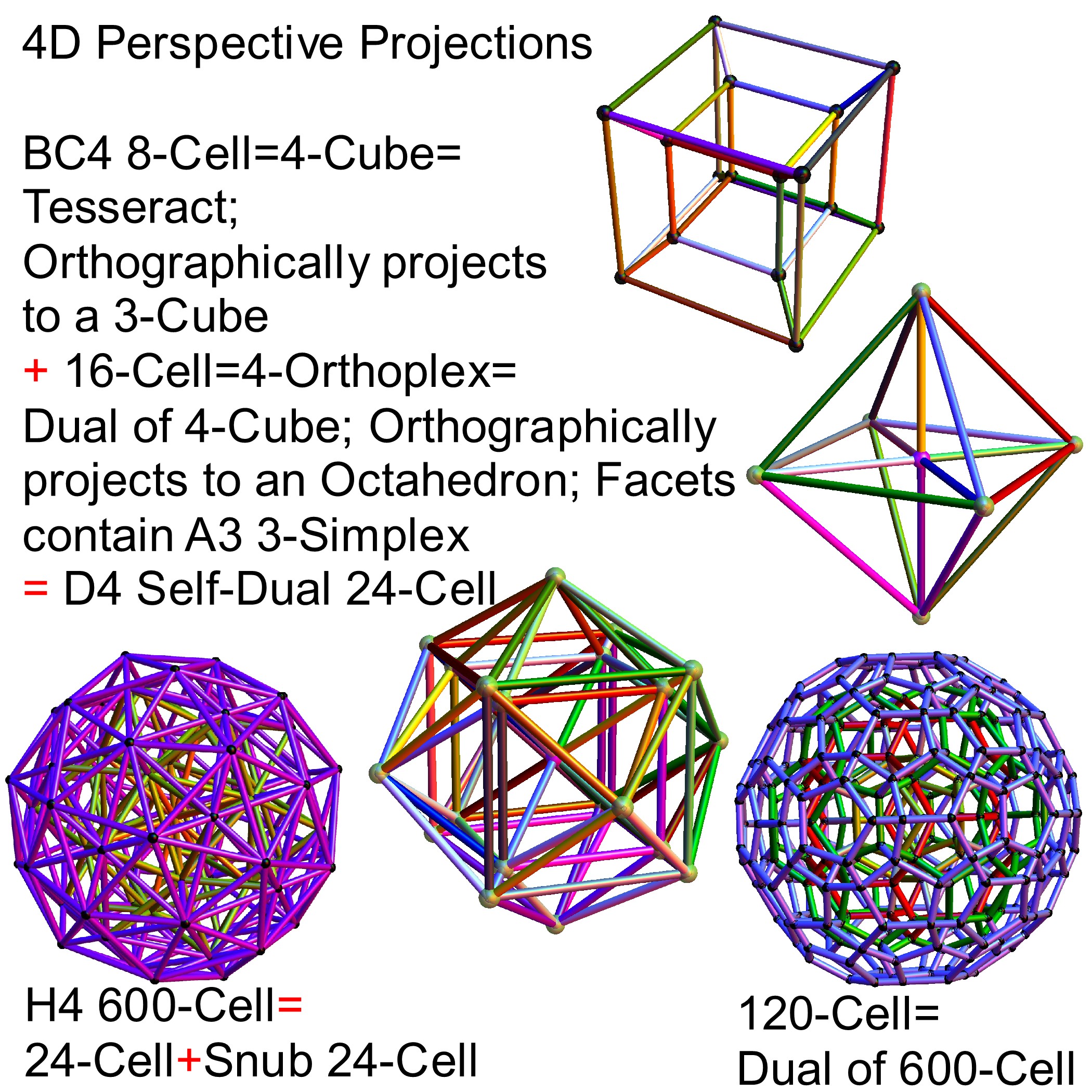
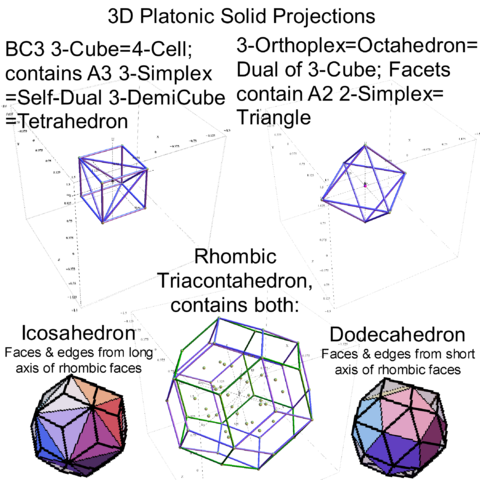
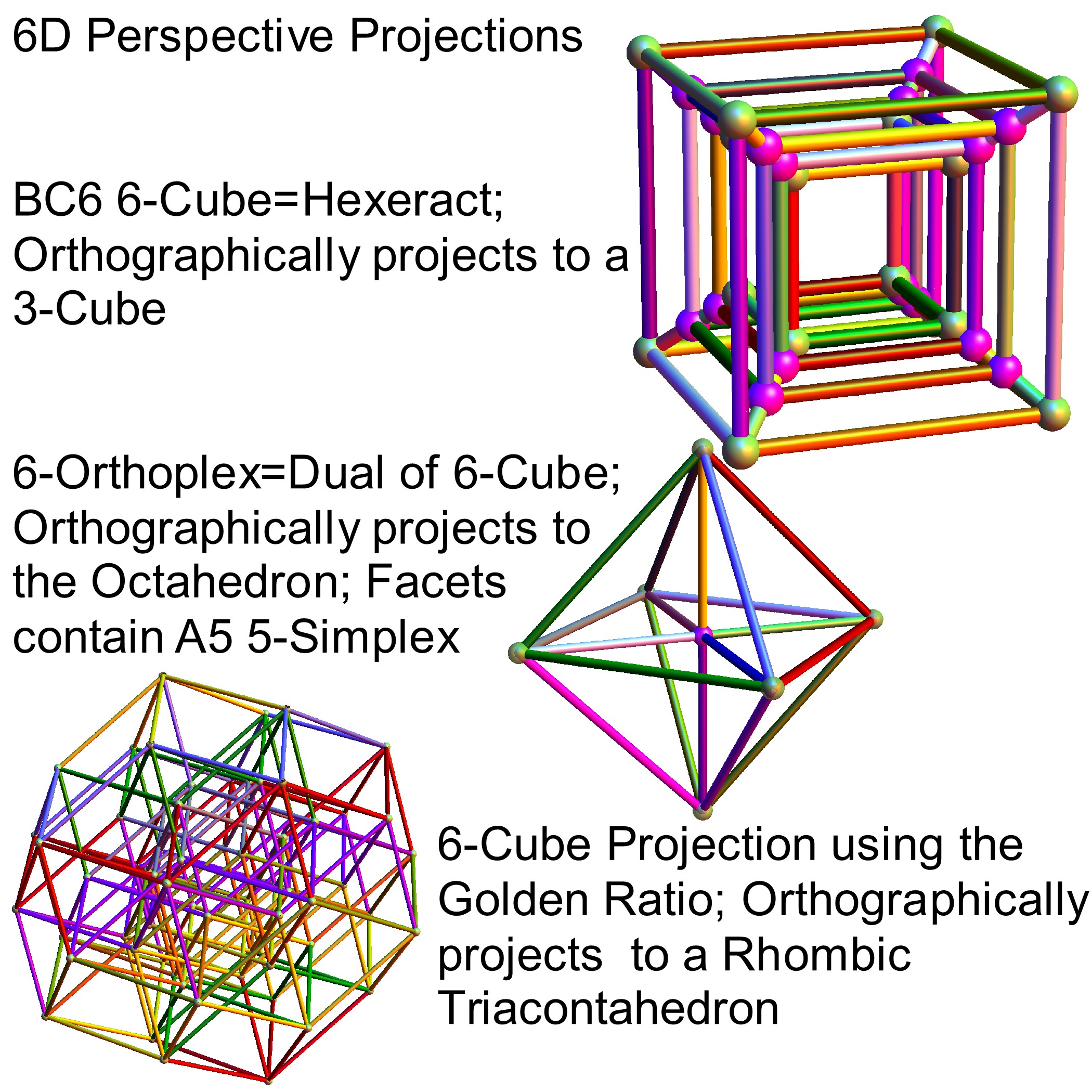
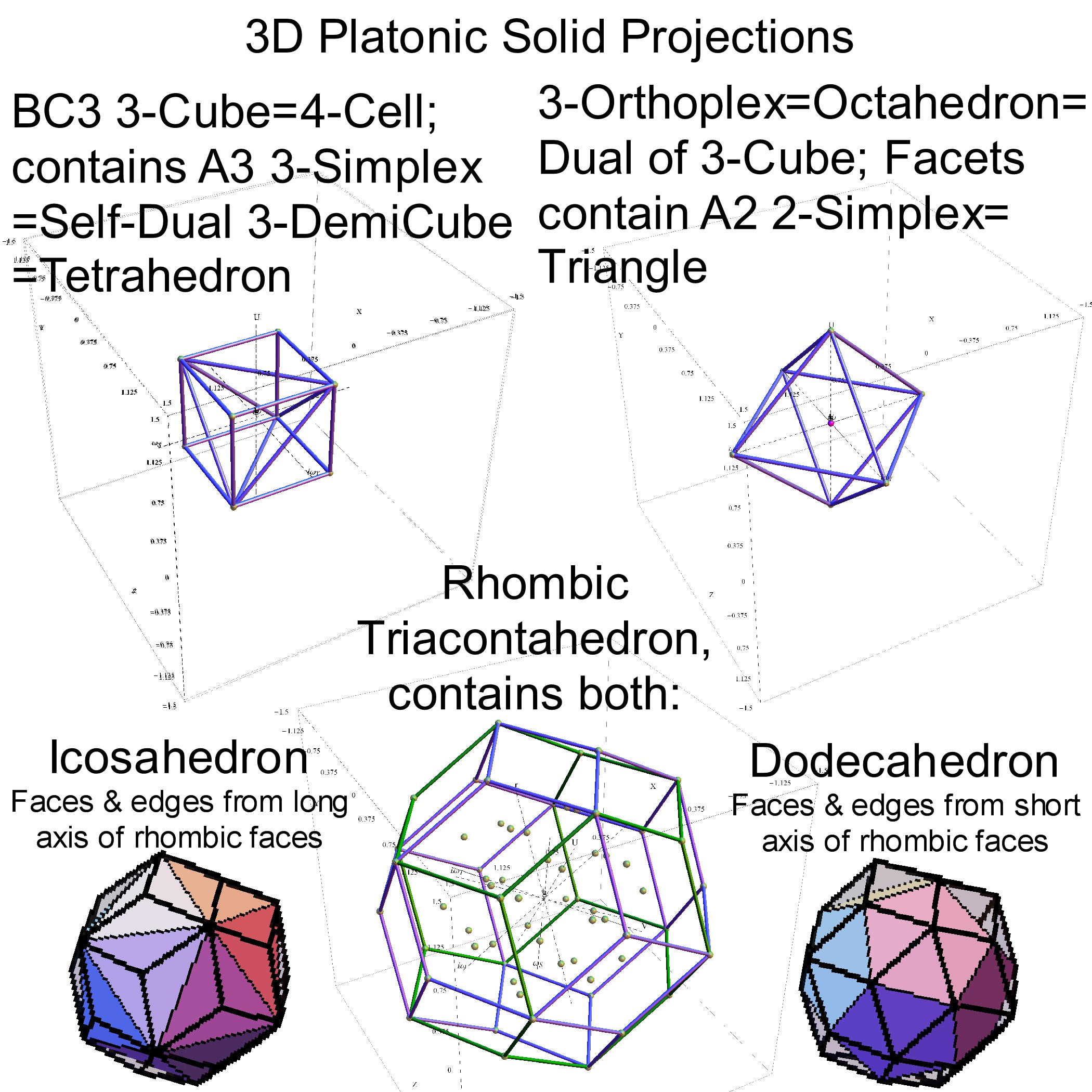
Interestingly, E8 in addition to containing the 8D structures D8 and BC8 and the 4D Polychora, contains the 7D E7, as well as the 6D structures of the Hexeract or 6 Cube. I also showed several years ago that this projects down to the 3D as the Rhombic Triacontahedron. The Rhombic Triacontahedron (of Quasicrystal fame) contains the Platonic Solids including the Icosahedron and Dodecahedron! This is shown to be done through folding of the 6-Cube using rows 2 through 4 of the E8 to H4 folding matrix!!

D6_H3fold

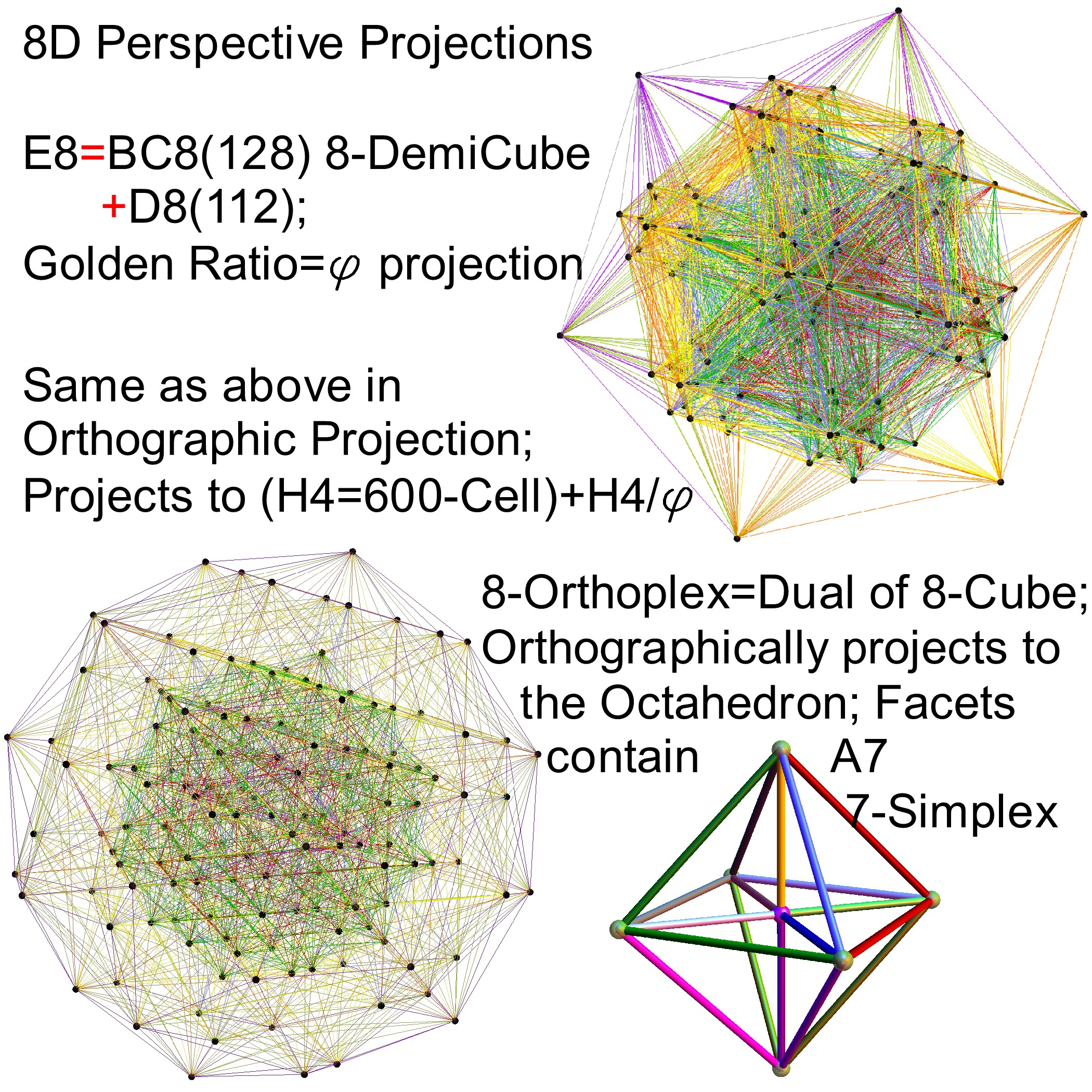
E8-8D-Polytopes-2

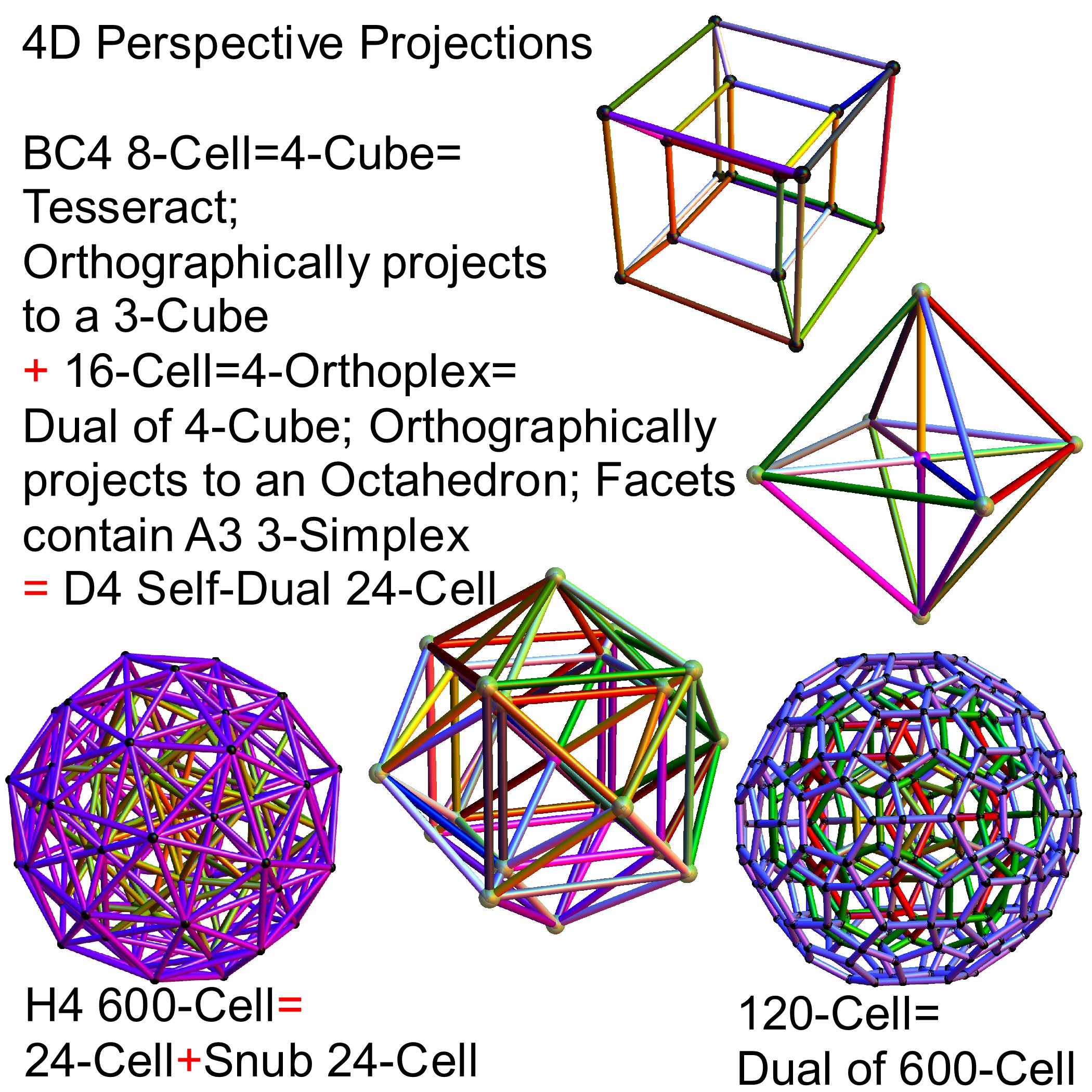
E8-4D-Polychora-2

E8-3D-Platonic-2

outE821b

Mathematica MyToE on the Wolfram Cloud

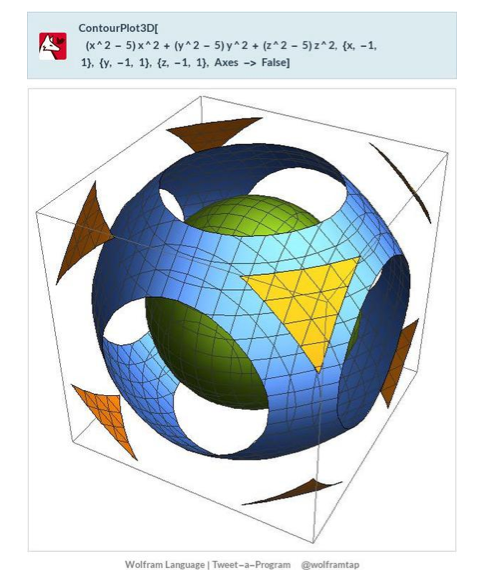
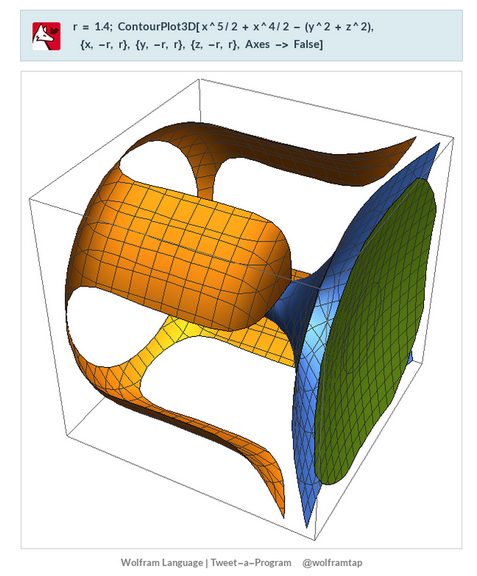
I am playing around with the Wolfram Tweet-a-Program, and the Wolfram Language (i.e. Mathematica) on the Wolfram Cloud.

What’s really cool is that you can now interact with advanced math and HPC on your phone/tablet.

Here are a few results…
@Wolframtap

ByeDZ-oIgAA8tZz

ByzPbCqIQAAzUJq.png large

BTW – you will need a WolframID (and be logged into WolframCloud.com) to interact with these pages.

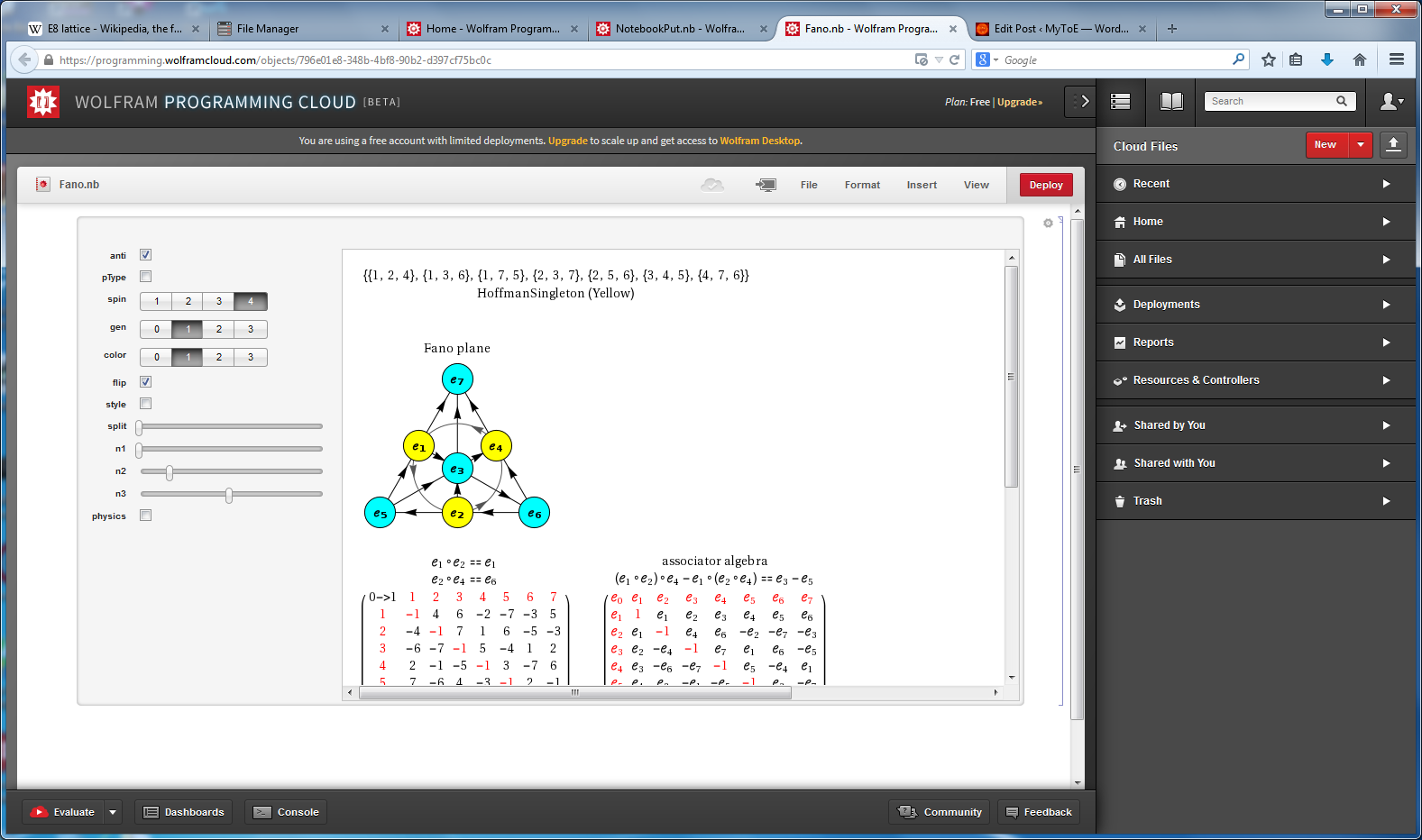
Octonions: The Fano Plane & Cubic

MTMcloud-Fano

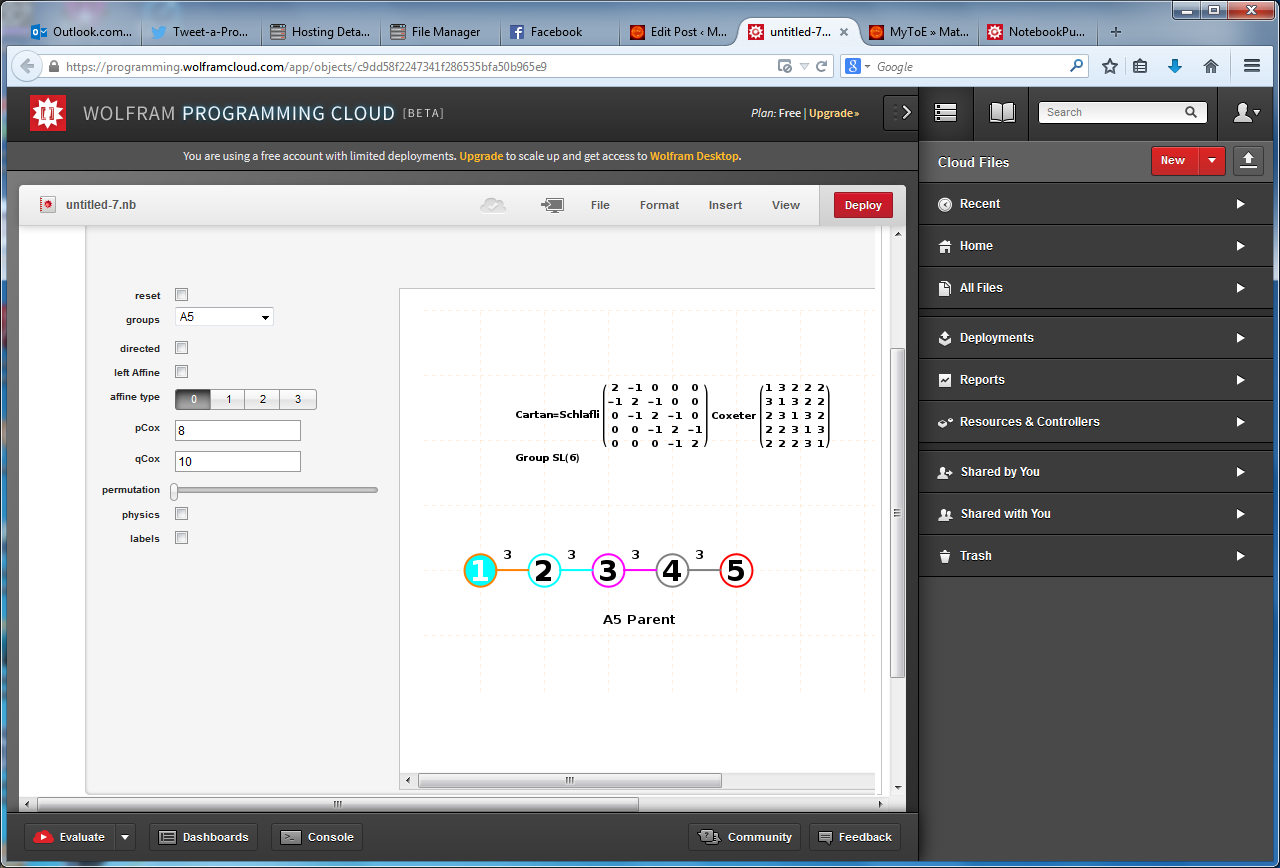
Dynkin Diagrams

MTMcloud-Dynkin

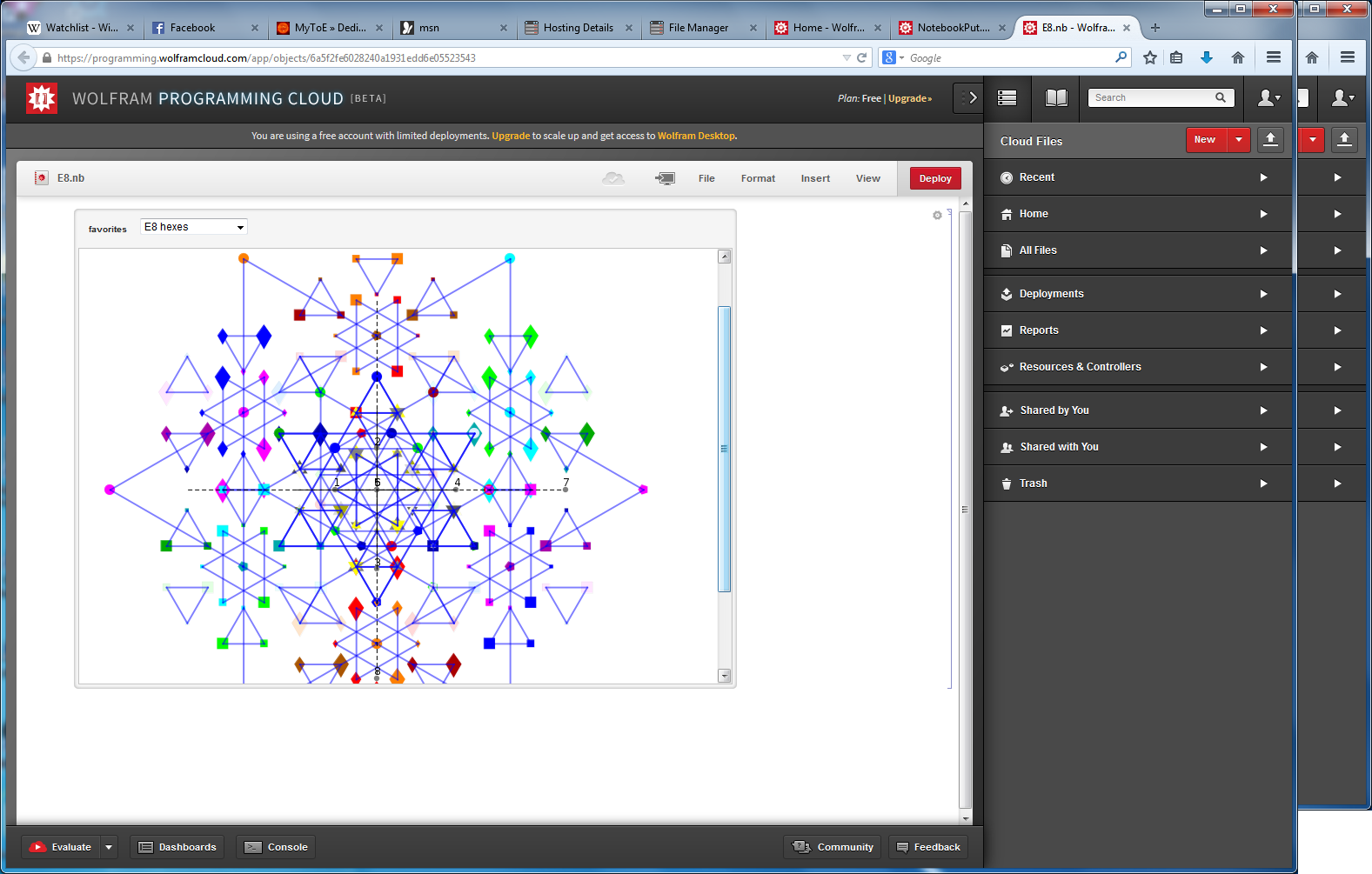
E8 and Subgroup Projections

MTMcloud-E8

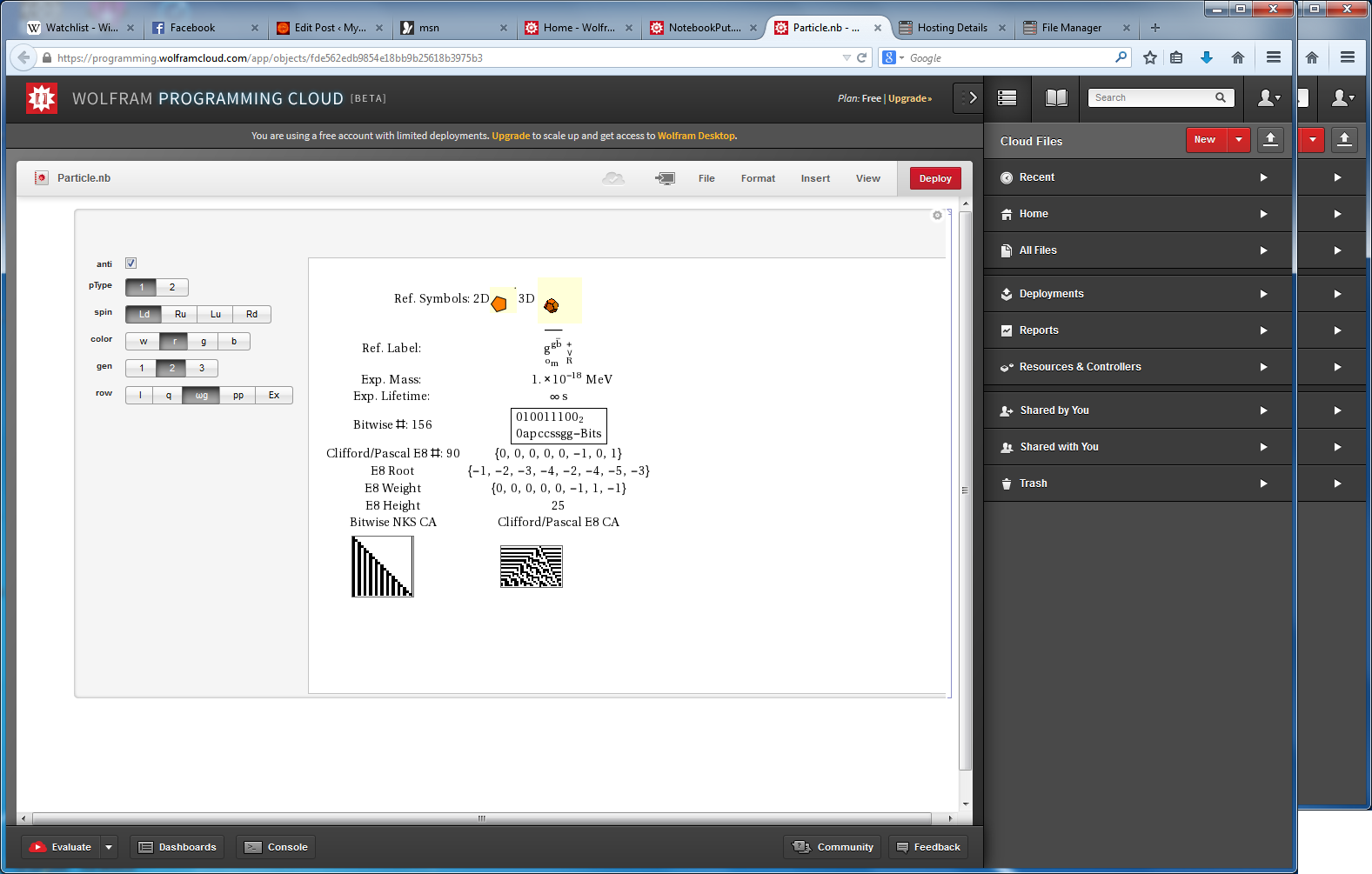
Particle Selector

MTMcloud-Particle

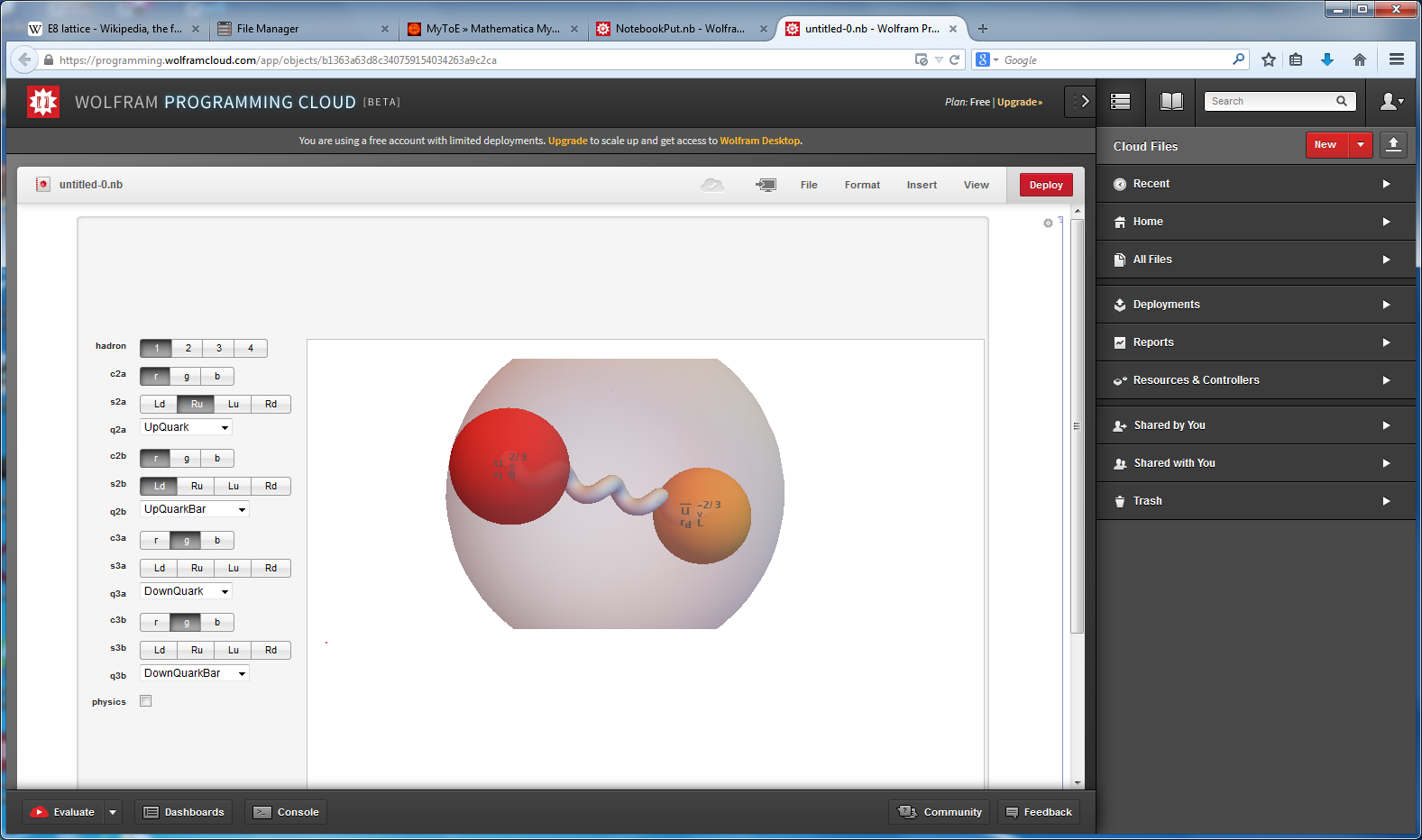
Hadron Builder

MTMcloud-Hadron

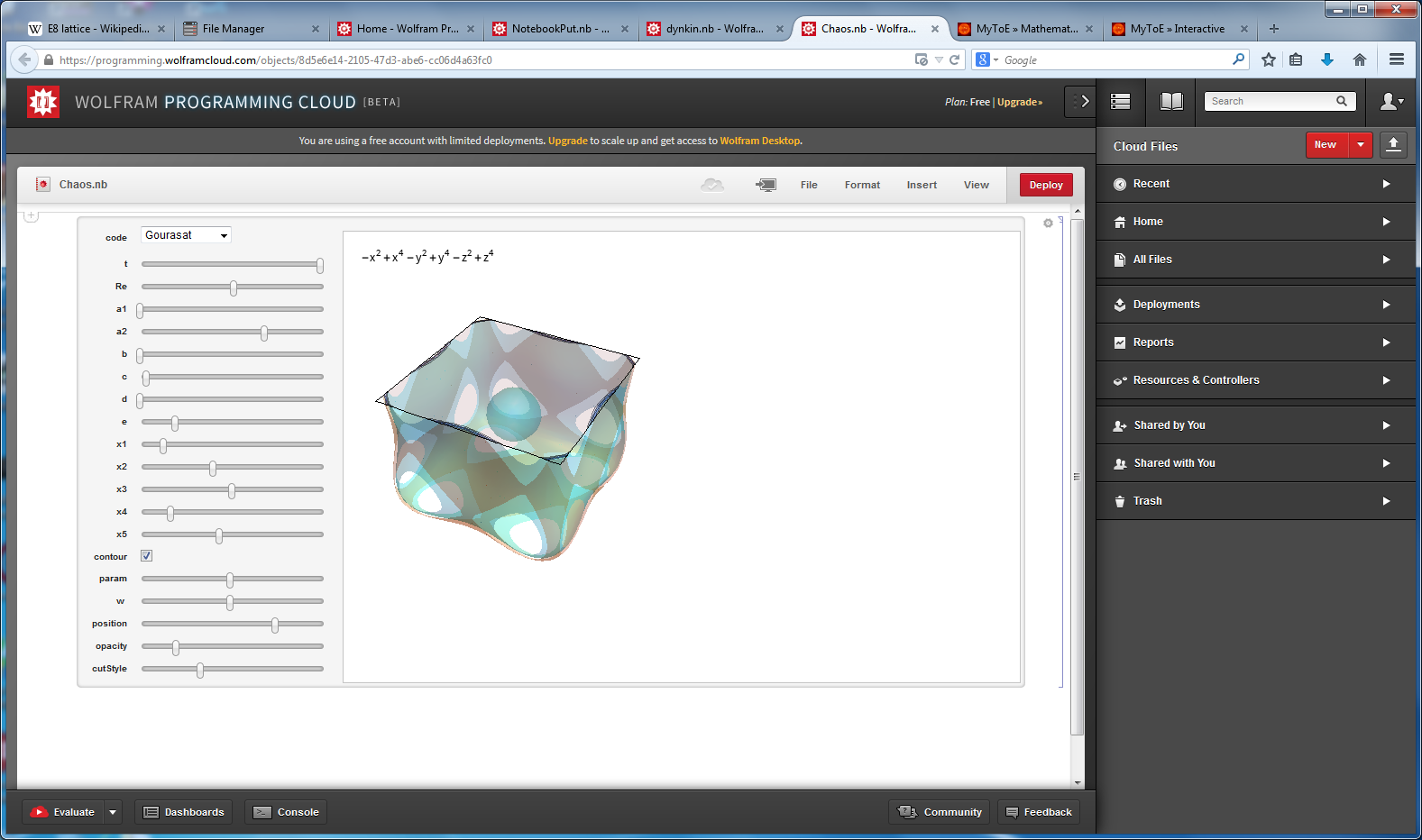
Navier-Stokes Chaos Theory, 6D Calabi-Yau and 3D/4D Surface visualizations

MTMcloud-Chaos

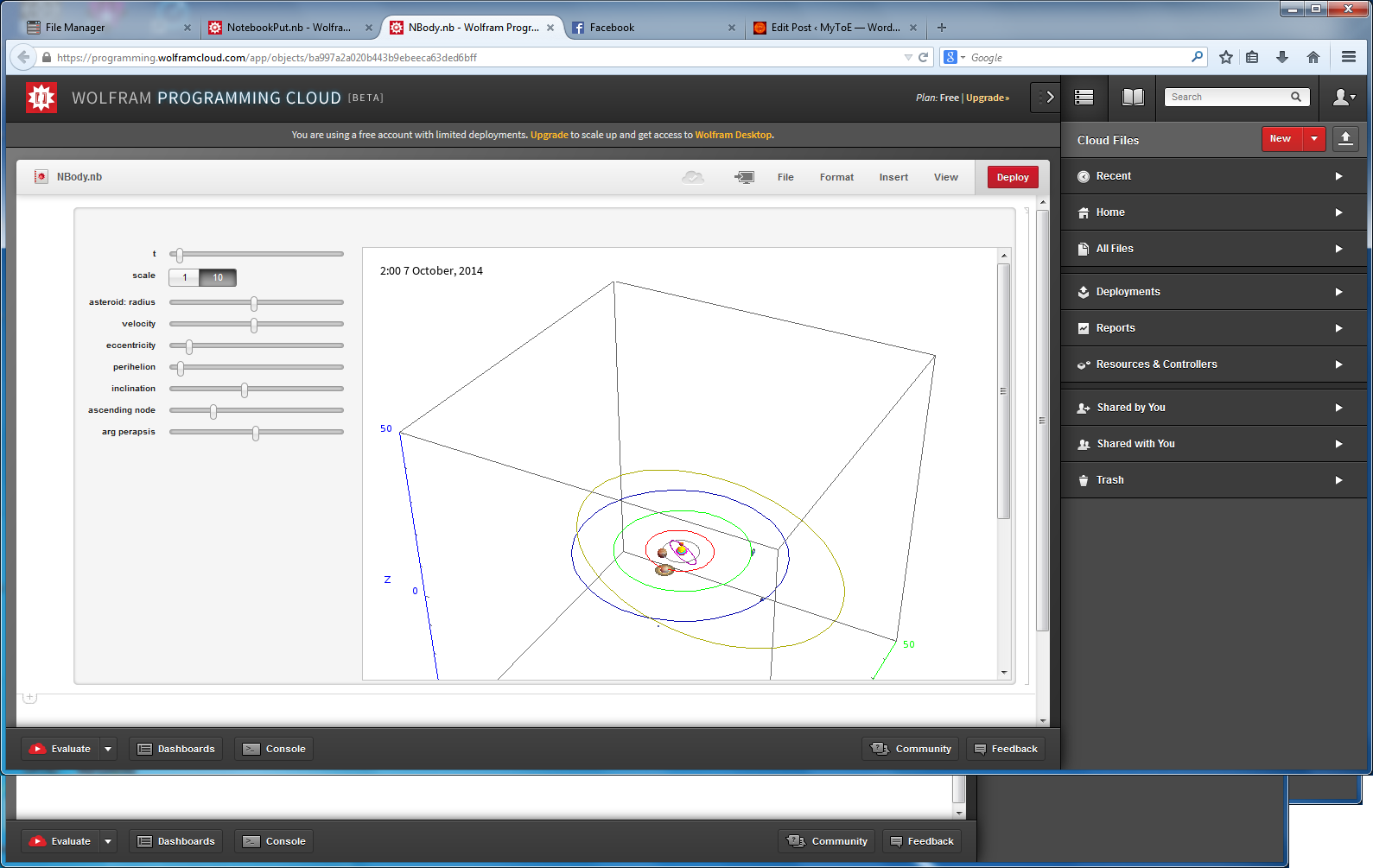
Solar System (from NBody Universe Simulator)

MTMcloud-NBody
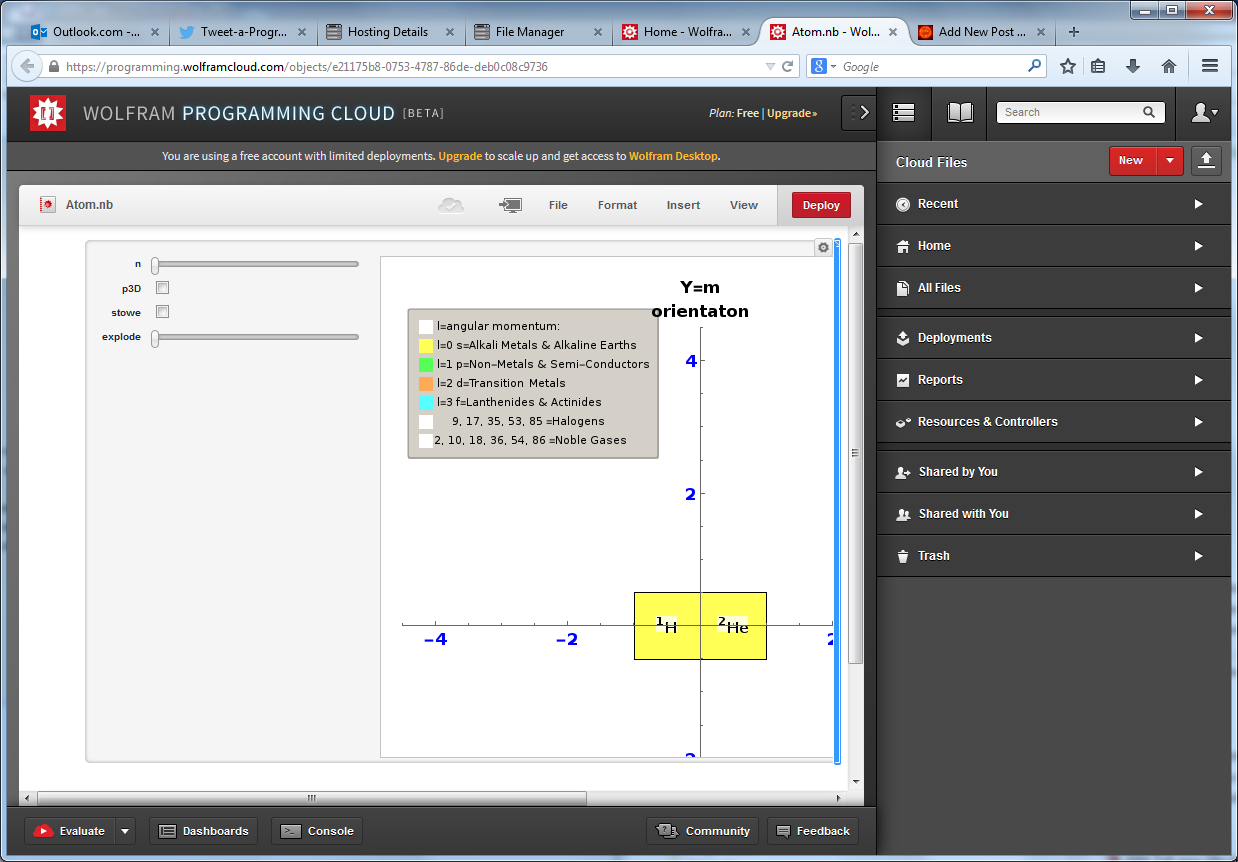
4D Periodic Table

MTMcloud-Atom

E8 folding to H4+H4/φ

I found the rotation matrix that shows the E8 Dynkin diagram can indeed be folded to H4+H4/φ.

The H4 and its 120 vertices make up the 4D 600 Cell. It is made up of 96 vertices of the Snub 24-Cell and the 24 vertices of the 24-Cell=[16 vertex Tesseract=8-Cell and the 8 vertices of the 4-Orthoplex=16-Cell]).

It can be generated from the 240 split real even E8 vertices using a 4×8 rotation matrix:
x = (1, φ, 0, -1, φ, 0, 0, 0)
y = (φ, 0, 1, φ, 0, -1, 0, 0)
z = (0, 1, φ, 0, -1, φ, 0, 0)
w = (0, 0, 0, 0, 0, 0, φ^2, 1/φ)

where φ=Golden Ratio=(1+Sqrt(5))/2

It is also interesting to note that the x, y, and z vectors project to a hull of the 3D Rhombic Triacontrahedron from the 6D 6 cube Hexaract (which then generates the hull of the Dodecahedron and Icosahedron Platonic solids).

Here’s a look at the Dynkin Diagram folding of E8 to H4+H4/φ:

E8-H4-Fold

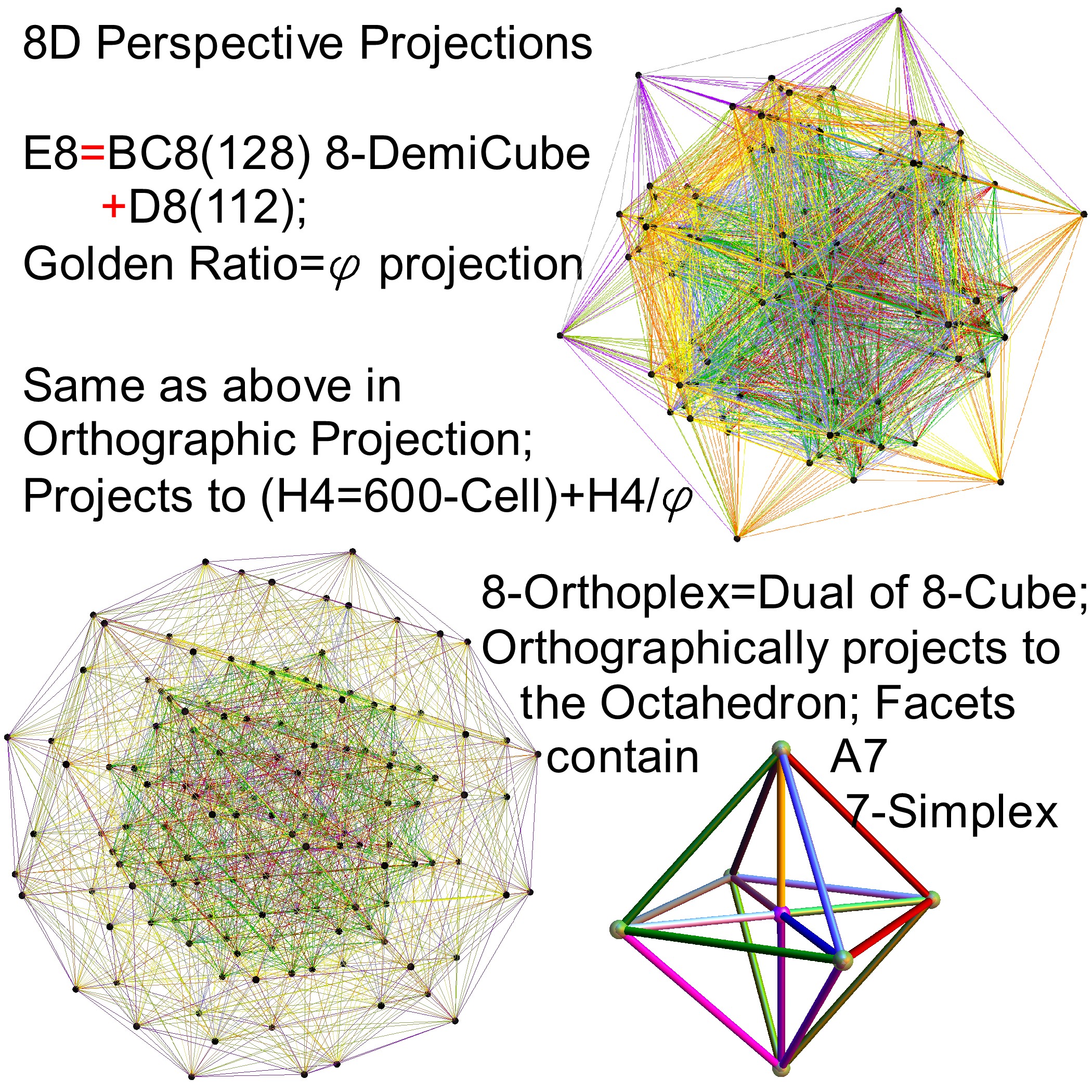
I find in folding from 8D to 4D, that the 6720 edge counts split into two sets of 3360 from E8’s 6720 length Sqrt(2), but the combined edges and vertices recreate the E8 petrie diagram perfectly.

Some visualizations of this in 8D:
E8-8D-Polytopes-2

to 4D:
E8-4D-Polychora-2

and also showing the Rhombic Triacontrahedron folding from 6D:
E8-6D-StarPolytopes-2

to 3D:
E8-3D-Platonic-2

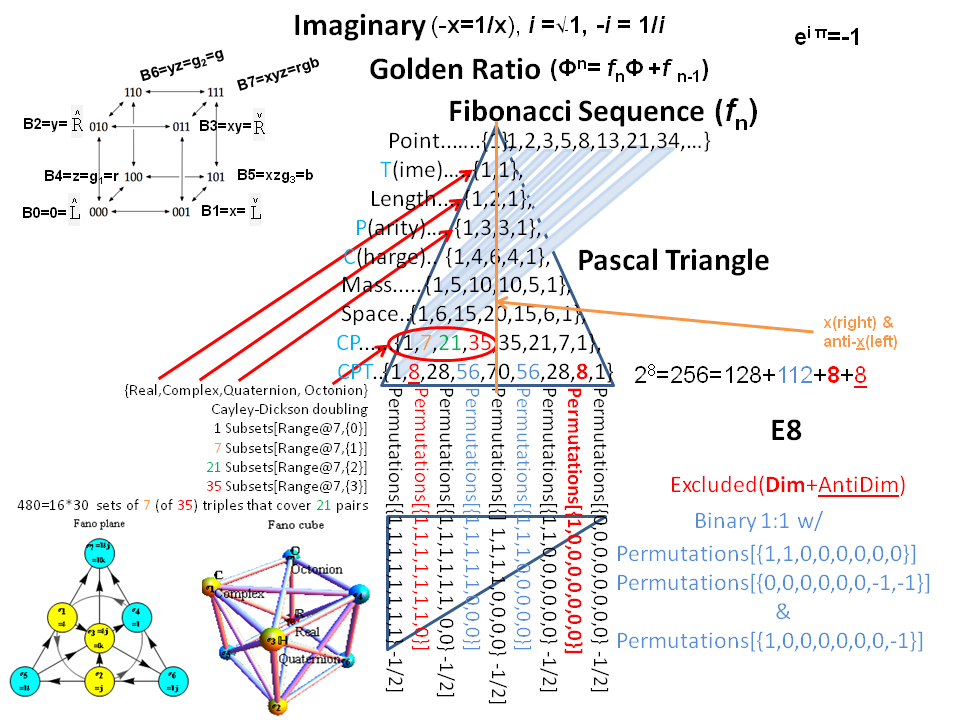
Another look at integrating the Pascal Triangle to Clifford Algebra, E8 Lie Algebra/Groups, Octonions and Particle Physics Standard Model

Pascal-g

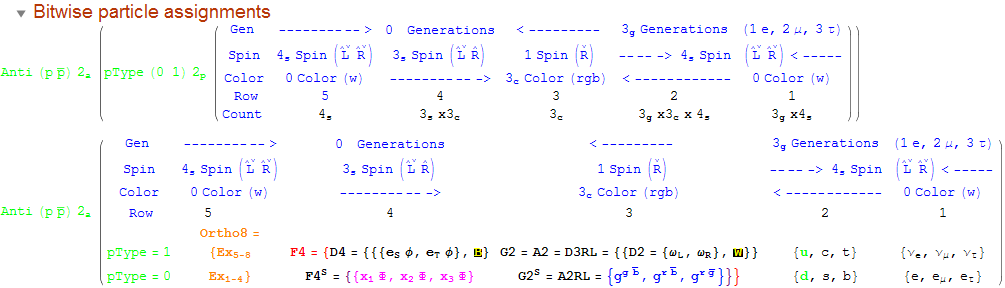
Modified Lisi split real even E8 particle assignment quantum bit patterns:

Lisi_Particle_Assignments

Assigning a specific mass, length, time, and charge metrics based on new dimensional relationships and the Planck constant (which defines Higgs mass).

ToEsummary

The split real even E8 group used has been determined from this simple root matrix (which gives the Cartan matrix upon dot product with a transpose of itself):

DynkinE8Full.svg

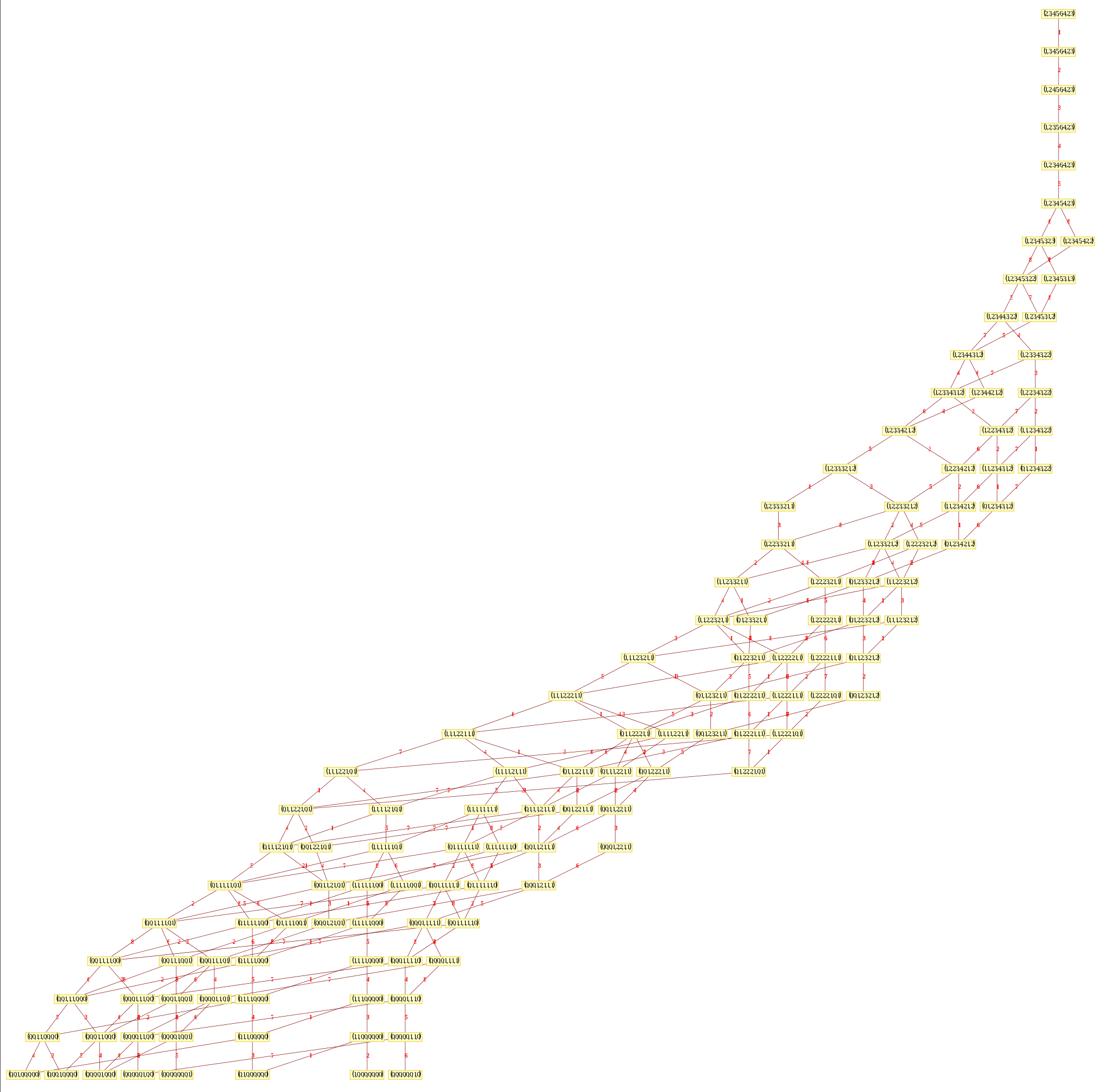
This Dynkin diagram builds the Cartan matrix and determines the root/weight/height with corresponding Hasse diagrams.

E8Hasse

E8HassePoset.svg

Integration of the Atomic Elements to E8 and Octonions

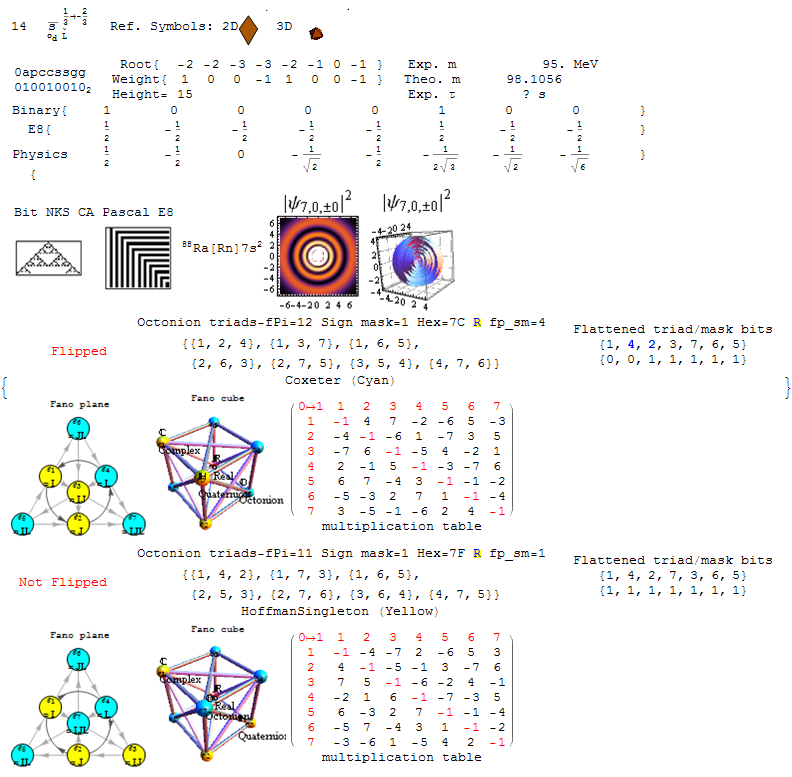
While it still needs some work – I’ve integrated the atomic elements to the Octonions, E8 and theoretical Lisi eSM model particle assignments (along with Wolfram’s NKS Cellular Automata linked to the Clifford Algebra/Pascal Triangle binary assignments). I have combined all these visualizations with the 2D/3D electron orbitals (based on the symmetry of the {n,l,m,s} quantum numbers (from the Stowe-Janet-Scerri Periodic Table. I totally understand this is not easy to dig into w/o some effort, but … it looks cool 😉

It is shown in an updated version of Fano.pdf. This is a very large and complex 30Mb file – with 241 pages. It shows the Lisi particle assignments, the E8 roots, split real even (SRE) E8 vertex and the Lisi “physics rotation”. It also shows two Fano plane and cubic derived from the symmetries of the E8 particle assignments (and all the relevant construction of it). See the interactive demo or the Mathematica Notebook for a more “navigational look” at the integration.

Octonions-E8-Particles-Elements