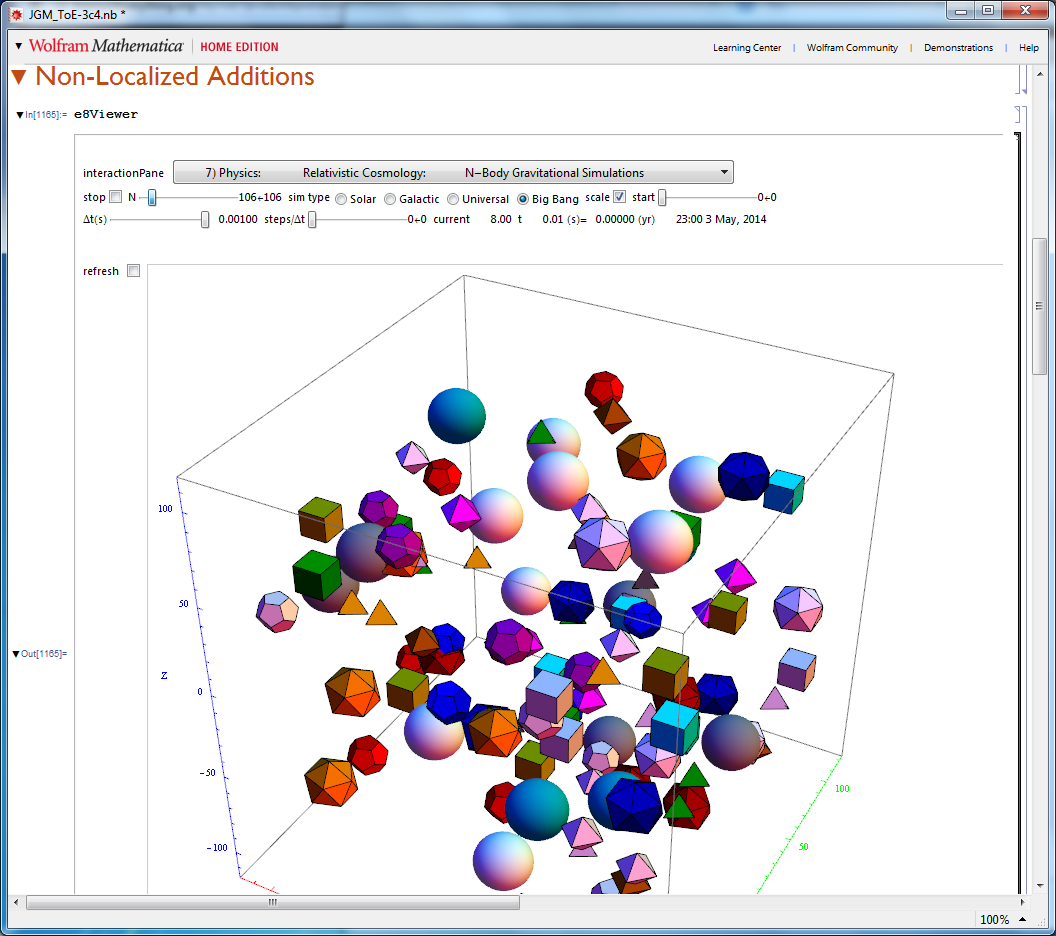
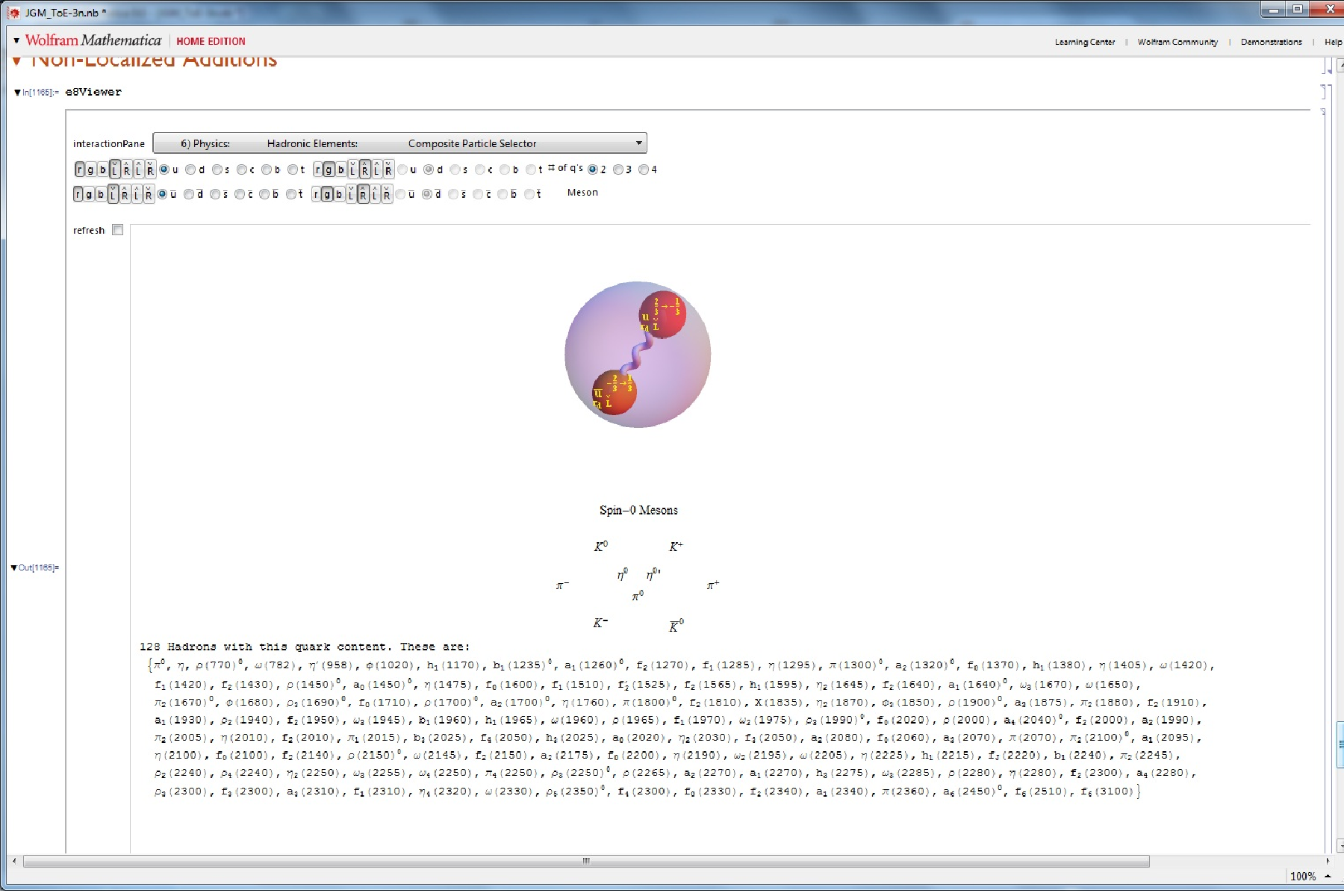
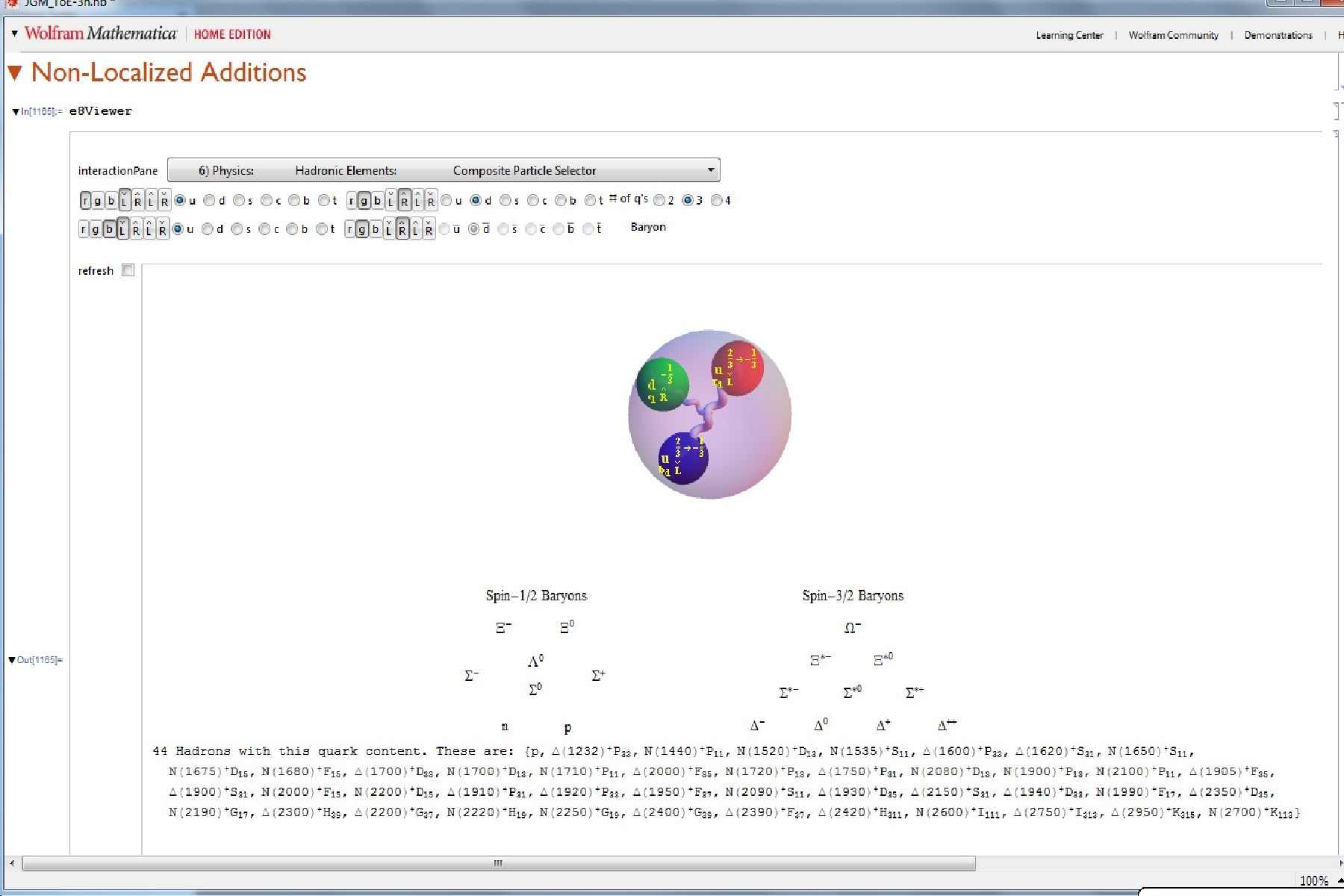
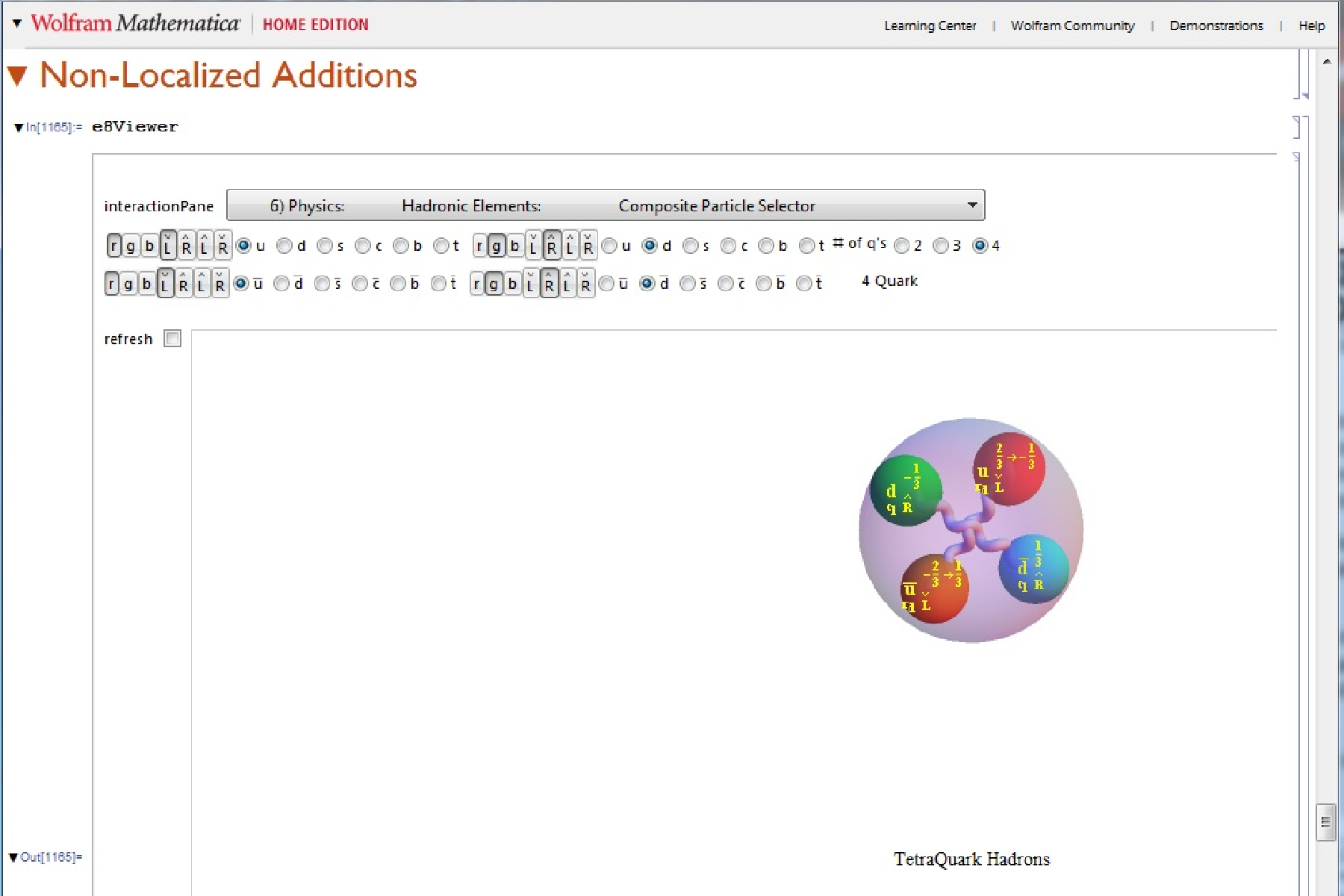
All posts by jgmoxness

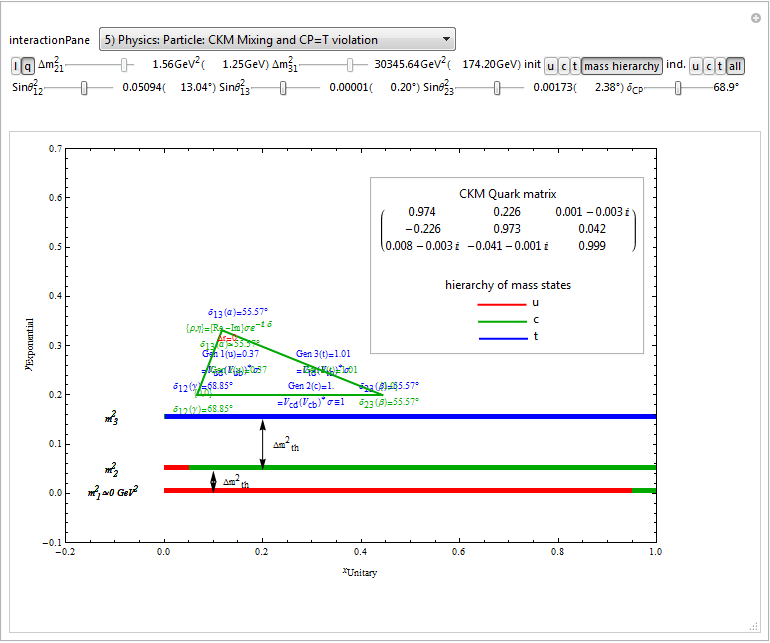
Added PMNS and CKM particle mixing matrix calculations to ToE_Demonstration.CDF

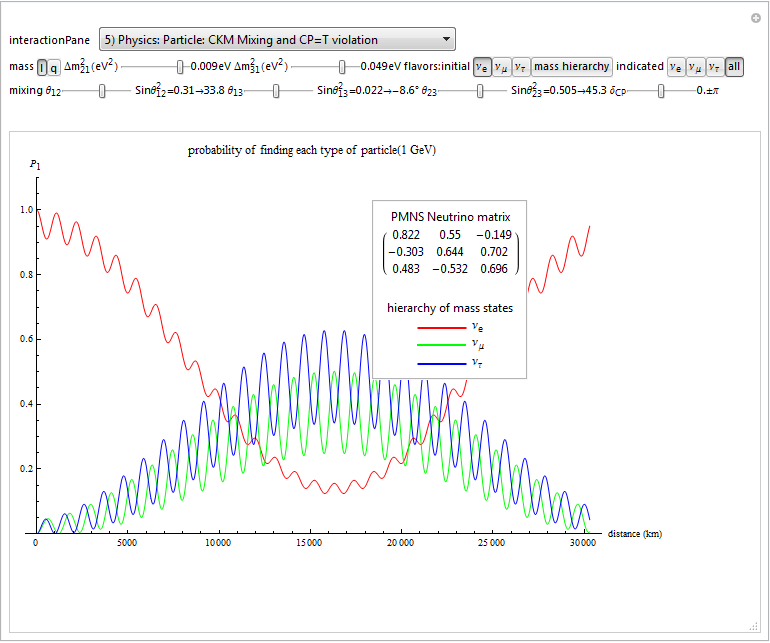
I’ve improved on a great Wolfram demonstration from Balázs Meszéna on Neutrino Oscillations by adding capabilities to view both the PMNS and CKM unitary triangle matrices, print and reference my ToE Neutrino mass predictions, which now accomodate the Koide relationships in particle masses.

Check out the new demonstrations using free interactive web plugin , .CDF, or .NB (for licensed Mathematica users) and social media integrations for comments, pages and posts.

This new pane (#5) presents the Unitarity of CP=T violations by combining the Lepton (Neutrino) Pontecorvo-Maki-Nakagawa-Sakata matrix (PMNS) with the Quark Cabibbo-Kobayashi-Maskawa (CKM) mixing matrix calculations through the Quark-Lepton Complementarity (QLC).

I am also working to incorporate the Koide particle mass relations to MyToE predictions.

ToE_Demonstration

JGM_ToE-15t

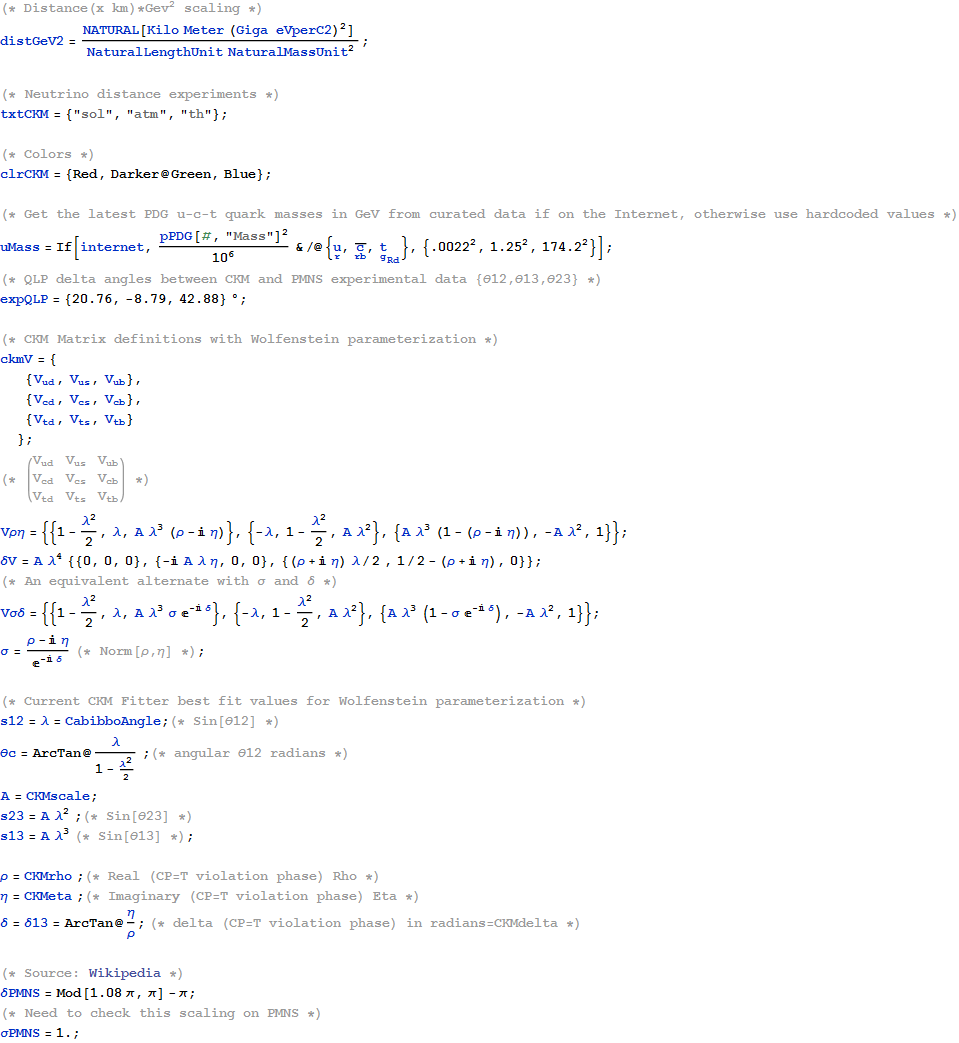
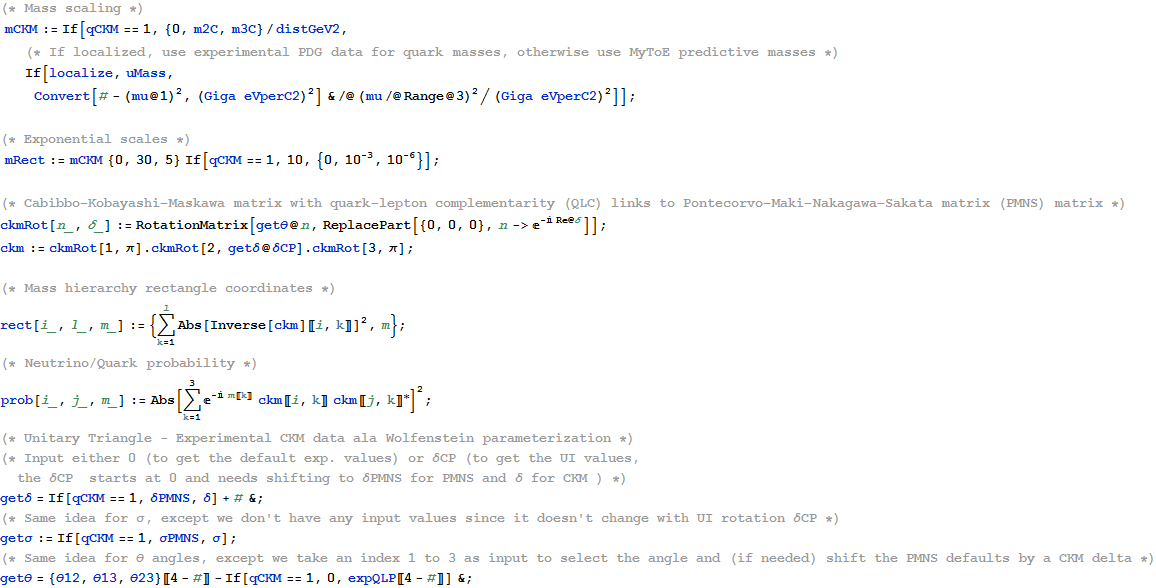
Code snippets showing the CKM and PMNS matrix calculations based on the UI.

JGM_ToE-15v

JGM_ToE-15u

Avengers Tesseract Cosmic Cube

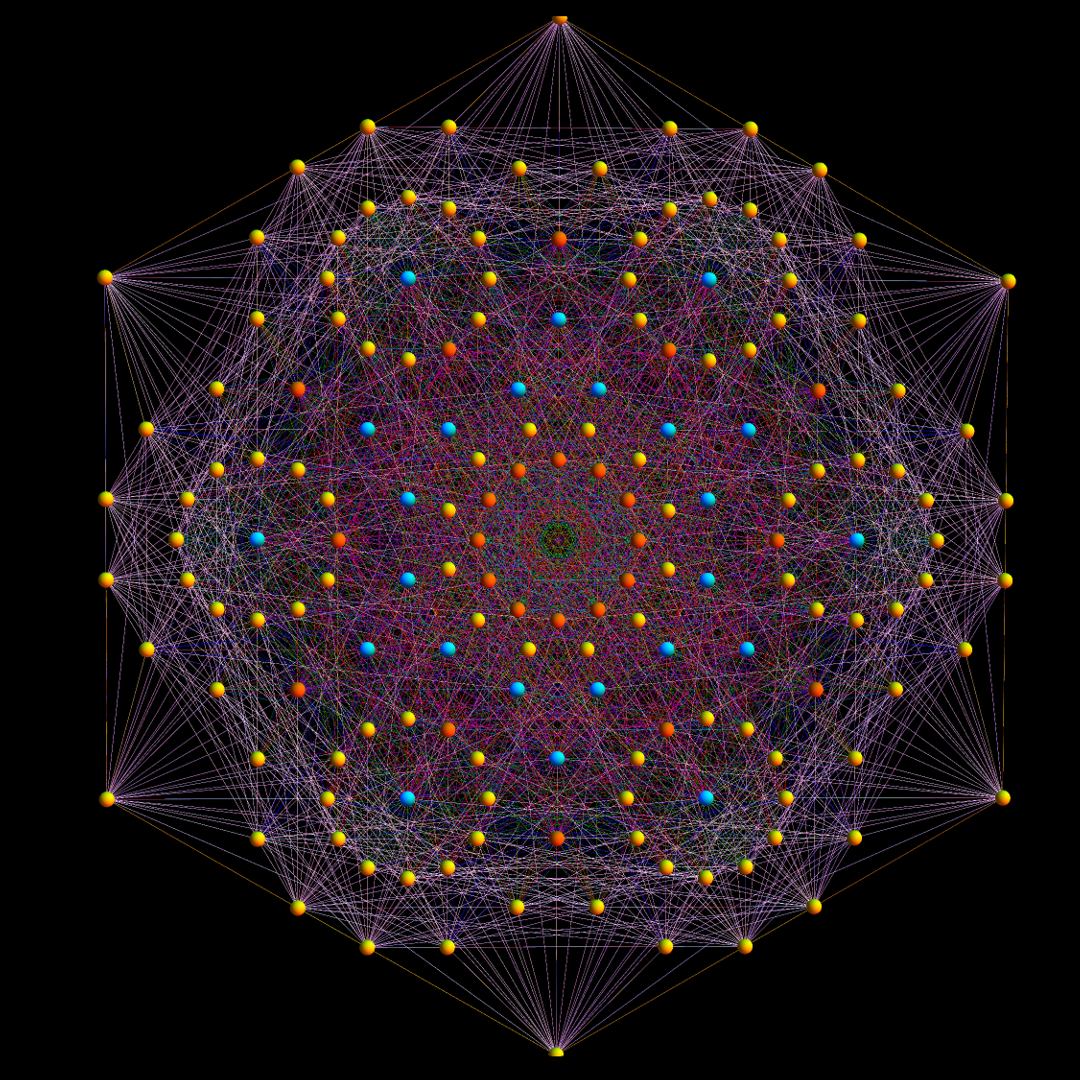
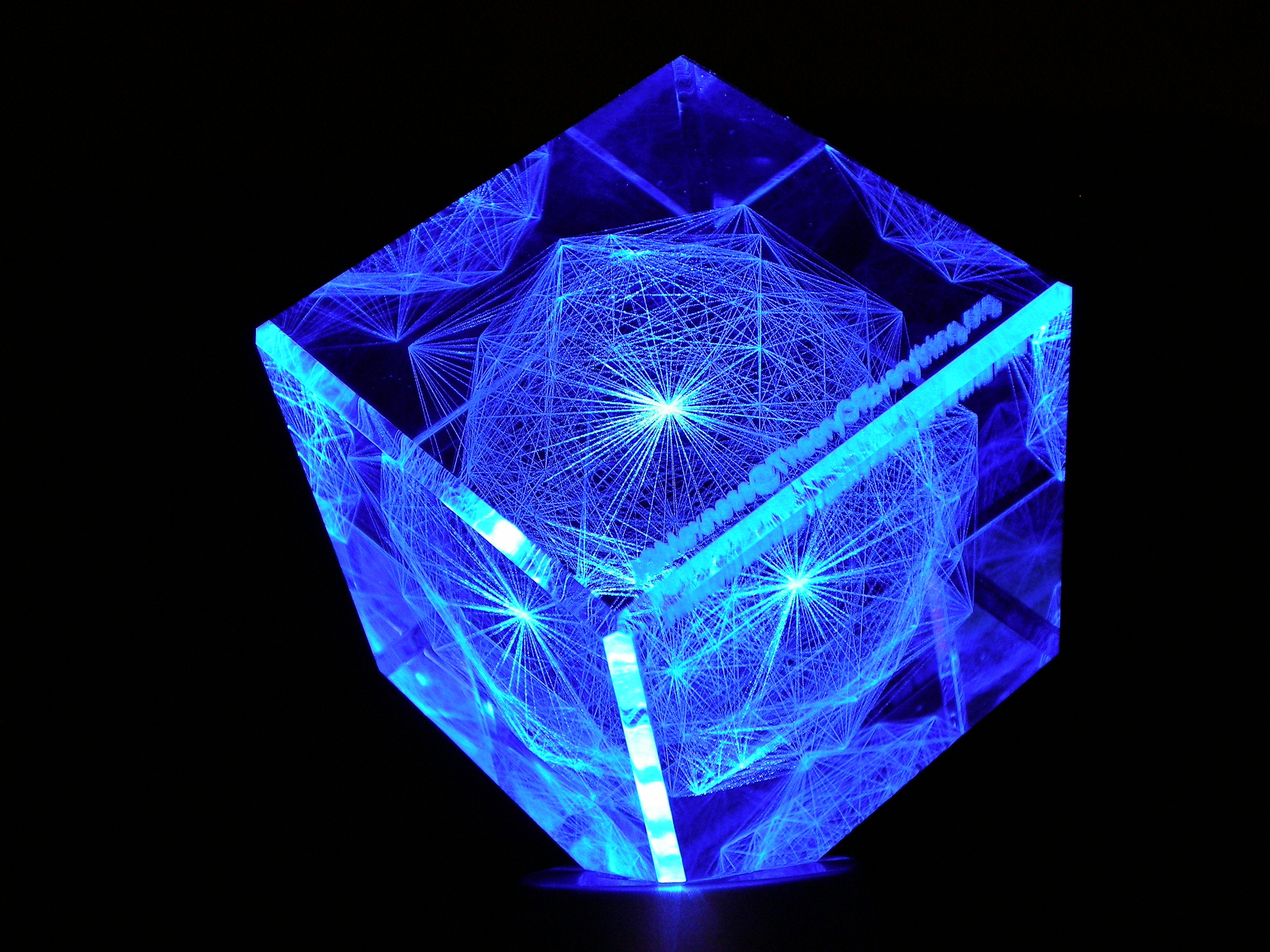
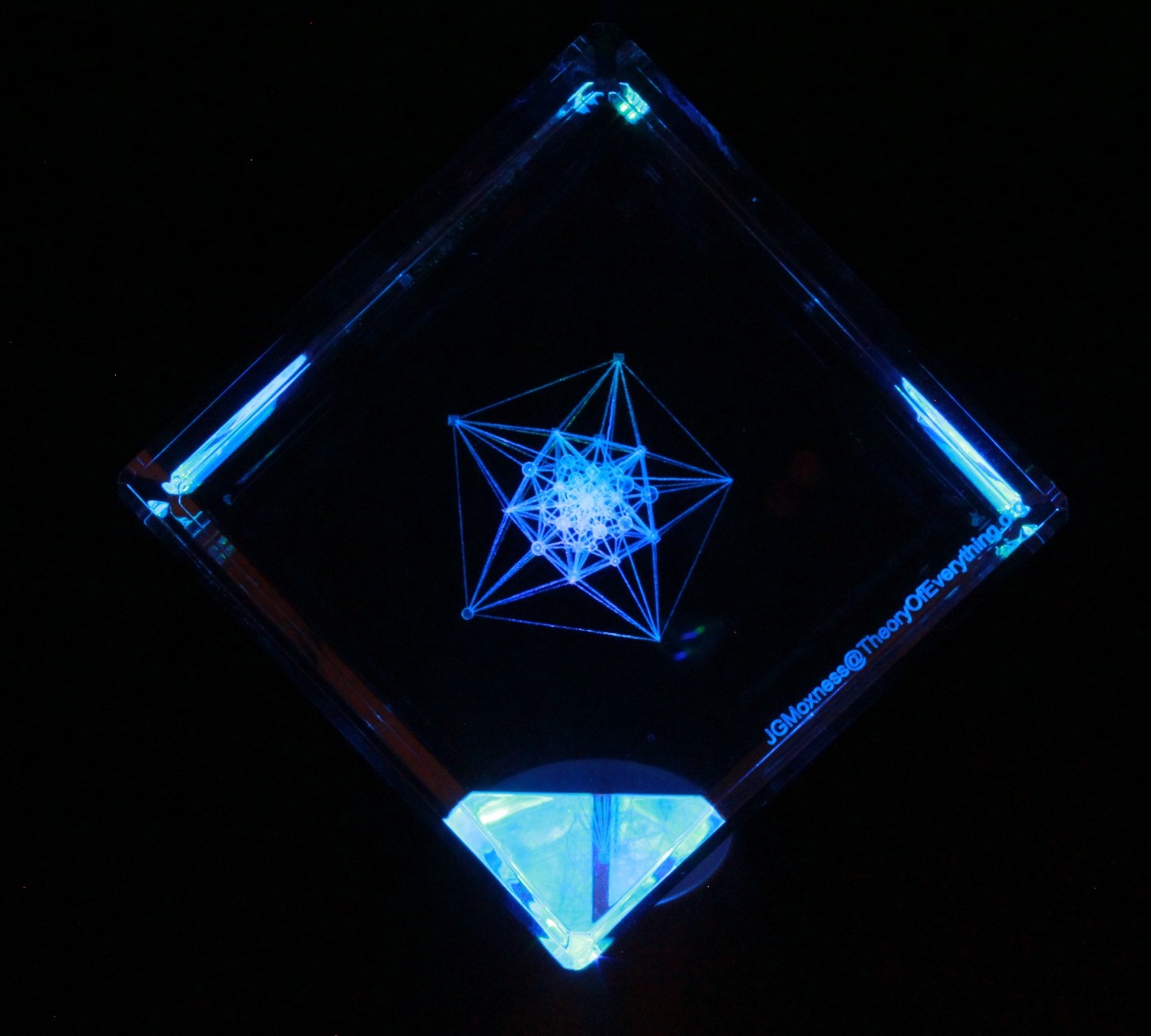
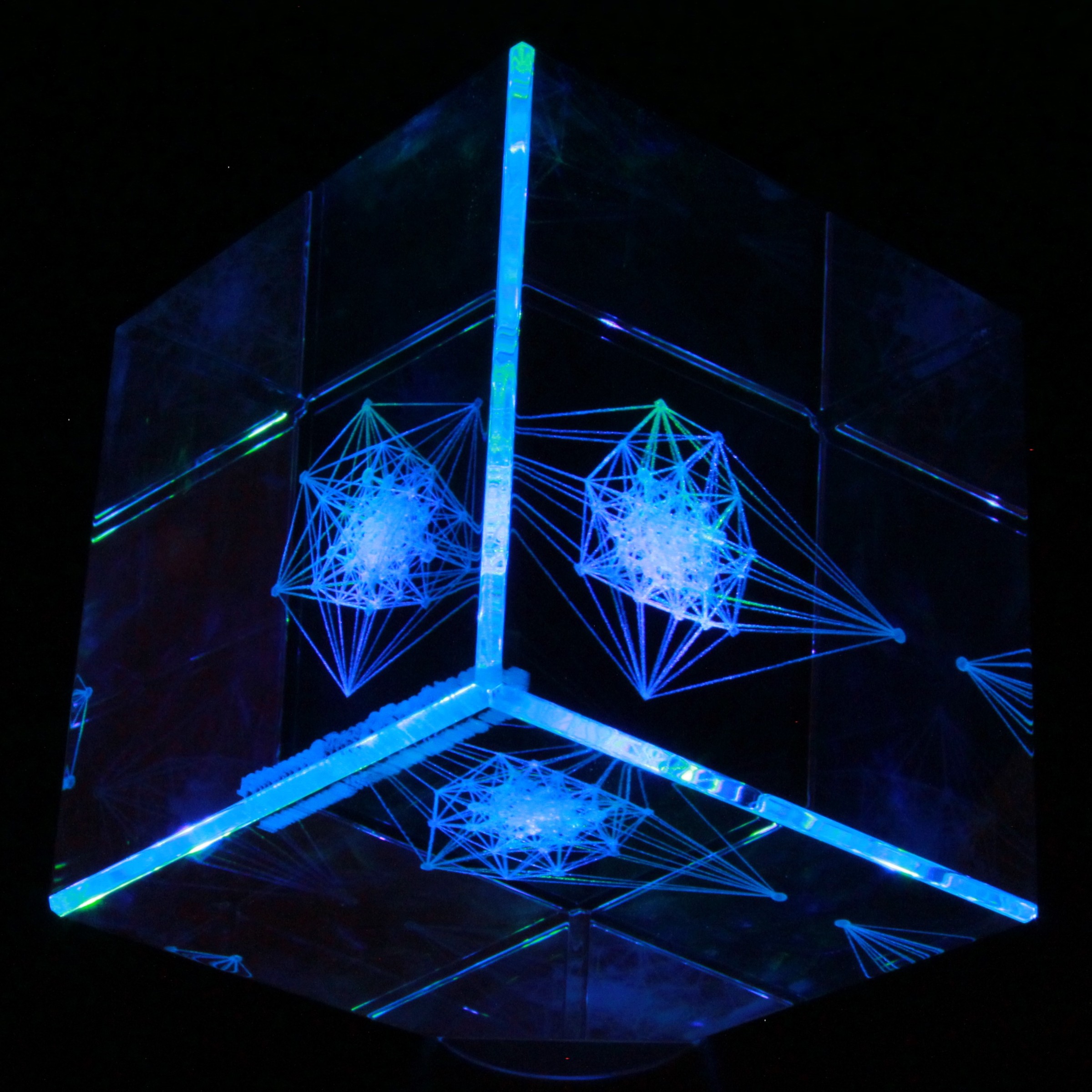
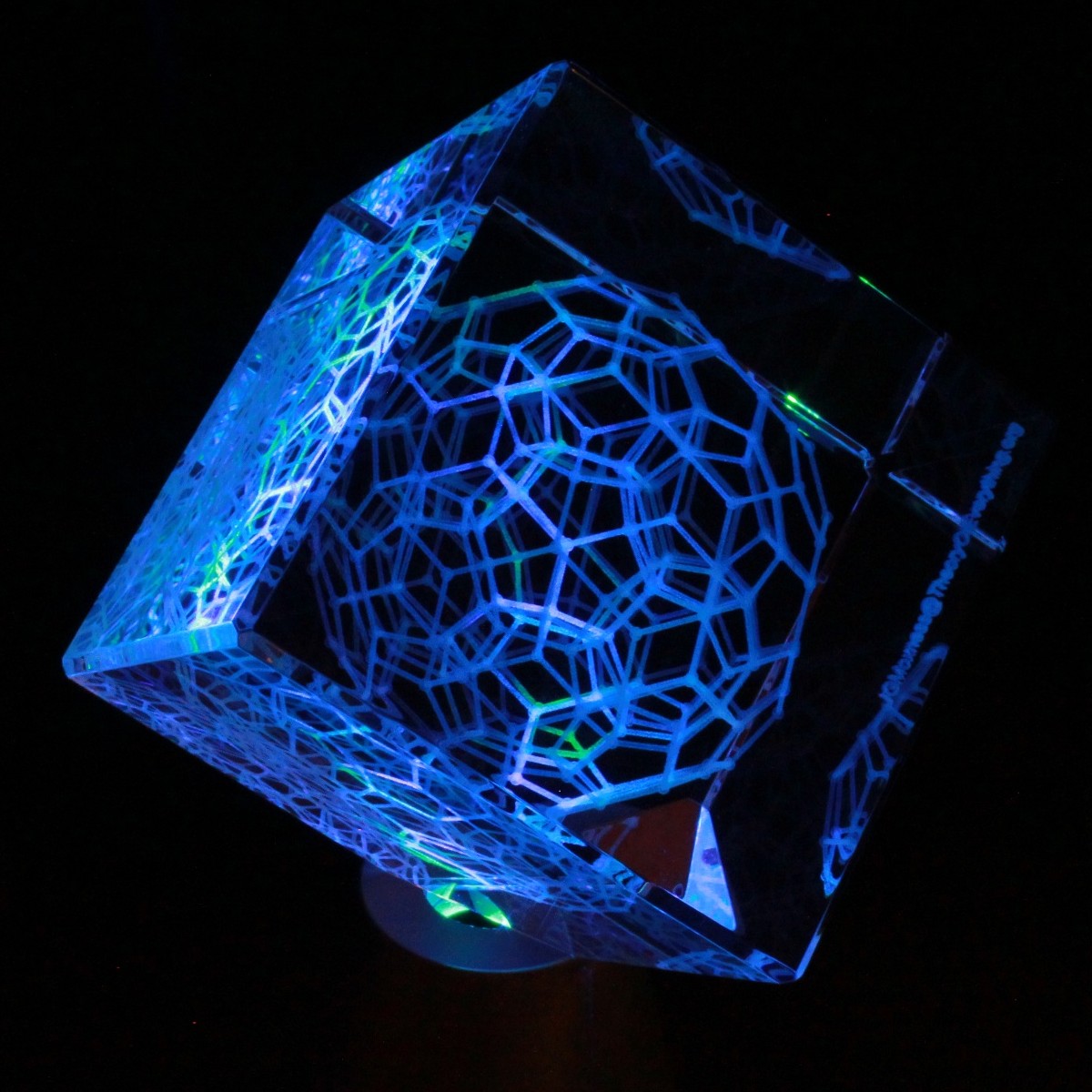
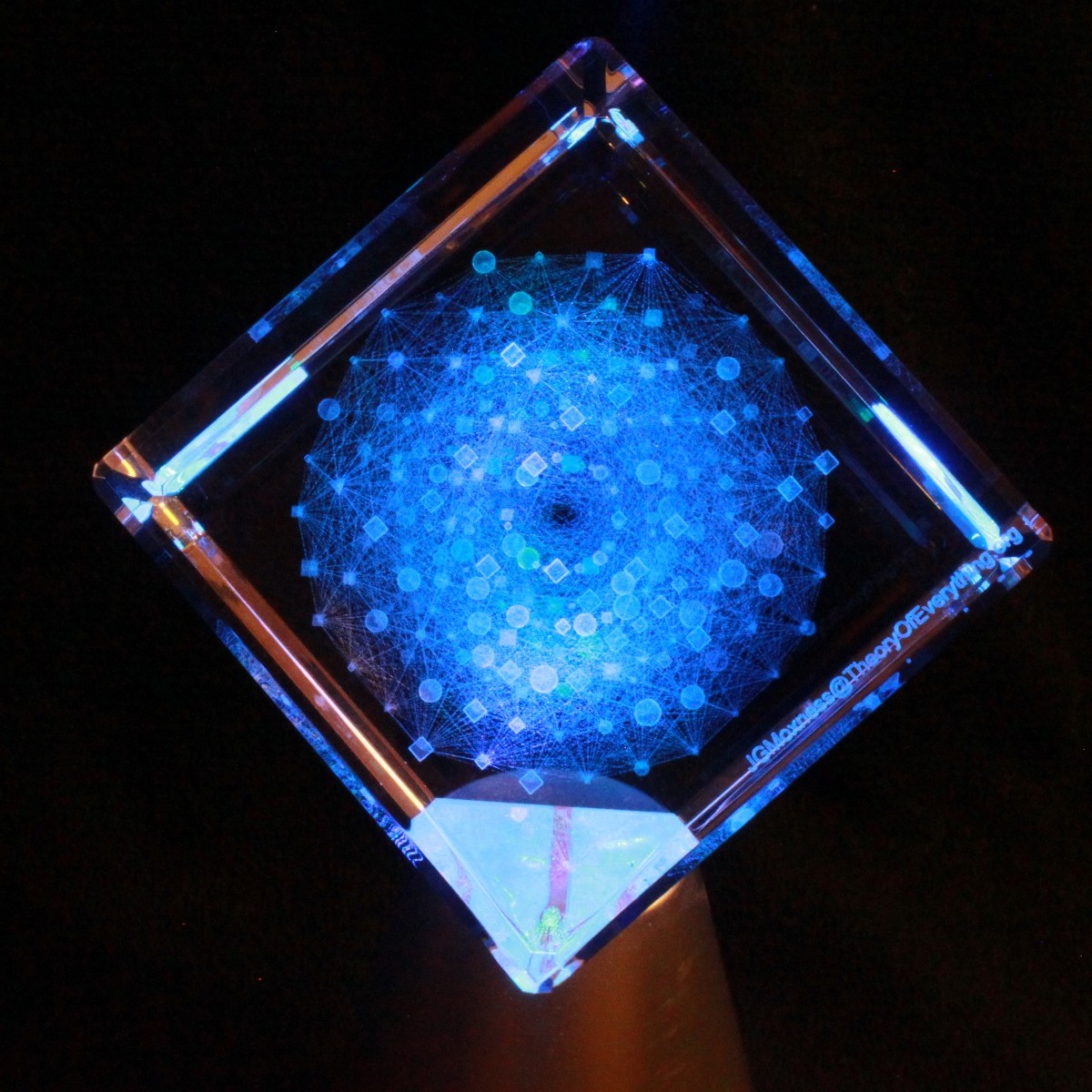
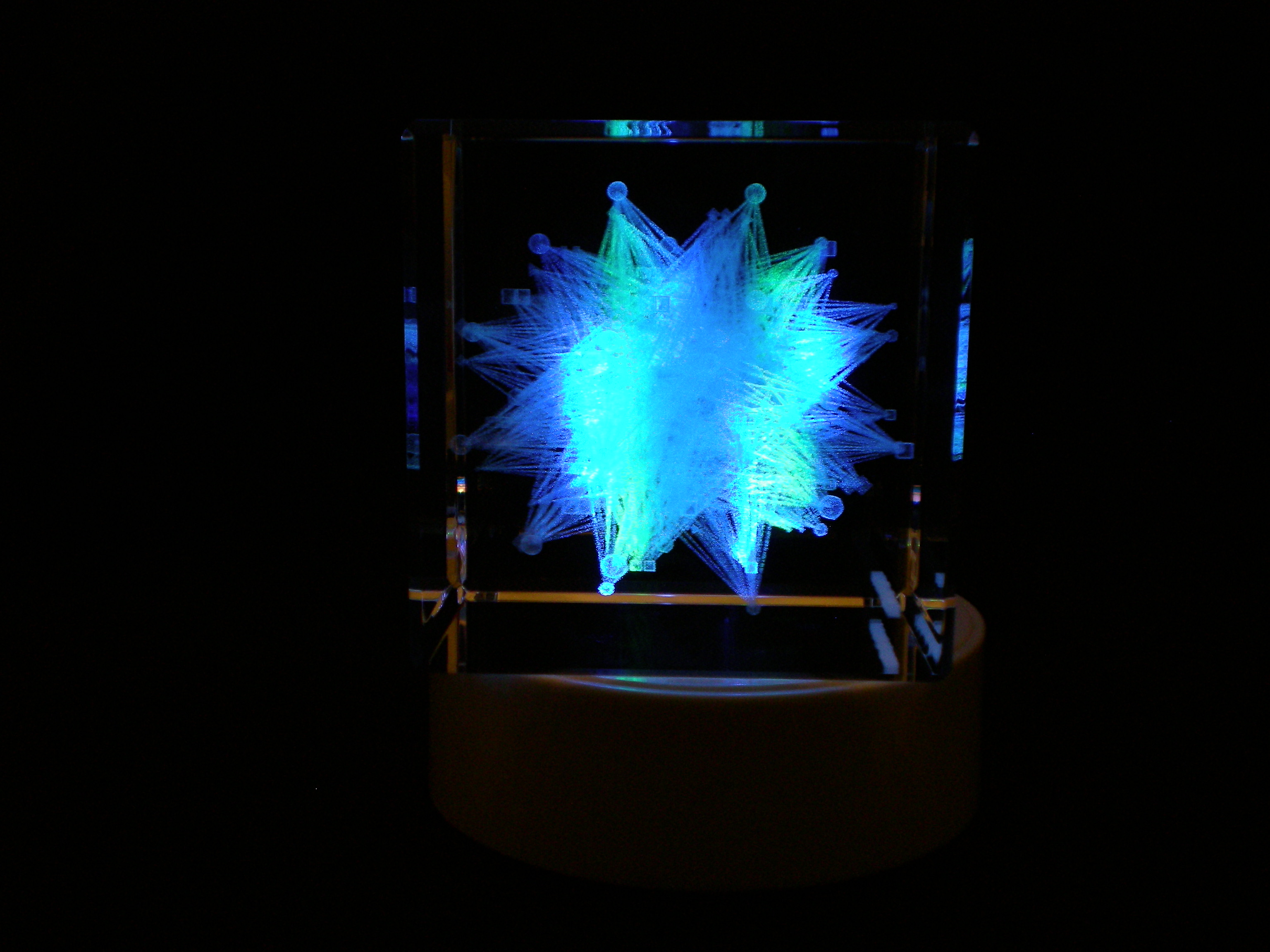
I finally got around to watching the Avengers movie and noticed that the Tesseract Cosmic Cube looked much like the hyper-dimensional projections that I make with laser etched optical crystal.

The blue light is projected from a multi-colored LED base.

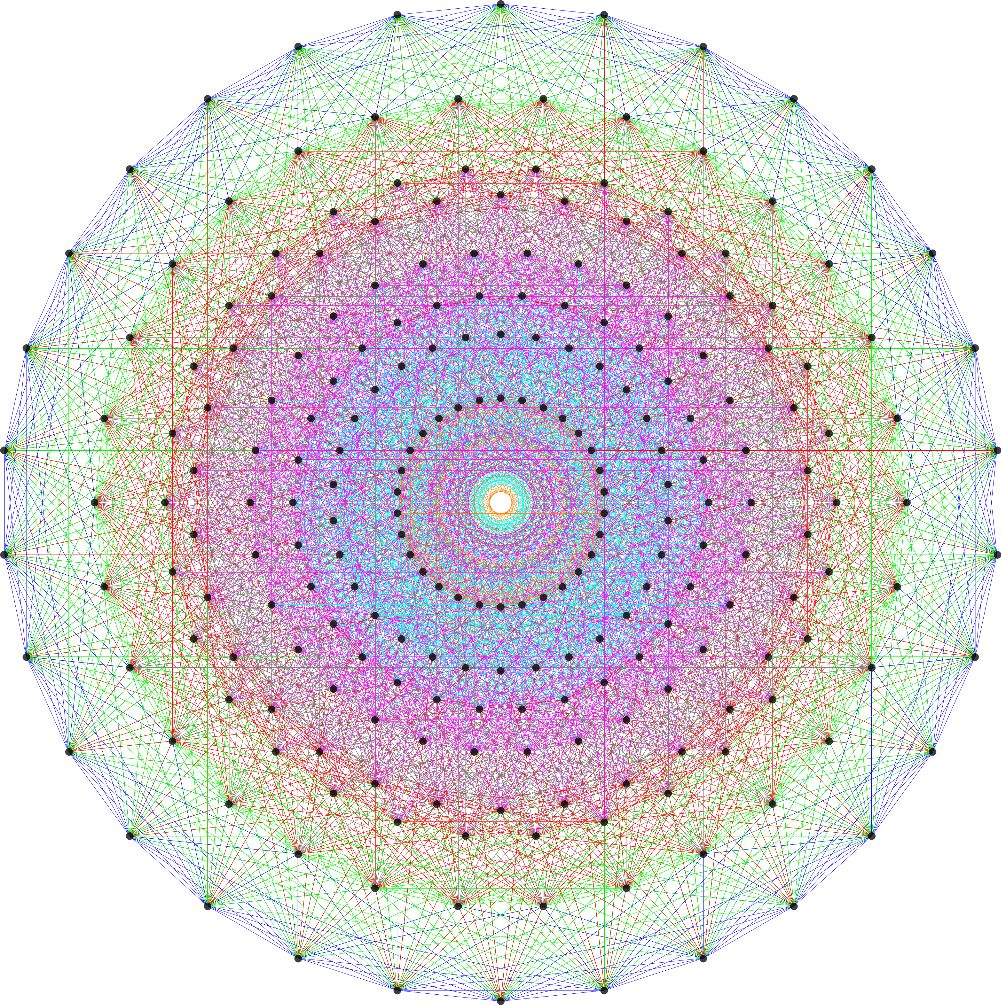
While I do have tesseract projections, the E8 projection on my home page seems most similar. Here are a few blue crystal photos I’ve taken that are also similar.

DSCN0934

IMG_2011_05_13_1042a

IMG_2011_05_13_1054a

IMG_2011_05_13_1029a

IMG_2011_05_13_1025a

DSCN0994

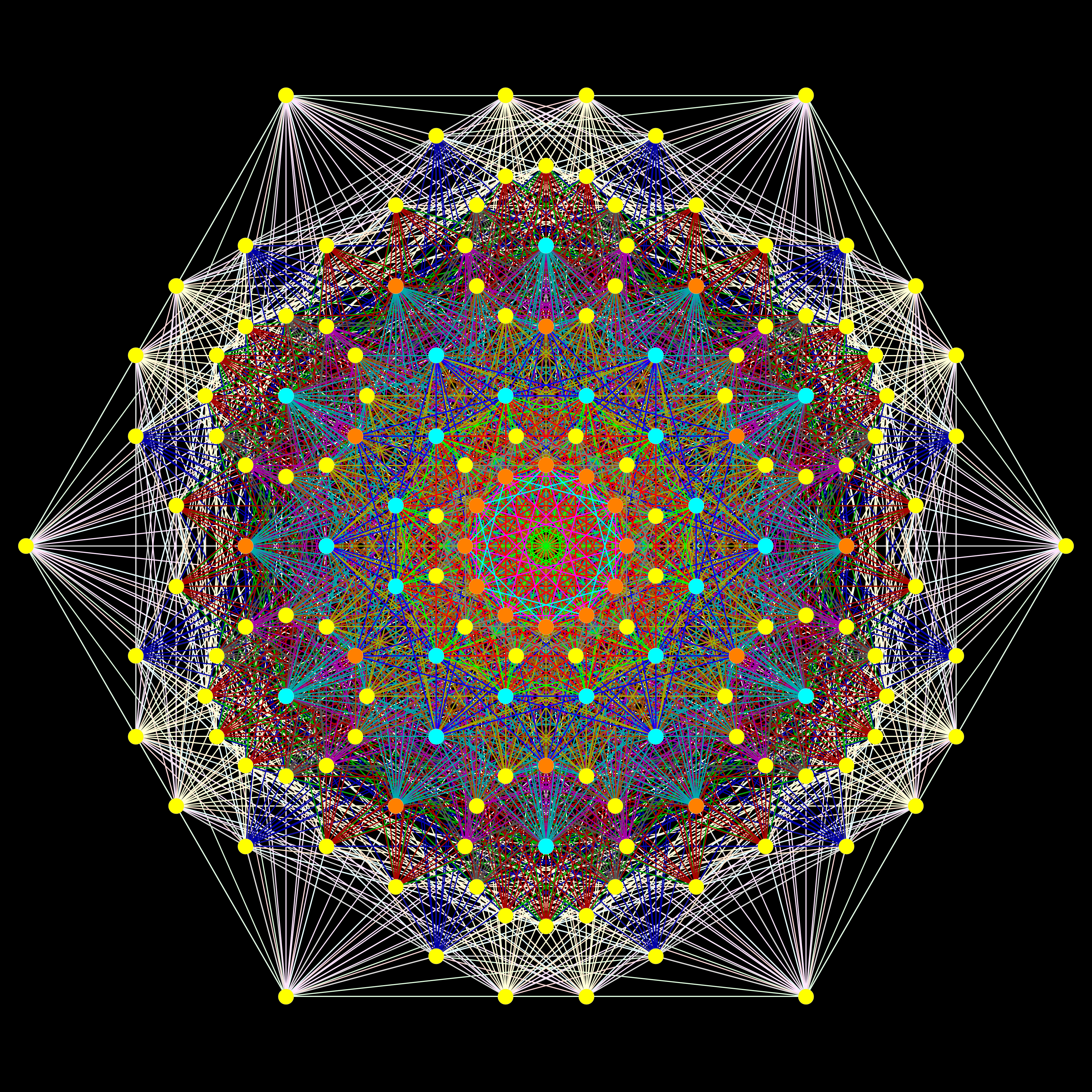
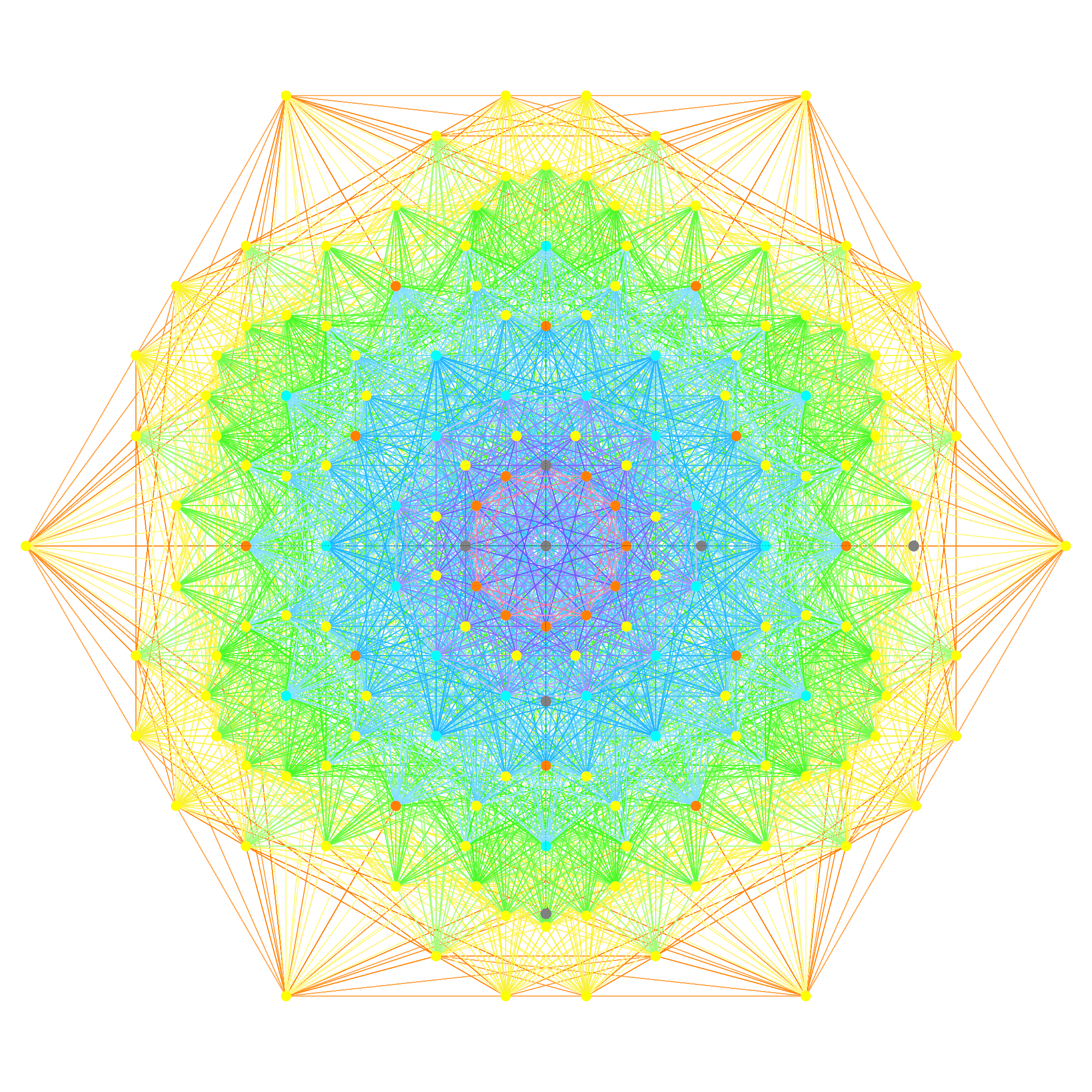
E8 folding to H4+H4/φ

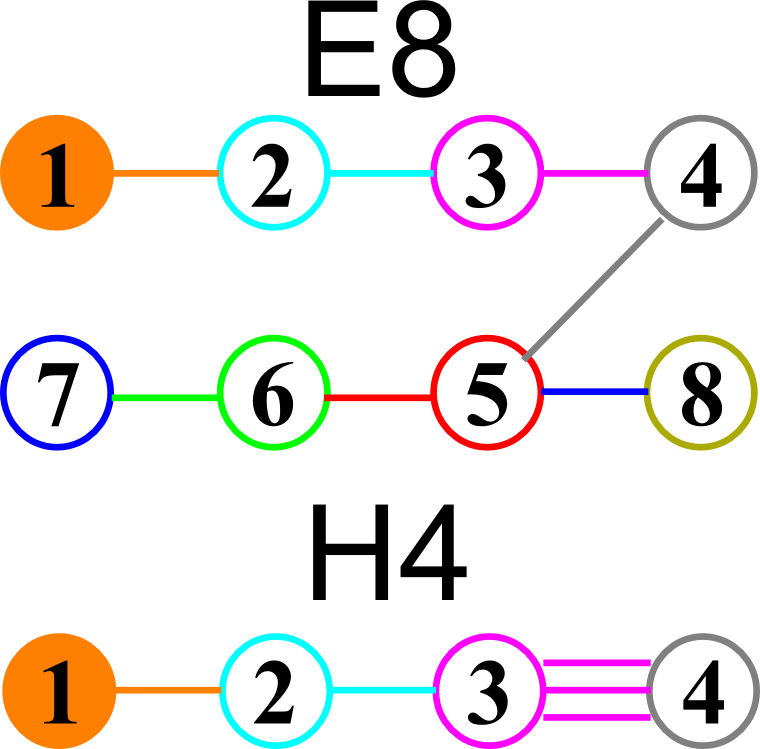
I found the rotation matrix that shows the E8 Dynkin diagram can indeed be folded to H4+H4/φ.

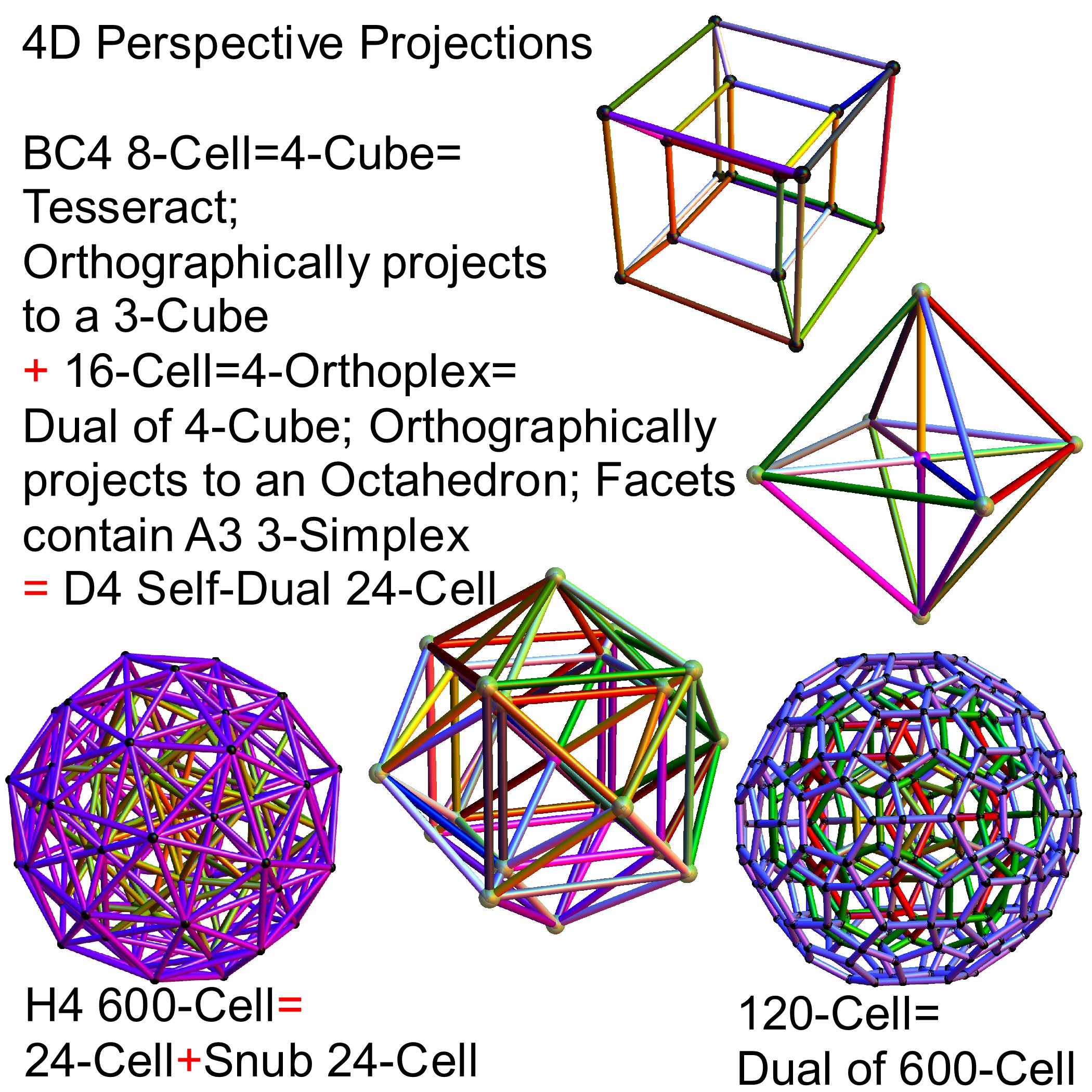
The H4 and its 120 vertices make up the 4D 600 Cell. It is made up of 96 vertices of the Snub 24-Cell and the 24 vertices of the 24-Cell=[16 vertex Tesseract=8-Cell and the 8 vertices of the 4-Orthoplex=16-Cell]).

It can be generated from the 240 split real even E8 vertices using a 4×8 rotation matrix:
x = (1, φ, 0, -1, φ, 0, 0, 0)
y = (φ, 0, 1, φ, 0, -1, 0, 0)
z = (0, 1, φ, 0, -1, φ, 0, 0)
w = (0, 0, 0, 0, 0, 0, φ^2, 1/φ)

where φ=Golden Ratio=(1+Sqrt(5))/2

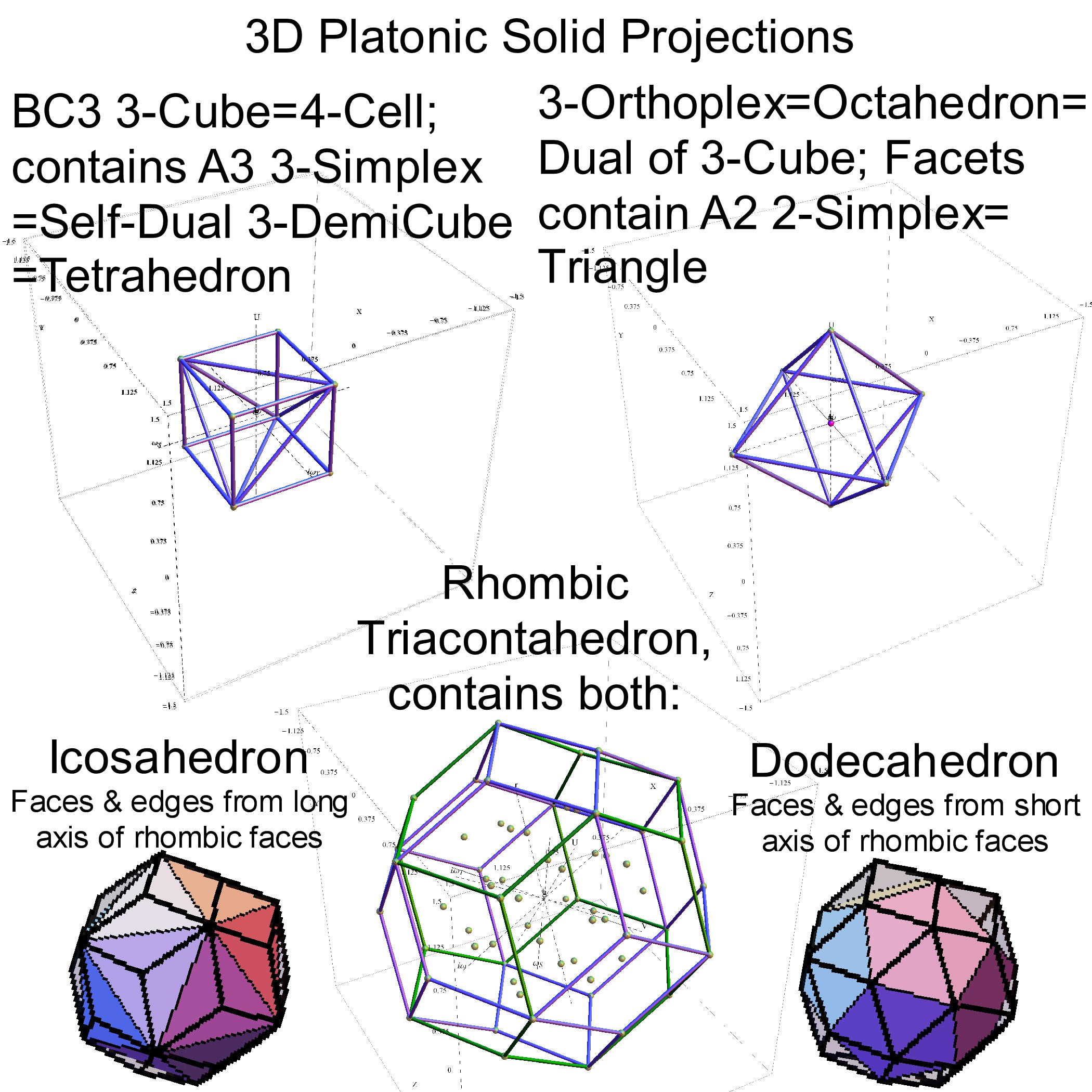
It is also interesting to note that the x, y, and z vectors project to a hull of the 3D Rhombic Triacontrahedron from the 6D 6 cube Hexaract (which then generates the hull of the Dodecahedron and Icosahedron Platonic solids).

Here’s a look at the Dynkin Diagram folding of E8 to H4+H4/φ:
E8-H4-Fold

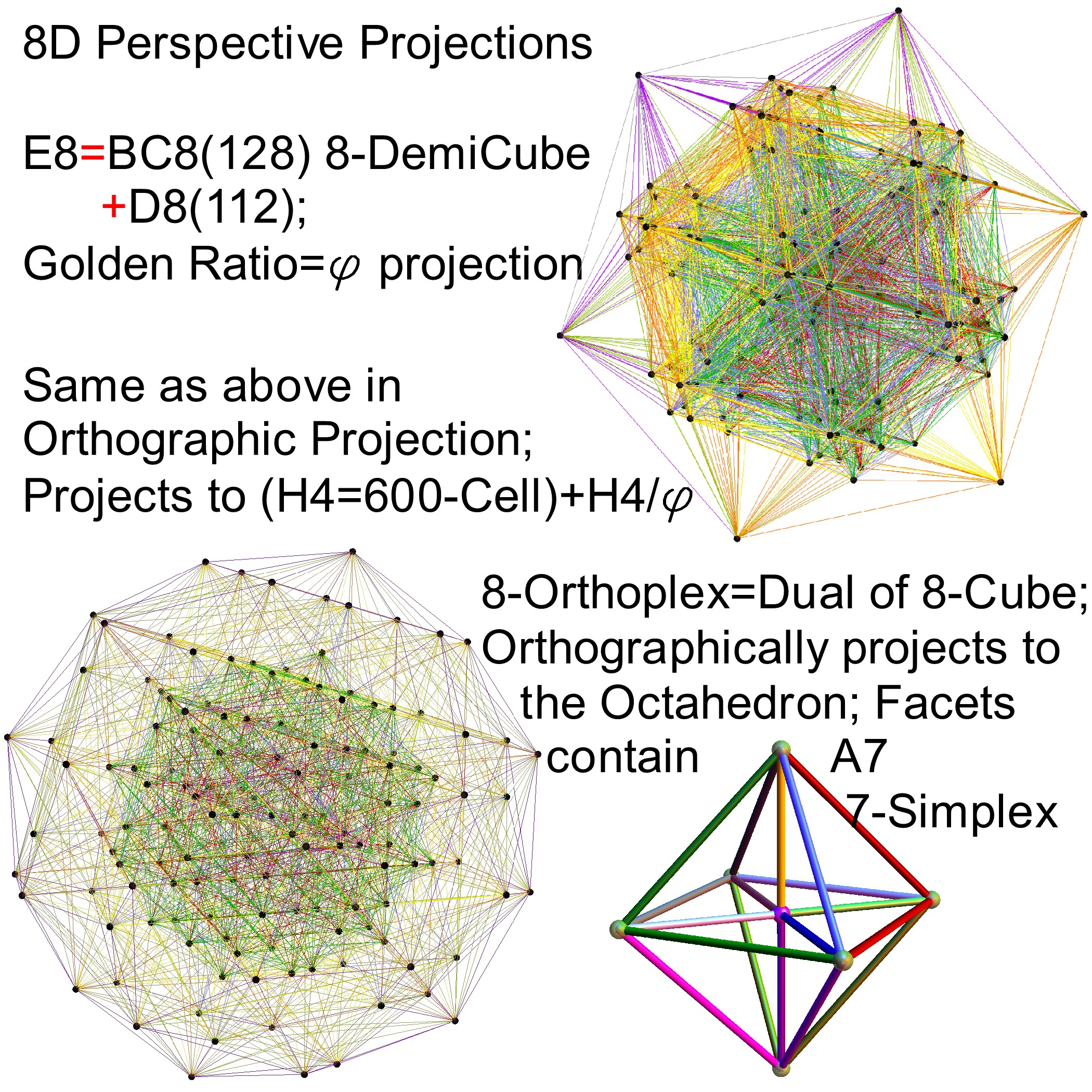
I find in folding from 8D to 4D, that the 6720 edge counts split into two sets of 3360 from E8’s 6720 length Sqrt(2), but the combined edges and vertices recreate the E8 petrie diagram perfectly.

Some visualizations of this in 8D:
E8-8D-Polytopes-2

to 4D:
E8-4D-Polychora-2

and also showing the Rhombic Triacontrahedron folding from 6D:
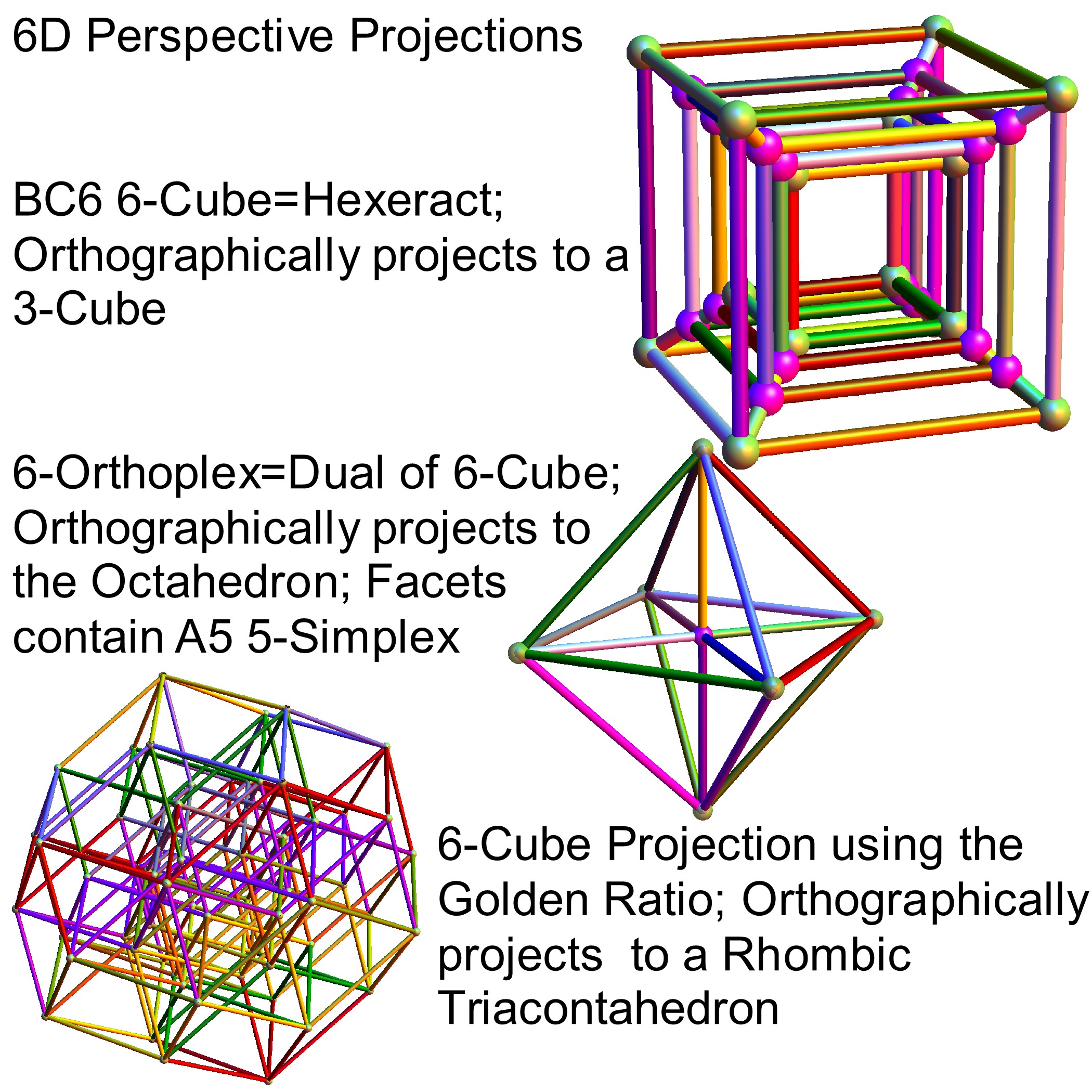
E8-6D-StarPolytopes-2

to 3D:
E8-3D-Platonic-2

Another look at integrating the Pascal Triangle to Clifford Algebra, E8 Lie Algebra/Groups, Octonions and Particle Physics Standard Model

Pascal-g

Modified Lisi split real even E8 particle assignment quantum bit patterns:

Lisi_Particle_Assignments

Assigning a specific mass, length, time, and charge metrics based on new dimensional relationships and the Planck constant (which defines Higgs mass).

ToEsummary

The split real even E8 group used has been determined from this simple root matrix (which gives the Cartan matrix upon dot product with a transpose of itself):

DynkinE8Full.svg

This Dynkin diagram builds the Cartan matrix and determines the root/weight/height with corresponding Hasse diagrams.

E8Hasse

E8HassePoset.svg

More amplituhedron capability (projected hull surface area and volume)

Getting more capability built into ToE_Demonstration.nb where it can now calculate the scattering amplitude by calculating the volume of the projected hull of selected edges in the n-Simplex Amplituhedron (based on a theory by Nima Arkani-Hamed, with some Mathematica code from J. Bourjaily for the positroid diagram). Of course, there is still much work to get this wrapped up…

A few more pics of Positive Grassmannian Amplituhedrons…
amplituhedron-0b

amplituhedron-0c
This last diagram is obtained using the following amplituhedron0.m as input to the ToE_Demonstration.nb (when using fully licensed Mathematica) as shown below:
* This is an auto generated list from ToE_Demonstration.nb *)
new := {
artPrint=True;
scale=0.1;
cylR=0.018;
range=2.;
pt={-0.3, 0.0, 0.6};
favorite=1;
showAxes=False;
showEdges=True;
showPolySurfaces=True;
eColorPos=False;
dimTrim=5;
ds=6;
pListName=”First8″;
dsName=”nSimplex”;
p3D=” 3D”;
edgeVals={{Sqrt[11/2], 8}, {Sqrt[9/2 – Sqrt[2]], 4}, {Sqrt[9/2 + Sqrt[2]], 4}};
};new;

Positroid Diagrams:
amplituhedron-0a

Amplituhedron Visualizations!

Playing around trying to visualize the latest in the theoretical high energy particle physics (HEP/TH) determining how particle masses might be predicted from geometric principles (based on a theory by Nima Arkani-Hamed, with some Mathematica code from J. Bourjaily for the positroid diagram).

Positive Grassmannian Amplituhedrons
amplituhedron-1a

Compare this Mathematica(l) basis to the artistic representation by Andy Gilmore amplituhedron-1a

Positroid Diagrams:
amplituhedron-0a

Announcing the AI party!

I am officially announcing a new political party for America! It is the AI party. No, this is not about Artificial Intelligence, but that would be a really cool idea.

This is the Anti-Incumbency party. I am really tired of the crap that the public puts up with due to the legacy of corruption and collusion in the name of consensus building.

Yes, the Tea-Party intended to address this with a different point-of-view (POV), but this splits the conservative base and leaves the liberals cold. Yet, Obama alienates the liberals with a schizophrenic agenda that doesn’t even hold true to his original campaign of hope and change.

So this new party will steadfastly vote against ANY incumbent for 6 years. This will flush the system of all the corrupt bureaucrats (and a few good ones). The good ones are collateral damage in a war against a system of government that has become too accustomed to professional politics.

It is time for all of them to go. Yes, some power is lost- but so is the corruption and inept consensus building with pork and back scratching.

Please join me in the AI party. Vote for ANY party except the incumbent. The AI party.

Hyperbolic Dynkin Diagrams

I am pleased to announce the availability of the comprehensive set of 238 Hyperbolic Dynkin diagrams ranks 3 to 10. These are enumerated here. They are constructed interactively using the mouse GUI (or manually through keyboard entry of the node / line tables) from this Mathematica notebook or free CDF player demonstration document or interactive CDF player web page.

All of these demonstrations have now been updated to include the new options on Dynkin diagram creation, including left (vs. right) affine topology recognition, black&white vs. color nodes and edges, and for those with full Mathematica licenses the notebook allows for added Dynkin line types.

The Lie group names are calculated based on the Dynkin topology. The geometric permutation names are calculated (to rank 8) based on the binary pattern of empty and filled nodes. The node and line colors can be used as indicators in Coxeter projections and/or Hasse diagrams.

Rank3CompactHyperbolicDynkins1-31bw.svg

Rank3NonCompactHyperbolicDynkins32-75bw.svg

Rank3NonCompactHyperbolicDynkins76-123bw.svg

Rank4HyperbolicDynkins124-176bw.svg

Rank5HyperbolicDynkins177-198bw.svg

Rank6HyperbolicDynkins199-205bw.svg

Rank6HyperbolicDynkins206-212bw.svg

Rank6HyperbolicDynkins213-220bw.svg

Rank7HyperbolicDynkins221-224bw.svg

Rank8HyperbolicDynkins225-229bw_svg

Rank9HyperbolicDynkins230-234bw_svg

Rank10HyperbolicDynkins235-238bw.svg