Tag Archives: Physics

A Visual Overview of how the H4 600-cell(s) embed into E8

Please see this Powerpoint for an interactive presentation (160 Mb).

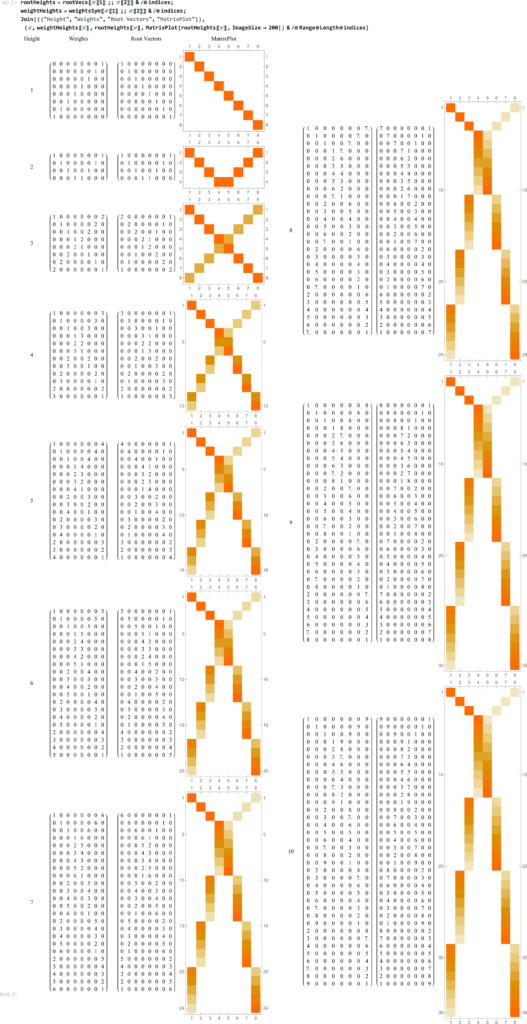
2D projection of 8,16,24, snub-24 and 600 cells as part of E8 vertex Petrie projection

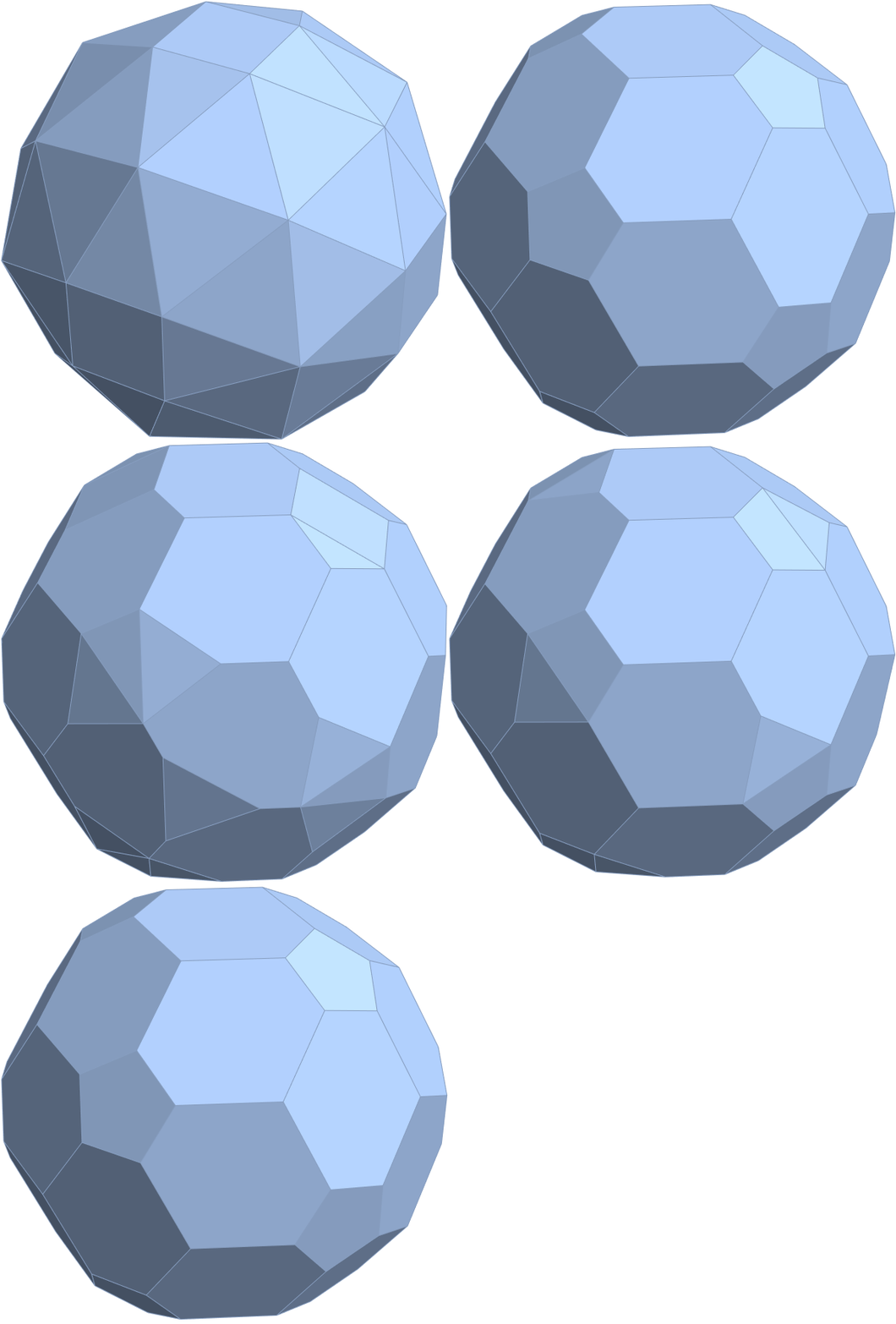
Below (and here and here in PDF and Mathematica Notebook form or here on the Cloud) are the I & I’ 600-cells based on quaternion construction from the T & T’ 24-cells. These are also documented in Coxeter’s book “Regular Polytopes” as {3,3,5} vertex first & cell first “sections” in Table V (respectively) vs. the projections shown here with one of the four dimensions projected to 0 such that the hulls are palindromic pairs of sections (e.g. for 9 sections, section 1-4 pairs with 9-6 in vertex counts equal to hull vertex counts 1-4 and the center section 5 = hull 5).

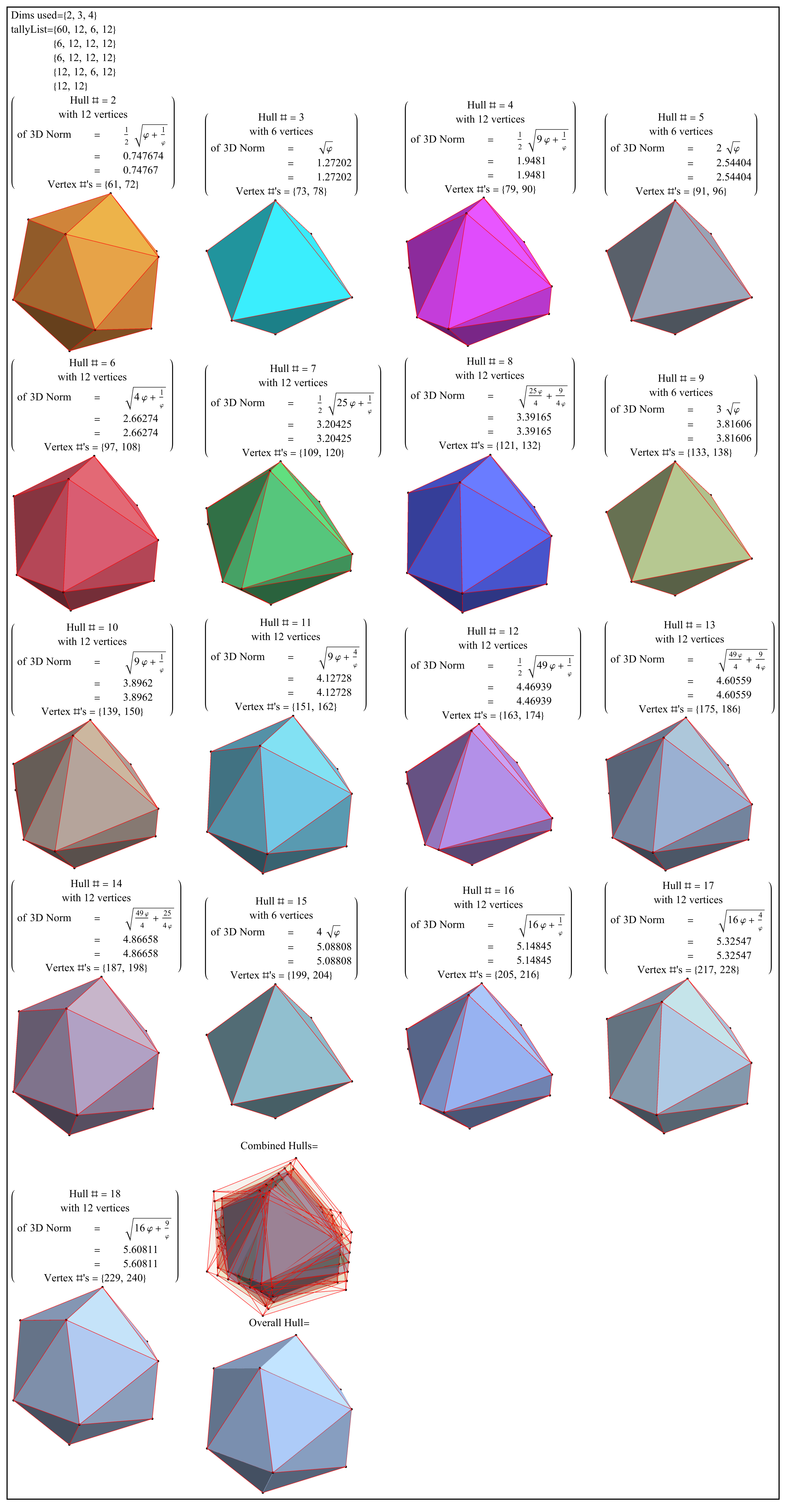
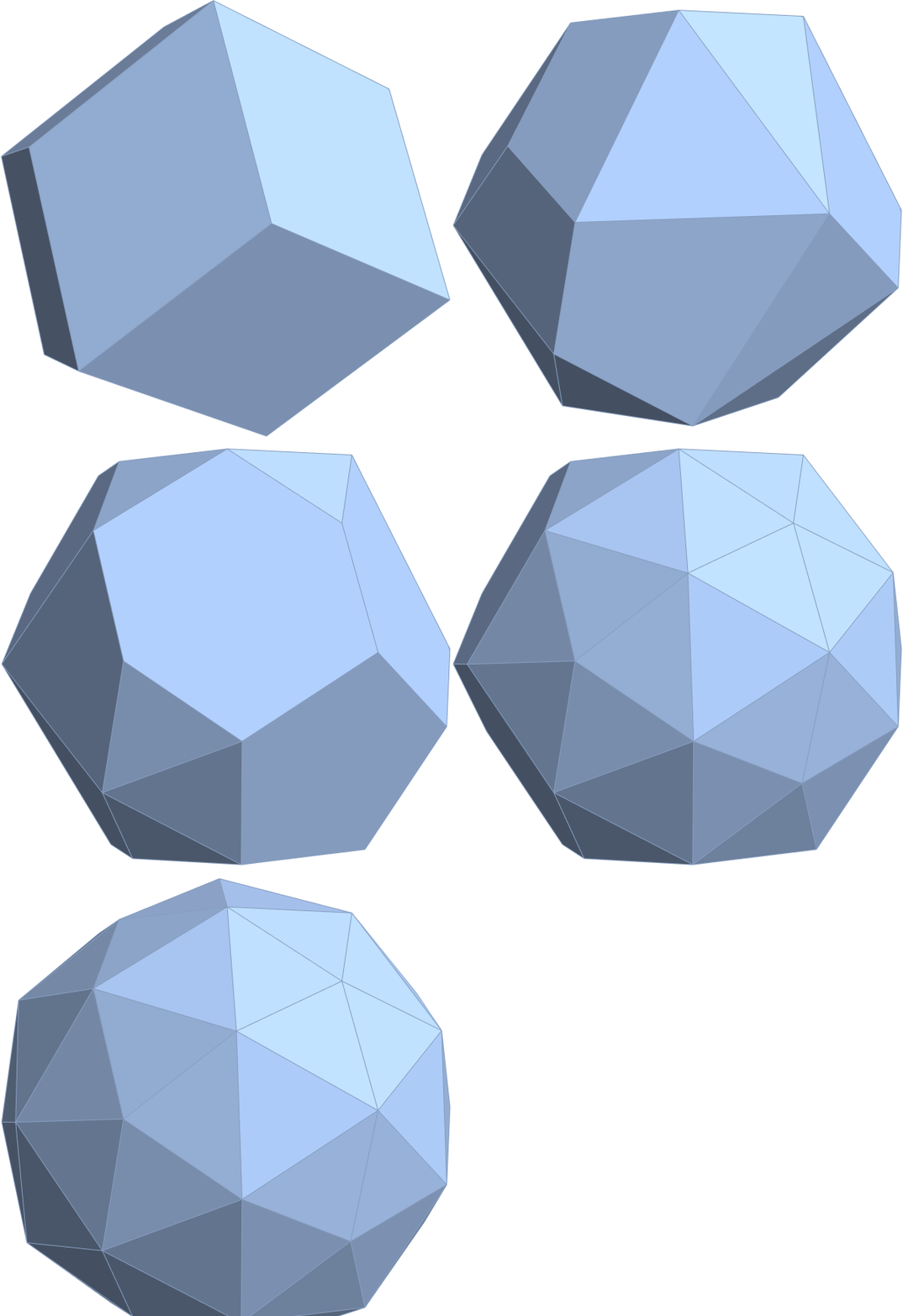
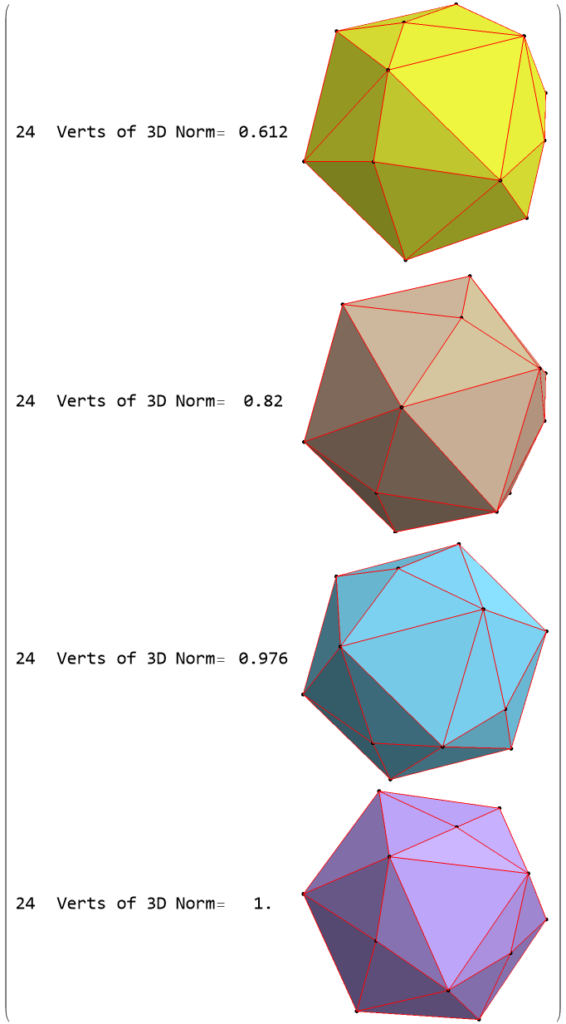
The 600-cell is projected to 3D using an orthonormal basis. The vertices are sorted and tallied by their 3D norm. Generating the increasingly transparent hull of each set of tallied norms shows pairs of:

1) points at the origin

2) icosahedrons

3) dodecahedrons

4) icosahedrons

5) and a single icosadodecahedron

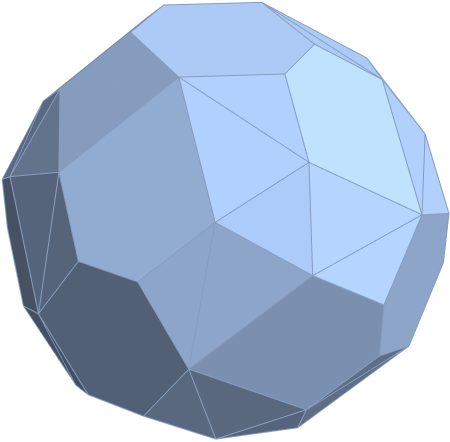
for a total of 120 vertices and an overall outer 3D hull of the Pentakis Icosidodecahedron.
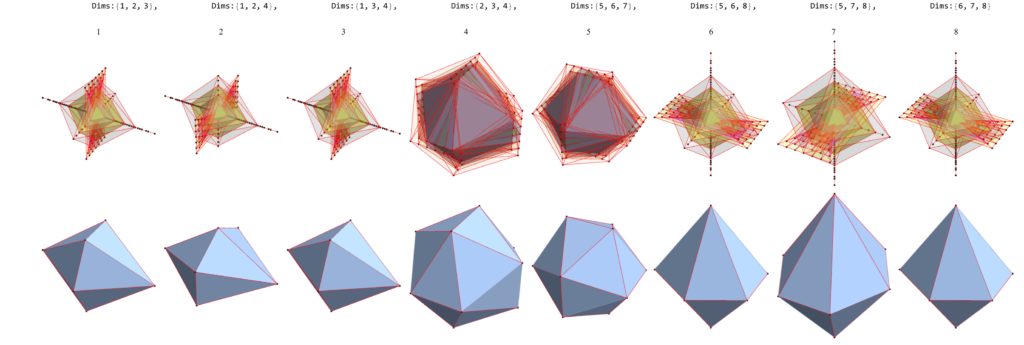
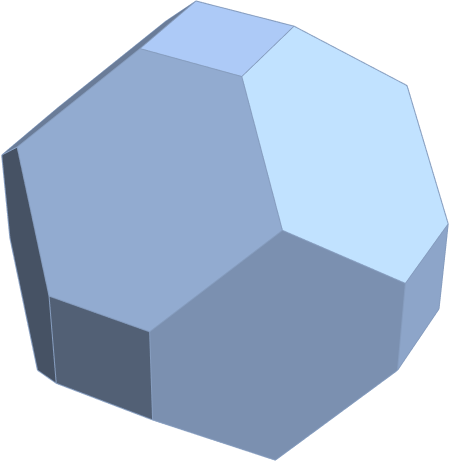
Alternate 600-Cell Convex Hulls. The 600-cell is projected to 3D using an orthonormal basis. The vertices are sorted and tallied by their 3D norm. Generating the increasingly transparent hull of each set of tallied norms shows:

1) a pair of tetrahedrons (or single cube)

2) a pair of tetrahedrons (or single cube)

3) a pair of icosahedrons

4) truncated cube

5) rhombicuboctahedron

6) rhombicuboctahedron

7) a pair of tetrahedrons (or single cube)

8) cuboctahedron

for a total of 120 vertices and an overall outer 3D hull of a near-miss of the Pentakis Icosidodecahedron.

For completeness, here are the J’ (alternate) & J form of the 120-cells based on quaternion construction from the T & T’ 24-cells. These are also documented in Coxeter’s book “Regular Polytopes” as {5,3,3} vertex first & cell first “sections” in Table V (respectively) vs. the projections shown here with one of the four dimensions projected to 0 such that the hulls are palindromic pairs of sections (e.g. for 31 sections, section 0-14 pairs with 30-16 in vertex counts equal to hull vertex counts 1-15 and the center section 15 = hull 16).

Hull 1 has 2 points at the origin.
Hulls 2 & 6 are cubes.
Hulls 3 & 5 are rhombicuboctahedrons.
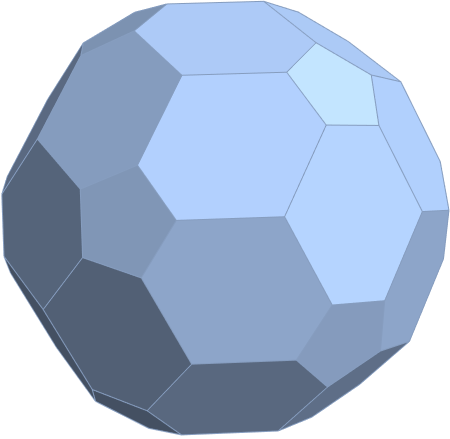
Hulls 4 & 12 are each pairs of truncated octahedrons.
Hulls 7 & 15 are truncated cuboctahedrons.
Hull 11 is a truncated cube.
Hulls 8, 9, 10, 13, 14, and 16 are unnamed solids.
Hulls 1, 2, & 7 are each overlapping pairs of dodecahedrons.
Hull 3 is a pair of icosidodecahedrons.
Hulls 4 & 5 are each pairs of truncated icosahedrons.
Hulls 6 & 8 are each rhombicosidodecahedrons.

Below is an interactive Mathematica 4D visualization of the 8,16, 24, 120, and 600 cells (including alternate forms 24p, 120p, 600p). Click here or on the image below to open in a new tab.

Group Theory in a Nutshell: Taming the Monster

For a paper with much of the content below, please see: theoryofeverything.org/TOE/JGM/E8_and_H4_in_QM_and_QC.pdf, and associated Mathematica notebook here.
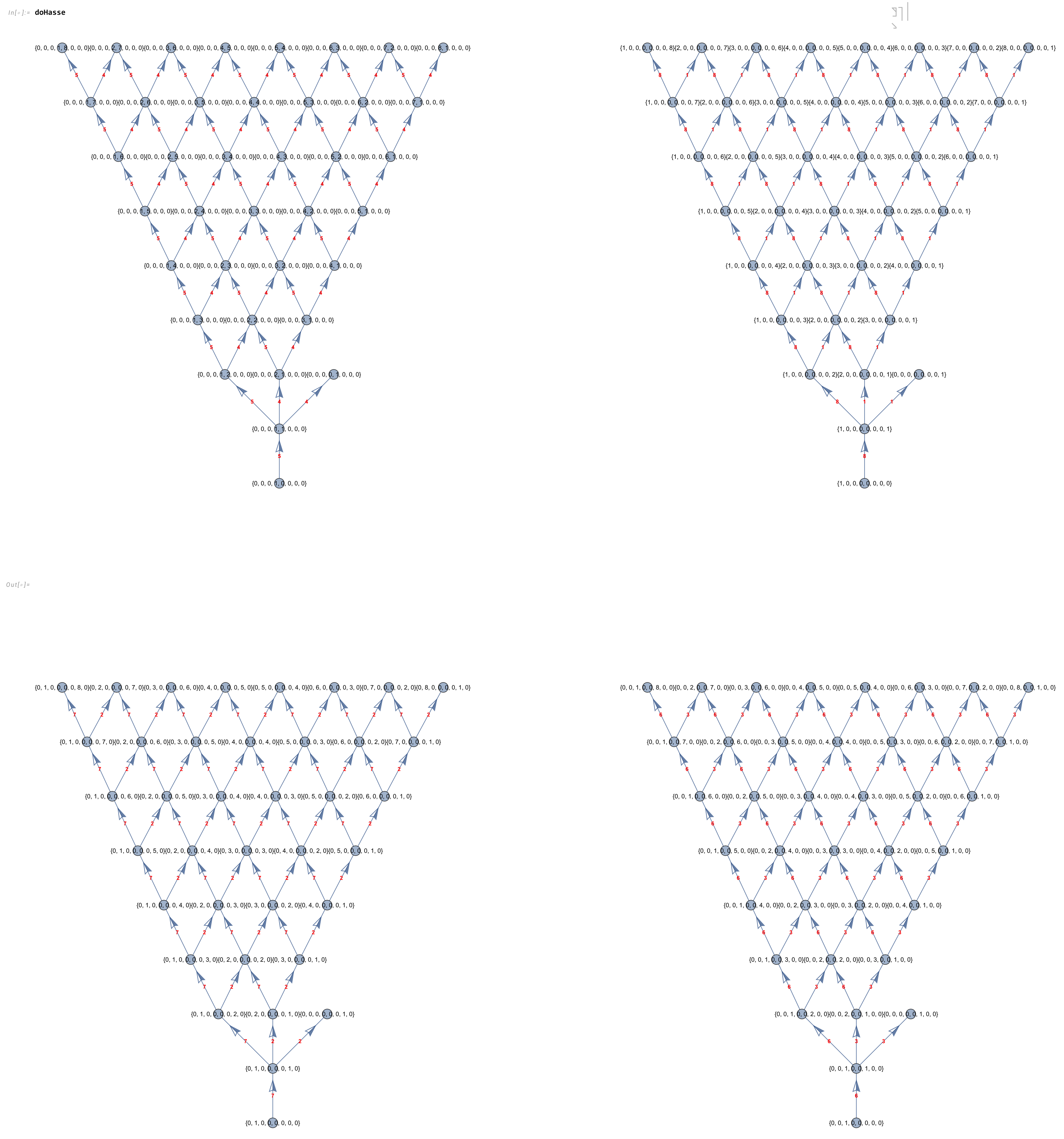
Y555 Hasse diagram

The wreath product of the Monster group with Z2 (M ≀ Z2) is the BiMonster, a quotient of the Y555 Dynkin diagram which contains six E8(Y124) Dynkin diagrams and the 23rd Niemeier lattice E83 root system. This can be reduced to Y444 by applying the spider relation to E83 .

Hasse diagram of sporadic groups in their Monster group subquotient relationships.

Happy Family generations:
Red=Mathieu groups (1st)
Green=Leech lattice groups (2nd)
Blue=other Monster subquotients (3rd)
Black=Pariahs

Table of sporadic group orders (with Tits group).
Niemeier lattices with group structure, Dynkin diagram, Coxeter number, and group orders.
Kneser neighborhood graph of Niemeier lattices with associated Mathematica Notebook here.

Each color coded node represents one of the 24 Niemeier lattices, and the lines joining them represent the 24-dimensional odd unimodular lattices with no norm 1 vectors. The Coxeter number of the Niemeier lattice is to the left. The red node index number indicates the row in the table above.

Table of sublattices of Conway groups (Green nodes in the Monster Group sub-quotients graph at the top of the page)
The Freudenthal magic square

”The Freudenthal magic square includes all of the exceptional Lie groups apart from G2, and it provides one possible approach to justify the assertion that ”the exceptional Lie groups all exist because of the octonions: G2 itself is the automorphism group of the octonions (also, it is in many ways like a classical Lie group because it is the stabilizer of a generic 3-form on a 7-dimensional vector space, see prehomogeneous vector space.”

E8 Subgroup Tree with associated Mathematica Notebook here.

This E8SubgroupTree.nb Mathematica Notebook (140Mb), viewable using the free viewable Player, which has interactive Tooltips on group nodes (with group data and Hasse diagram) and Tooltips on the subgroup edges (with its individual maximal embedding chart). Also in the notebook is one cell with a table of all of the above data plus the Dynkin diagram based maximal embedding charts and an example 2D or 3D polytope projection.

The H4 600-Cell in all its beauty

These models use a tetrahedral mesh generator package << TetGenLink` to analyze the cells created by the edges selected.

Note: The Mathematica auto-generated geometry statistics of 120 vertices, 720 golden-ratio length edges, 1200 faces, and 600 color-coded cells, with a surface area of 11.4 volume of 127.

The transparent shaded blue is the outer hull that forms the Pentakis Icosidodecahedron with a vertex hull having 30 vertices of Norm=1 from the center. All 120 vertices form concentric hulls in groups:

1) two points at the origin
2) two icosahedra (24)
3) two dodecahedra (40)
4) two larger icosahedra (24)
5) one icosidodecahedron (30)

H4 600-Cell with 3D vertex shapes representing Standard Model physics particle assignments and color-coded cells

H4 600-Cell with 1200 unit length edges, 2400 faces and 600-cells. 3D vertex shapes representing Standard Model physics particle assignments and color-coded cells are also shown

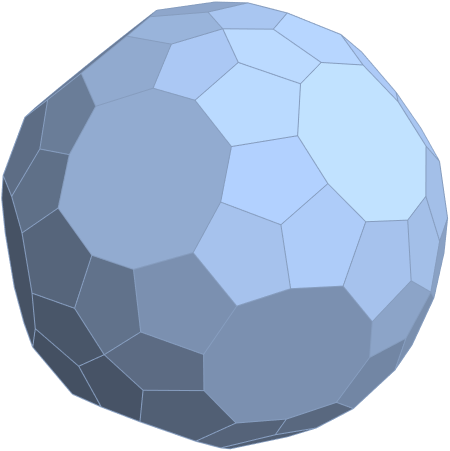
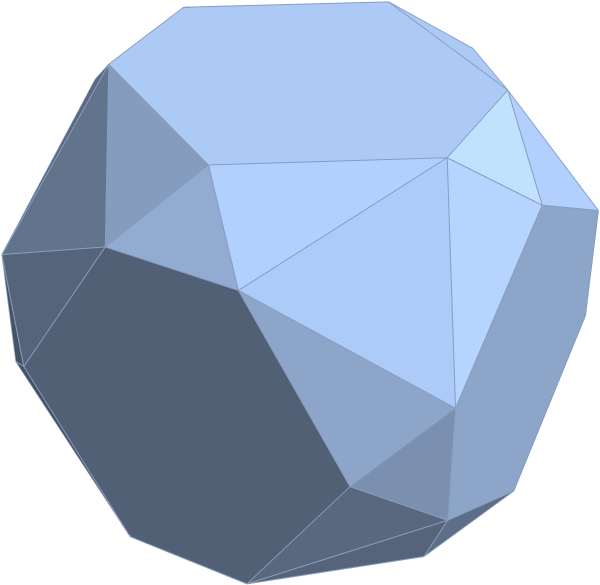
The H4 120-cell (J), dual of the 600-cell, showing the hull of the chamfered dodecahedron. It is also called a truncated rhombic triacontahedron, constructed as a truncation of the rhombic triacontahedron. It can more accurately be called an order-5 truncated rhombic triacontahedron because only the order-5 vertices are truncated. It is shown with physics particle assignments.

Same as above with interior color-coded cells displayed

3D Visualization of the outer hull of the Dual 120-Cell (600) J’ generated using T

The Dual H4 120-cell (J’) shown above (and more below).

An animated alternate form 120-cell (J’), which seems to be a new (near-miss Johnson solid?) constructed using D4′ (or T’) vs. D4 (T) above.

The H4 dual 120-cell (J’) build of outer edges and color-coded cells

The H4 dual 120-cell (J’) build of outer edges with physics particle assignments

There is yet another construction of a 120-cell that has the same outer hull as the 600-Cell (above), yet with the 600 vertices (5 on each of the 120 vertices of the 600-Cell. The exception to this is a set of 6 square faces.

One of my arXiv papers is featured as a Wolfram Community Editor’s Pick

Please take a look here to view a paper I wrote about in a recent blog post here. The paper registered in arXiv is here and titled: The_Isomorphism_of_H4_and_E8.

As I like to provide more than just type-set text and graphics, I include in the arXiv the Mathematica notebooks with code snippets and actual output w/interactive 3D graphics. This gets attached in the ancillary files and is also linked as “Papers with Code” using my GitHub account here.

That caught the eye of the Wolfram editors who graciously offered to help with this post. My hats off to them. Enjoy the paper, with a follow-on paper: The_Isomorphism_of_3-Qubit_Hadamards_and_E8 here, including the notebook 😉

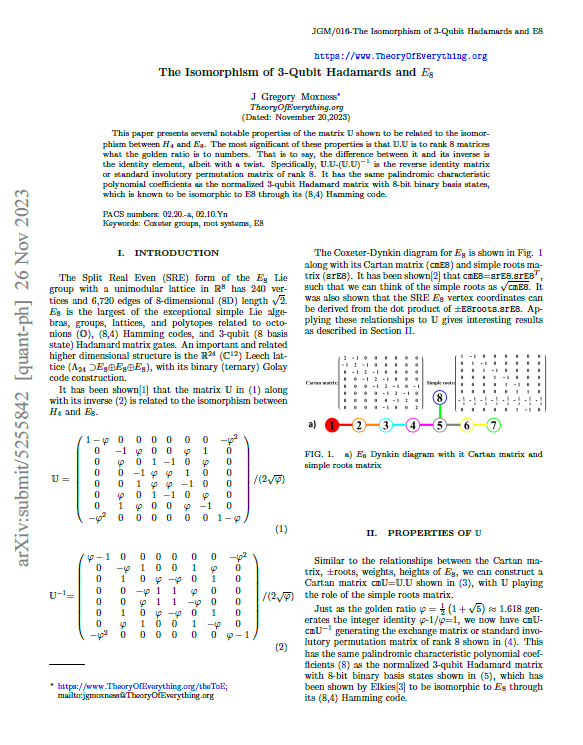
The Isomorphism of 3-Qubit Hadamards and E8

Click here for a PDF of my latest paper. This has been accepted by the arXiv as 2311.11918 (math.GR & hep-th) with an ancillary Mathematica Notebook here. These links have (and will continue to have) minor descriptive improvements/corrections that may not yet be incorporated into arXiv, so the interested reader should check back here for those. The prior related paper on THE ISOMORPHISM OF H4 AND E8 is referenced in the blog post here.

Abstract: This paper presents several notable properties of the matrix U shown to be related to the isomorphism between H4 and E8. The most significant of these properties is that U.U is to rank 8 matrices what the golden ratio is to numbers. That is to say, the difference between it and its inverse is the identity element, albeit with a twist. Specifically, U.U-(U.U)-1 is the reverse identity matrix or standard involutory permutation matrix of rank 8. It has the same palindromic characteristic polynomial coefficients as the normalized 3-qubit Hadamard matrix with 8-bit binary basis states, which is known to be isomorphic to E8 through its (8,4) Hamming code.

Info about my creative work: The Universe, Math, Physics, & Art

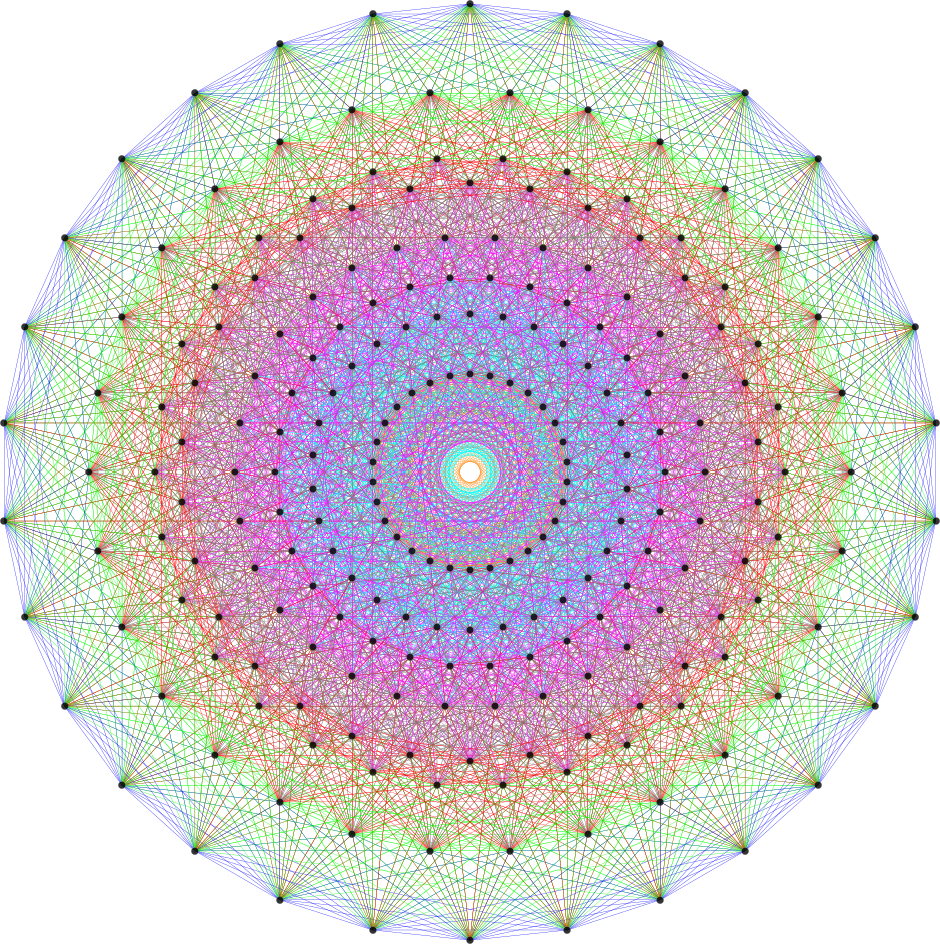
I think the most well-known (2D) image I’ve created so far (above) is found on Wikipedia’s (WP) math/geometry pages. It is what has been called the Public Relations (PR) or publicity photo for E8, which is an 8D (or 248 dimensional as the math guys count it) geometric object. It has been used in books, papers, math/science conference promotional materials, etc. That WP page also has what many used to consider “uninteresting” – my 3D versions of the same object. E8 is used in various theories to understand how the Universe operates way below the atomic level (i.e. the quantum stuff). I think it is responsible for what I call the shape of the Universe. As others have said, “who knew the Universe had a shape?”

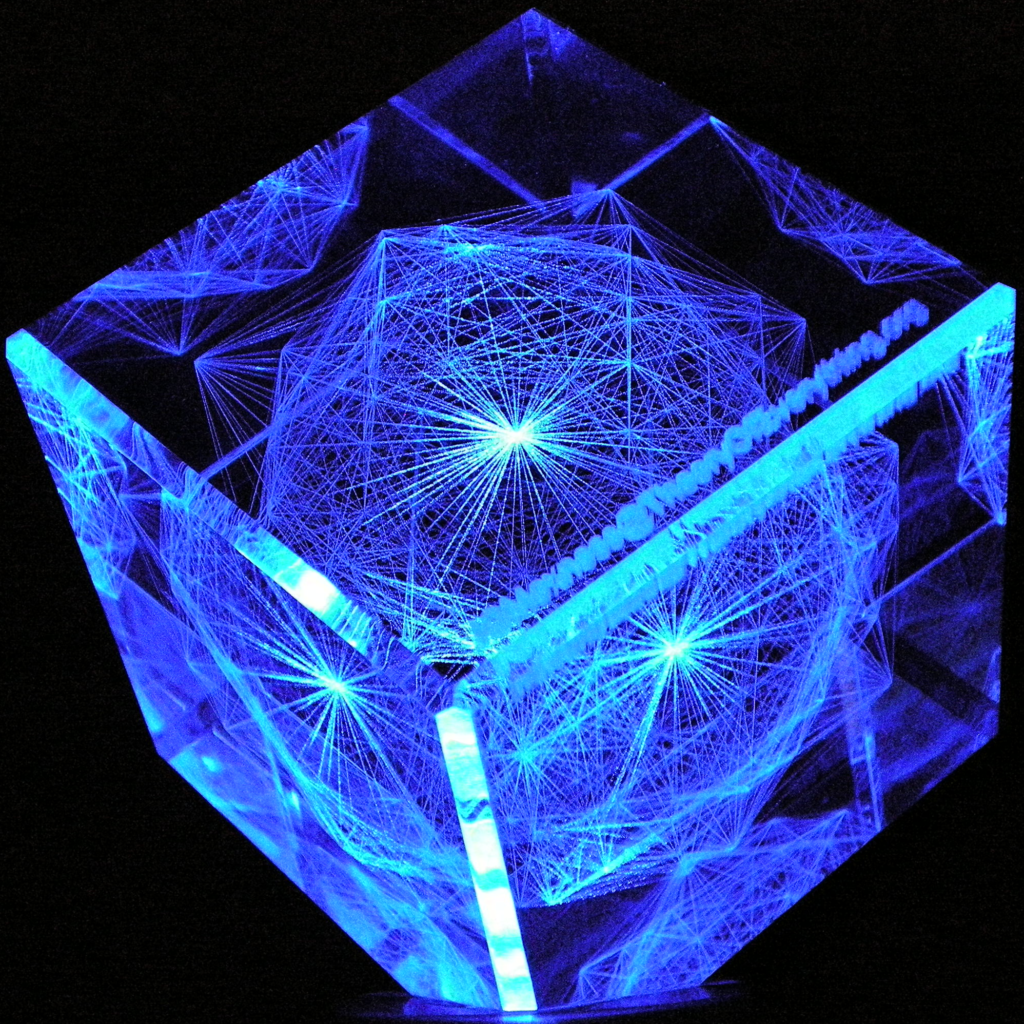
In (very) layman’s terms, that 2D image of E8 looks sort-of-like how the lowly 4D Tesseract cube would look if it grew up into an 8D object, but a bit more interesting. The Tesseract was made (more) popular in the modern Avengers movies. In 2015 before I had ever seen any of those movies, I created a laser etched 3D projection of E8 within a jewel cut optical crystal cube and put a photo of that object lit from below by a blue LED on my website’s main homepage. Someone mentioned the resemblance and I was surprised at the likeness, motivating me to go see the movies.

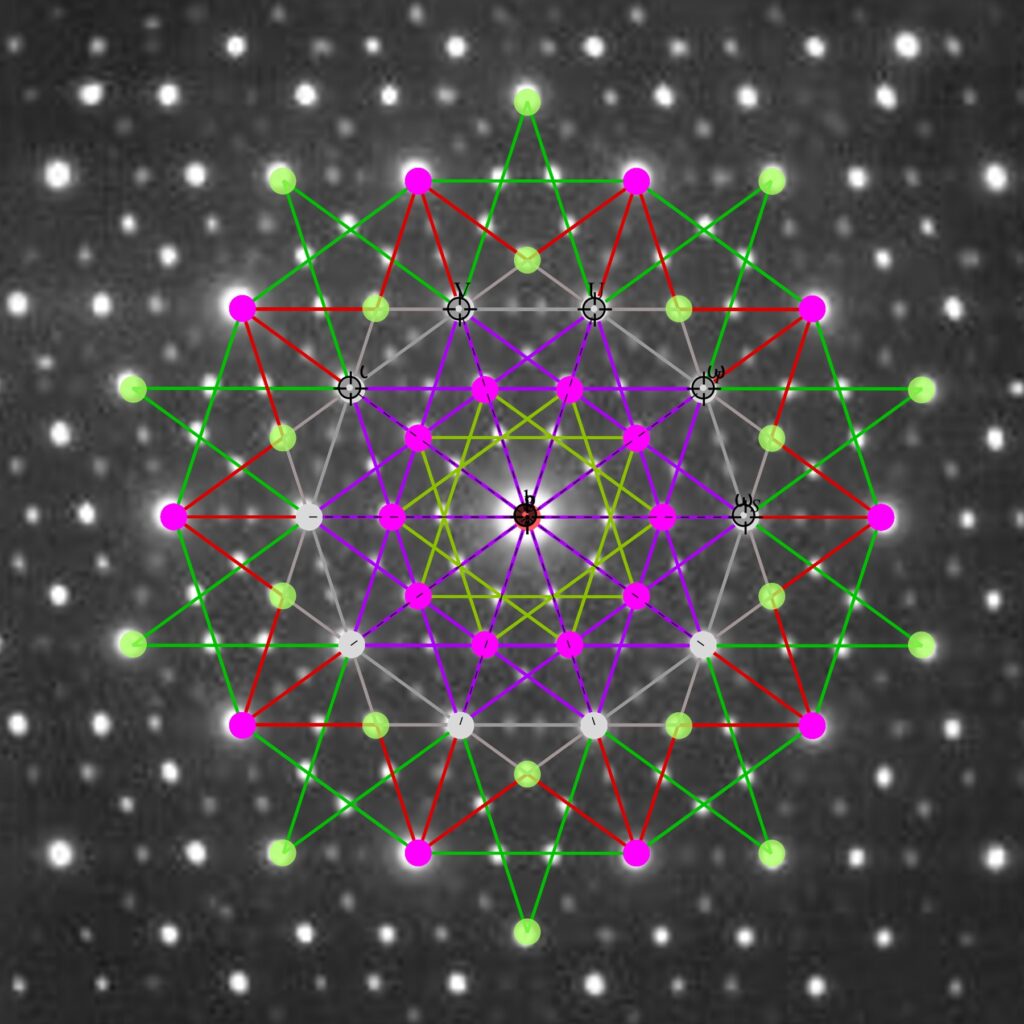
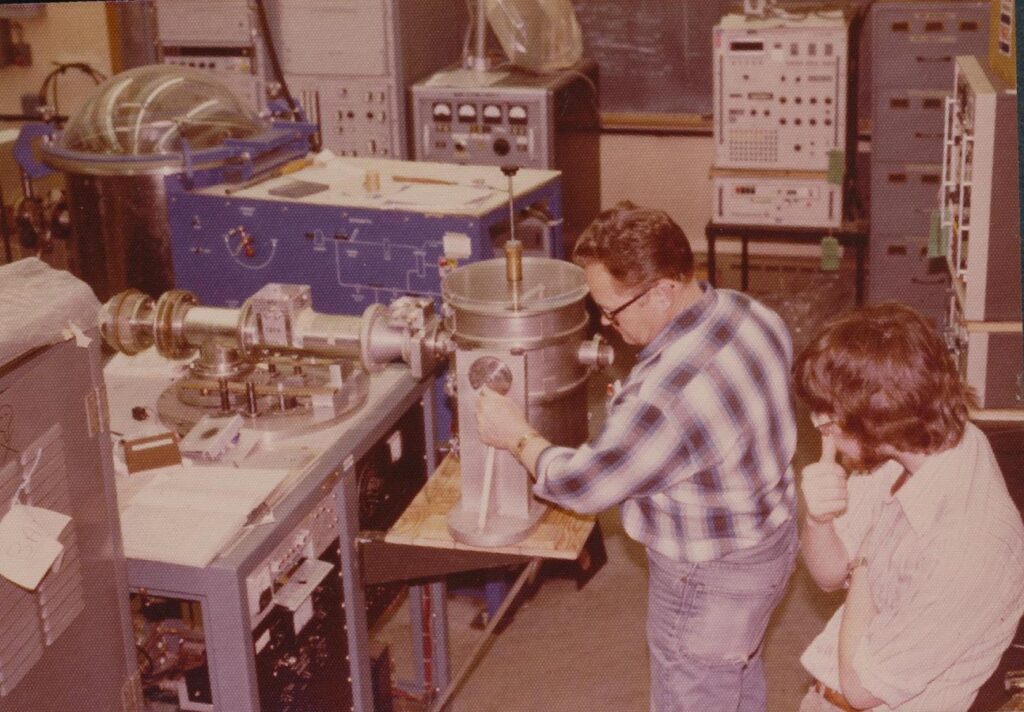
Another of my more notable math/physics images has to do with the discovery of QuasiCrystals made by a guy, Dan Shechtman, who was ostracized from academia for the “impossible” idea of crystals having rotational symmetries beyond 2,3,4 and 6. He is now a Nobel Laureate. The WP image above is on that QuasiCrystal page as an overlay of part of E8 projected over a picture made from shooting a beam of x-rays at an icosahedral Ho-Mg-Zn quasicrystal.  I didn’t actually do that experiment with the x-ray beams, but I did similar ones in my college days on a particle accelerator called the Cockroft-Walton Kevatron – see below for a picture of me (the one with the beard ;–)  in the physics lab assembling a moon dust experiment. One of the professors had gotten the accelerator out of Germany after having worked on the Manhattan project.

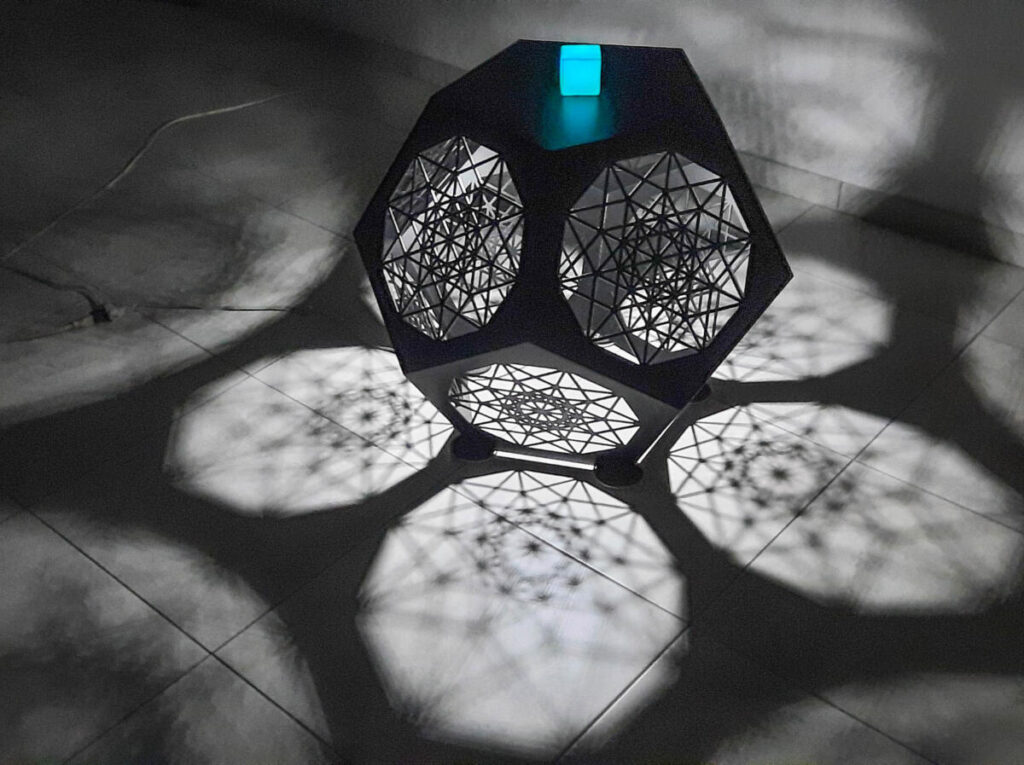
E8 and its 4D children, the 600-cell and 120-cell (pages on which I have some work, amongst others) and its grandkids (2 of the 3D 5 Platonic Solids, one of which is the 3D version of the 2D Pentagon) are all related to the Fibonacci numbers and the Golden Ratio. So that kind of explains why most of my 2D art, 3D objects and sculptures (e.g. furniture like the dodecahedron table below), and 4D youtube animations all use the Golden Ratio theme.

Greg Moxness, Tucson AZ

Visualizing Quaternion Generated Dual to the Snub 24-cell

I did a Mathematica (MTM) analysis of several important papers here and here from Mehmet Koca, et. al. The resulting MTM output in PDF format is here and the .NB notebook is here.

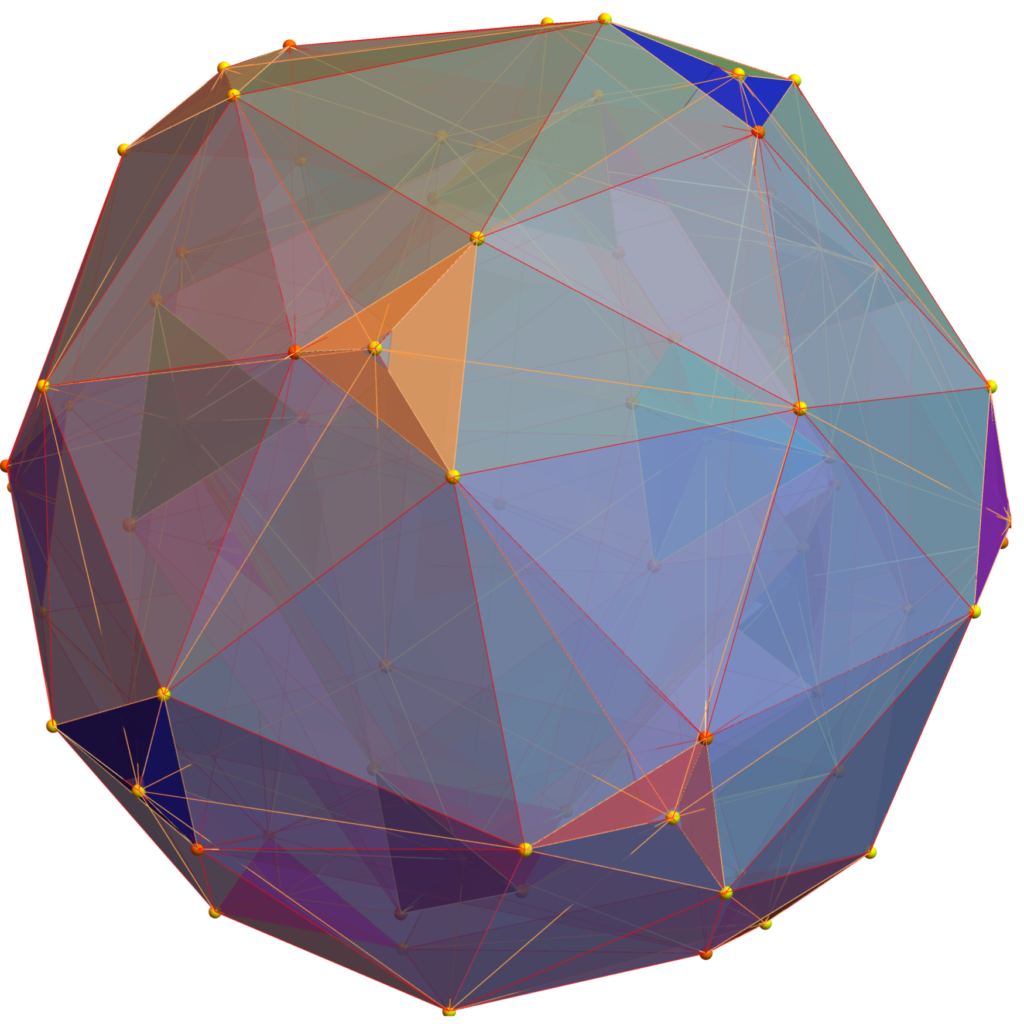
3D Visualization of the outer hull of the 144 vertex Dual Snub 24 Cell, with vertices colored by overlap count:
* The (42) yellow have no overlaps.
* The (51) orange have 2 overlaps.
* The (18) tetrahedral hull surfaces are uniquely colored.
The Dual Snub 24-Cell with less opacity

What is really interesting about this is the method to generate these 3D and 4D structures is based on Quaternions (and Octonions with judicious selection of the first triad={123}). This includes both the 600 Cell and the 120 Cell and its group theoretic orbits. The 144 vertex Dual Snub 24 Cell is a combination of those 120 Cell orbits, namely T'(24) & S’ (96), along with the D4 24 Cell T(24).

3D Visualization of the outer hull of the alternate 96 vertex Snub 24 Cell (S’)
Visualization of the concentric hulls of the Alternate Snub 24 Cell
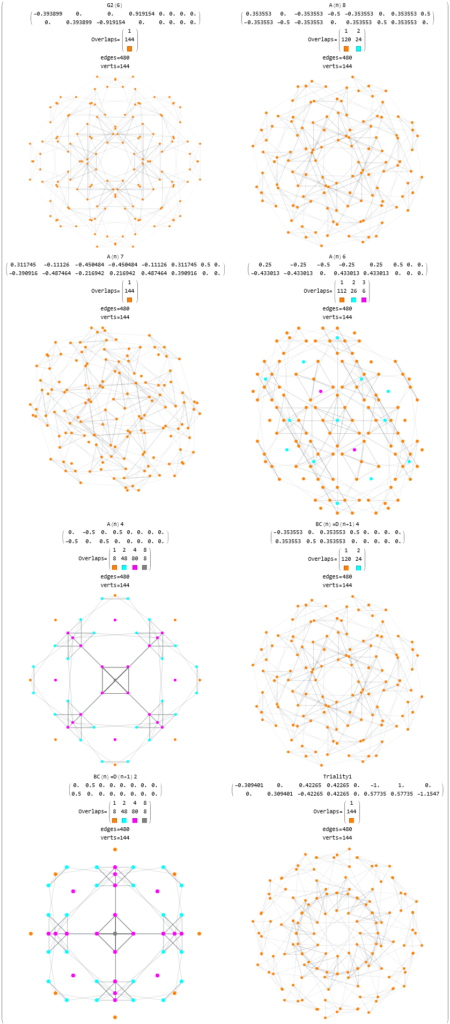
Various 2D Coxeter Plane Projections with vertex overlap color coding.
3D Visualization of the outer hull of M(192) as one of the W(D4) C3 orbits of the 120-Cell (600)
3D Visualization of the outer hull of N(288) that are the 120-Cell (600) Complement of
the W(D4) C3 orbits T'(24)+S'(96)+M (192)
3D Visualization of the outer hull of the 120-Cell (600) generated using T’
3D Visualization of the outer hull of the 120-Cell (600) generated using T
3D Animation of the 5 quaternion generated 24-cell outer hulls consecutively adding to make the 600-Cell.
3D Animation of the 5 quaternion generated 600-cell outer hulls consecutively adding to make the 120-Cell.