Category Archives: Physics

More amplituhedron capability (projected hull surface area and volume)

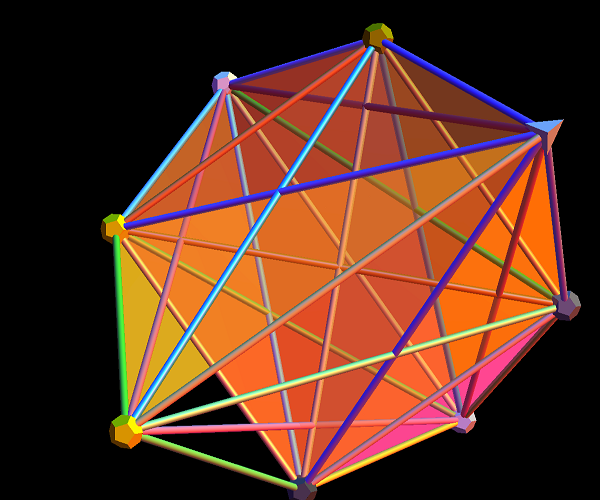
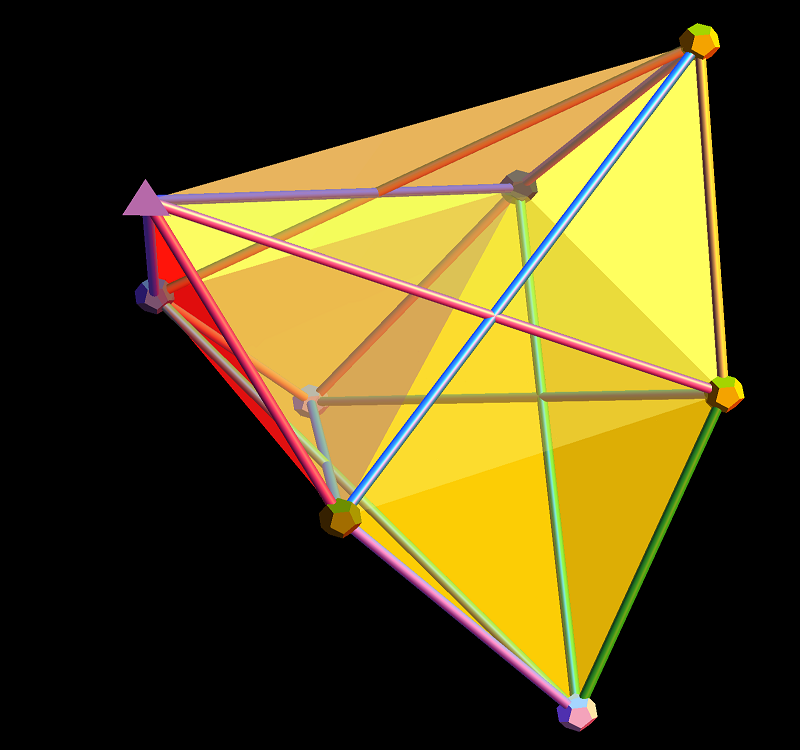
Getting more capability built into ToE_Demonstration.nb where it can now calculate the scattering amplitude by calculating the volume of the projected hull of selected edges in the n-Simplex Amplituhedron (based on a theory by Nima Arkani-Hamed, with some Mathematica code from J. Bourjaily for the positroid diagram). Of course, there is still much work to get this wrapped up…

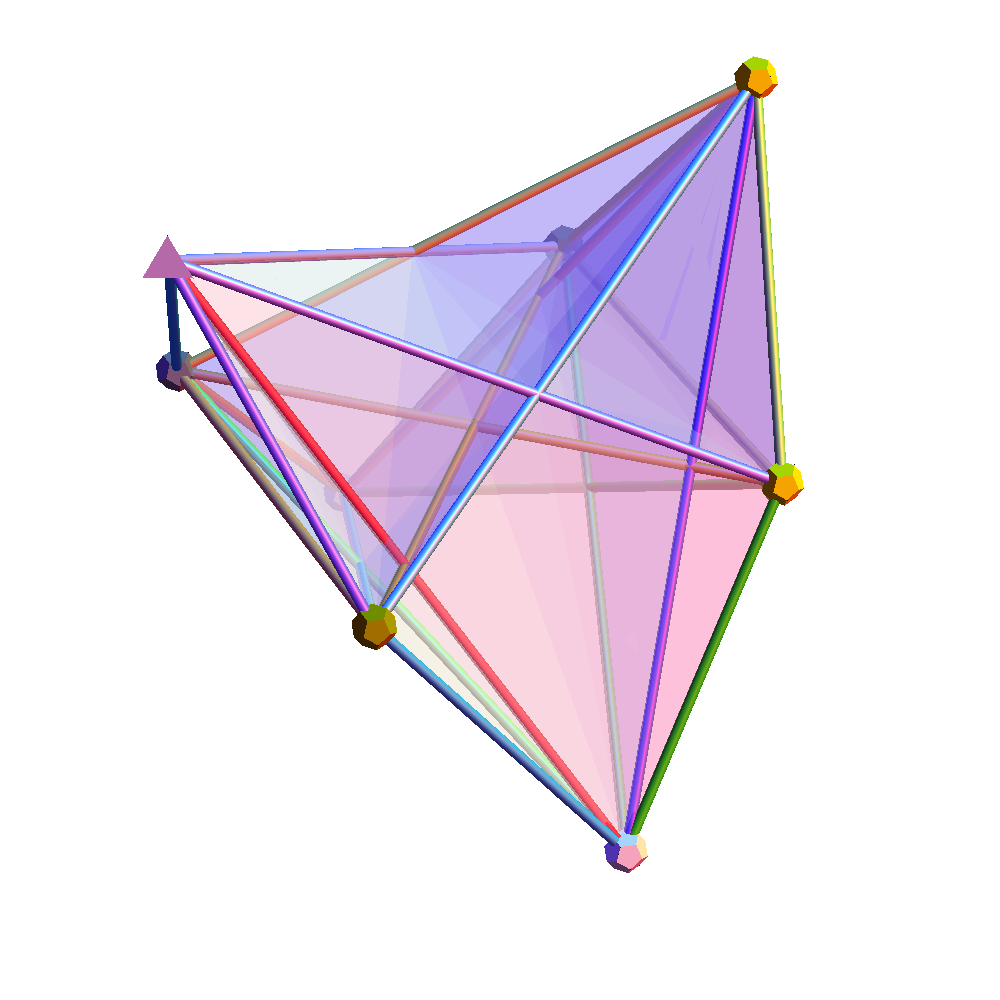
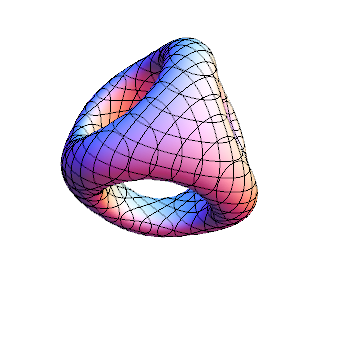
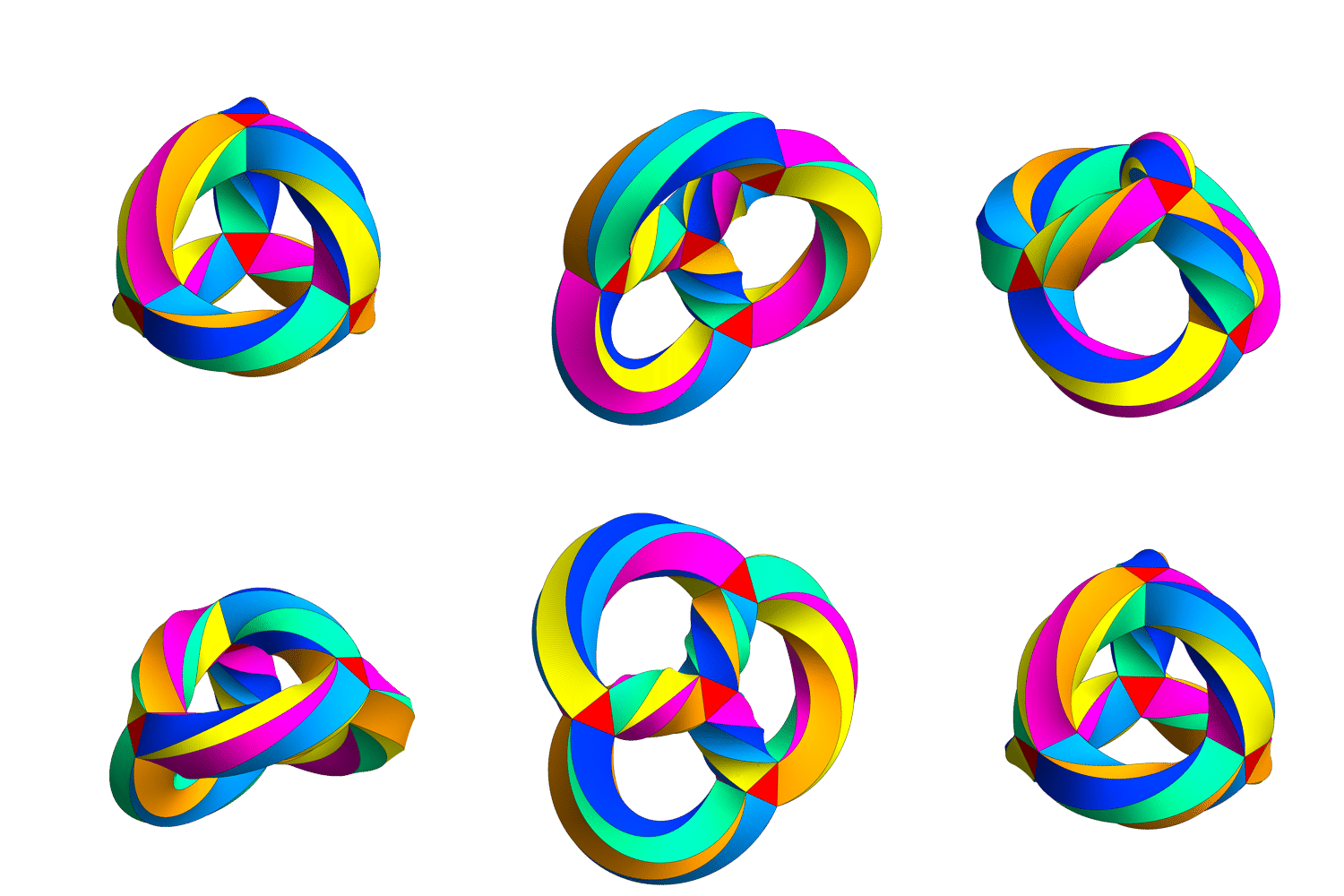
A few more pics of Positive Grassmannian Amplituhedrons…
amplituhedron-0b

amplituhedron-0c
This last diagram is obtained using the following amplituhedron0.m as input to the ToE_Demonstration.nb (when using fully licensed Mathematica) as shown below:
* This is an auto generated list from ToE_Demonstration.nb *)
new := {
artPrint=True;
scale=0.1;
cylR=0.018;
range=2.;
pt={-0.3, 0.0, 0.6};
favorite=1;
showAxes=False;
showEdges=True;
showPolySurfaces=True;
eColorPos=False;
dimTrim=5;
ds=6;
pListName=”First8″;
dsName=”nSimplex”;
p3D=” 3D”;
edgeVals={{Sqrt[11/2], 8}, {Sqrt[9/2 – Sqrt[2]], 4}, {Sqrt[9/2 + Sqrt[2]], 4}};
};new;

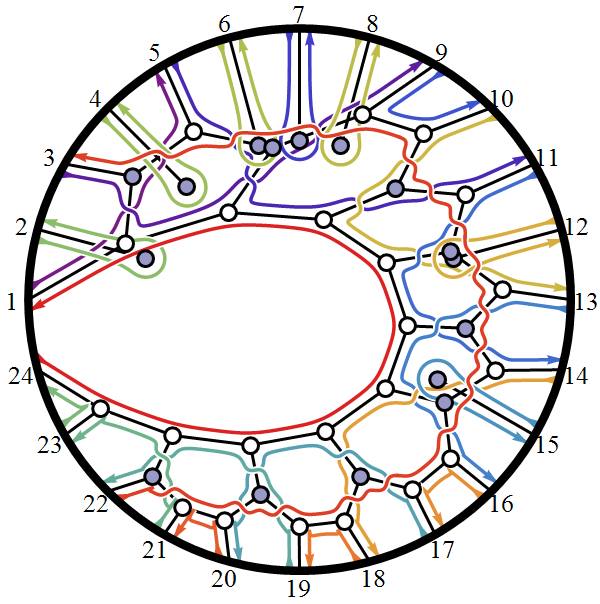
Positroid Diagrams:
amplituhedron-0a

Amplituhedron Visualizations!

Playing around trying to visualize the latest in the theoretical high energy particle physics (HEP/TH) determining how particle masses might be predicted from geometric principles (based on a theory by Nima Arkani-Hamed, with some Mathematica code from J. Bourjaily for the positroid diagram).

Positive Grassmannian Amplituhedrons
amplituhedron-1a

Compare this Mathematica(l) basis to the artistic representation by Andy Gilmore amplituhedron-1a

Positroid Diagrams:
amplituhedron-0a

Hyperbolic Dynkin Diagrams

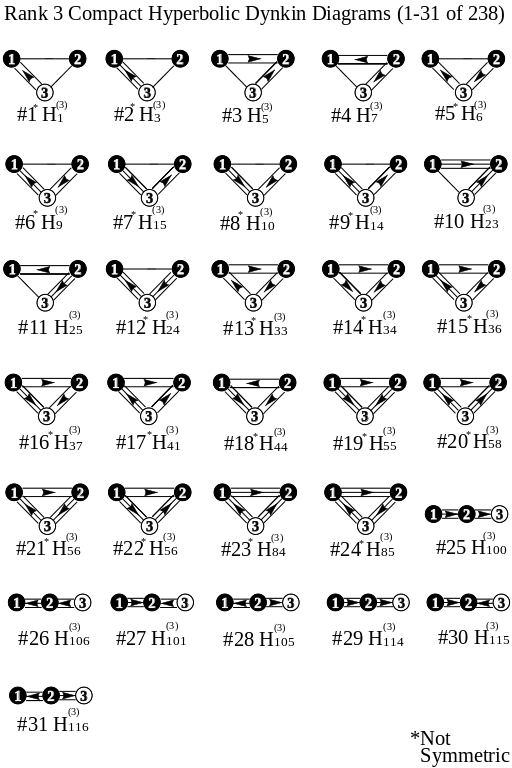
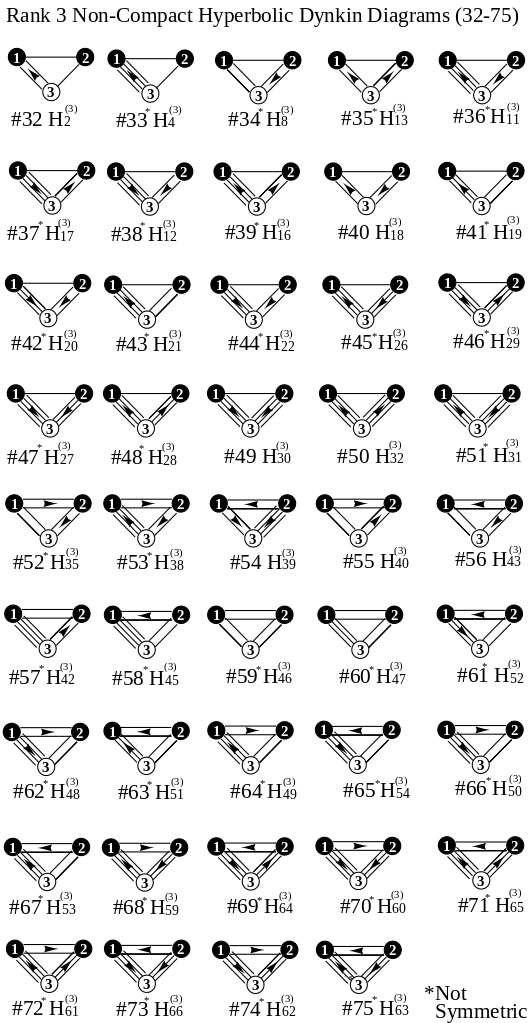
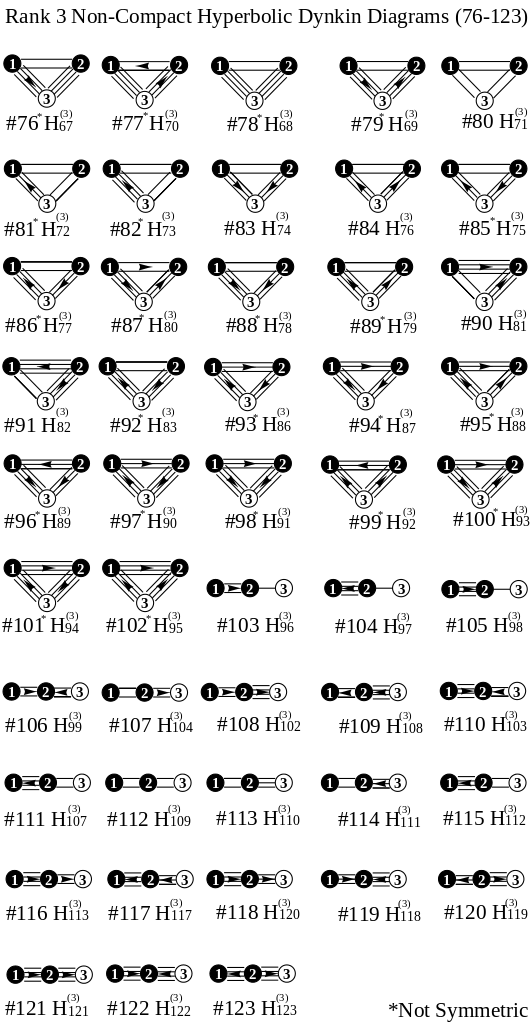
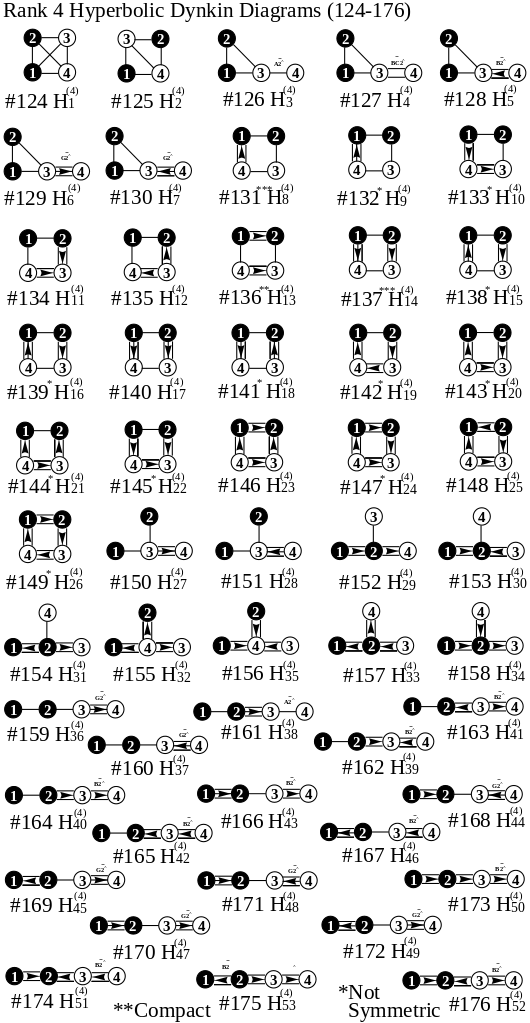
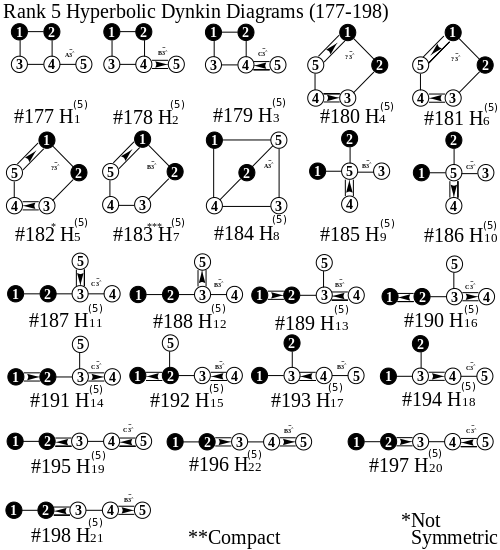
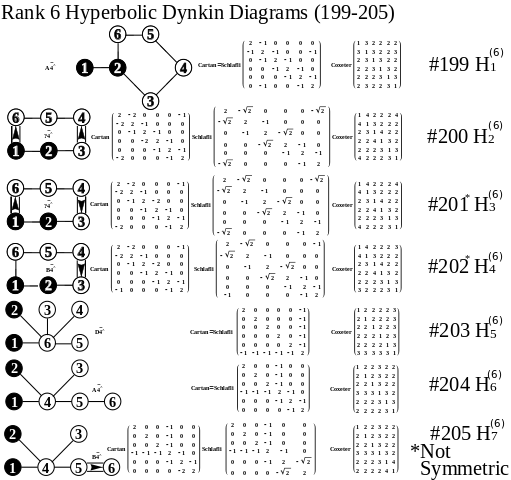
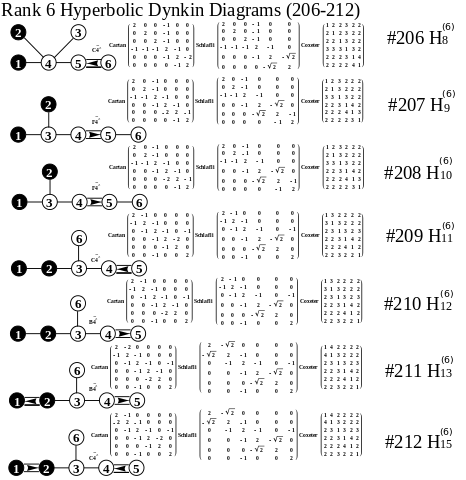
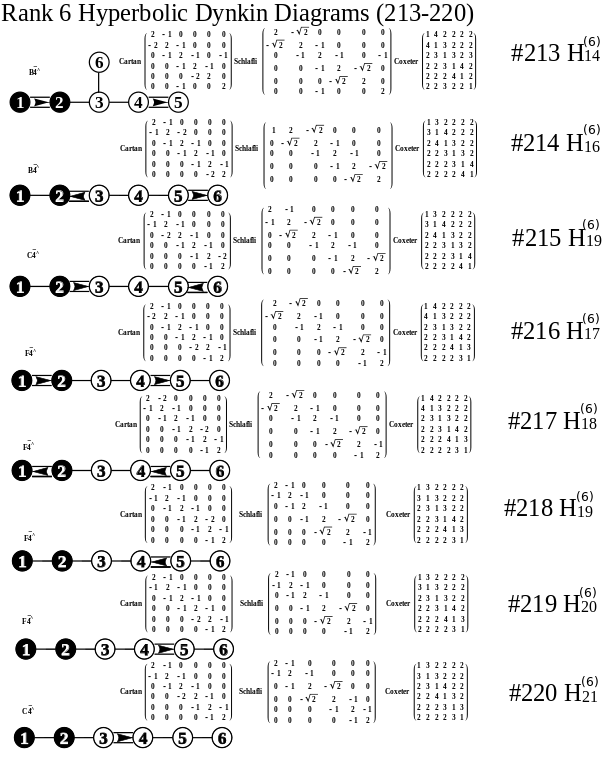
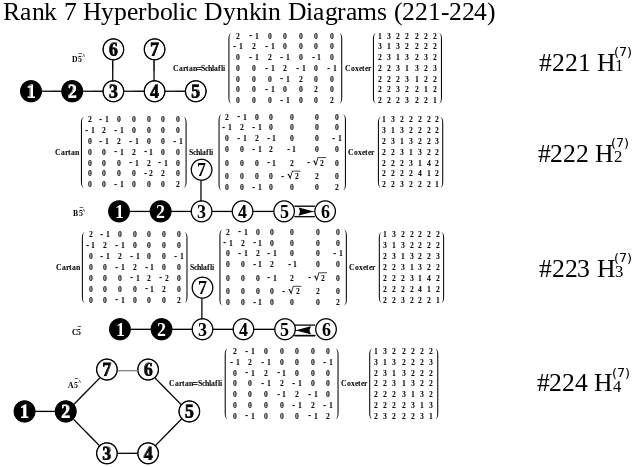
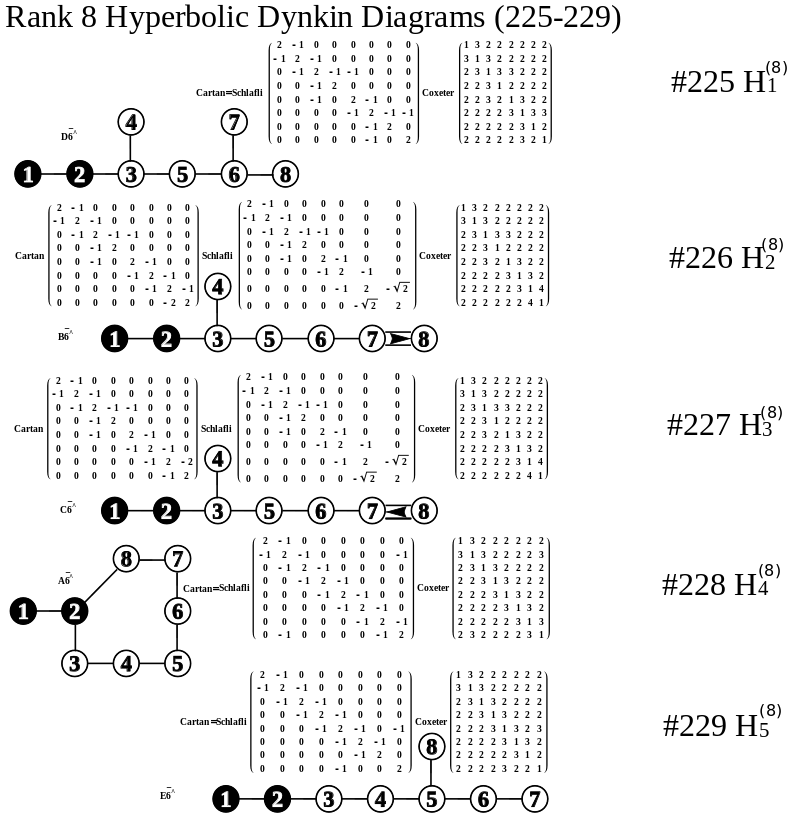
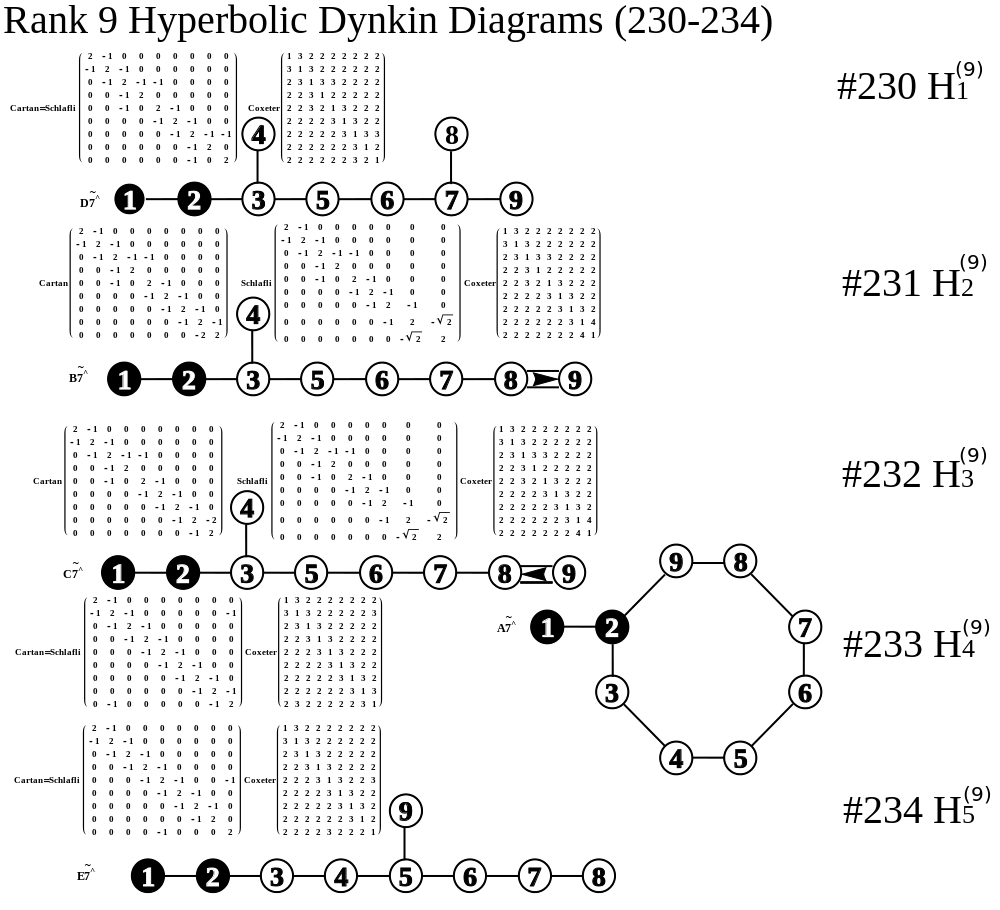
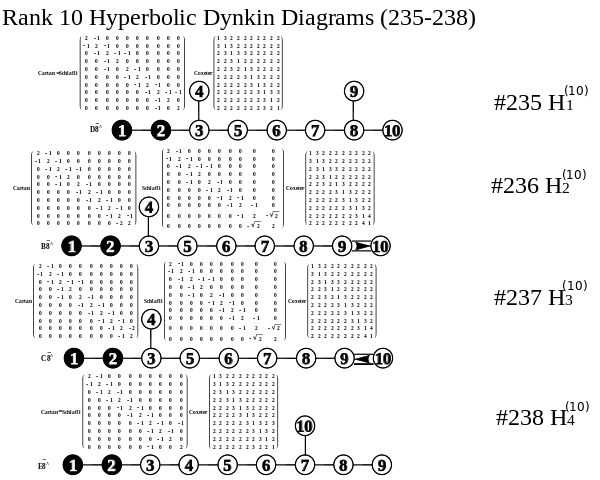
I am pleased to announce the availability of the comprehensive set of 238 Hyperbolic Dynkin diagrams ranks 3 to 10. These are enumerated here. They are constructed interactively using the mouse GUI (or manually through keyboard entry of the node / line tables) from this Mathematica notebook or free CDF player demonstration document or interactive CDF player web page.

All of these demonstrations have now been updated to include the new options on Dynkin diagram creation, including left (vs. right) affine topology recognition, black&white vs. color nodes and edges, and for those with full Mathematica licenses the notebook allows for added Dynkin line types.

The Lie group names are calculated based on the Dynkin topology. The geometric permutation names are calculated (to rank 8) based on the binary pattern of empty and filled nodes. The node and line colors can be used as indicators in Coxeter projections and/or Hasse diagrams.

Rank3CompactHyperbolicDynkins1-31bw.svg

Rank3NonCompactHyperbolicDynkins32-75bw.svg

Rank3NonCompactHyperbolicDynkins76-123bw.svg

Rank4HyperbolicDynkins124-176bw.svg

Rank5HyperbolicDynkins177-198bw.svg

Rank6HyperbolicDynkins199-205bw.svg

Rank6HyperbolicDynkins206-212bw.svg

Rank6HyperbolicDynkins213-220bw.svg

Rank7HyperbolicDynkins221-224bw.svg

Rank8HyperbolicDynkins225-229bw_svg

Rank9HyperbolicDynkins230-234bw_svg

Rank10HyperbolicDynkins235-238bw.svg

The Comprehensive Split Octonions and their Fano Planes

Please see this post for updates to these graphs.

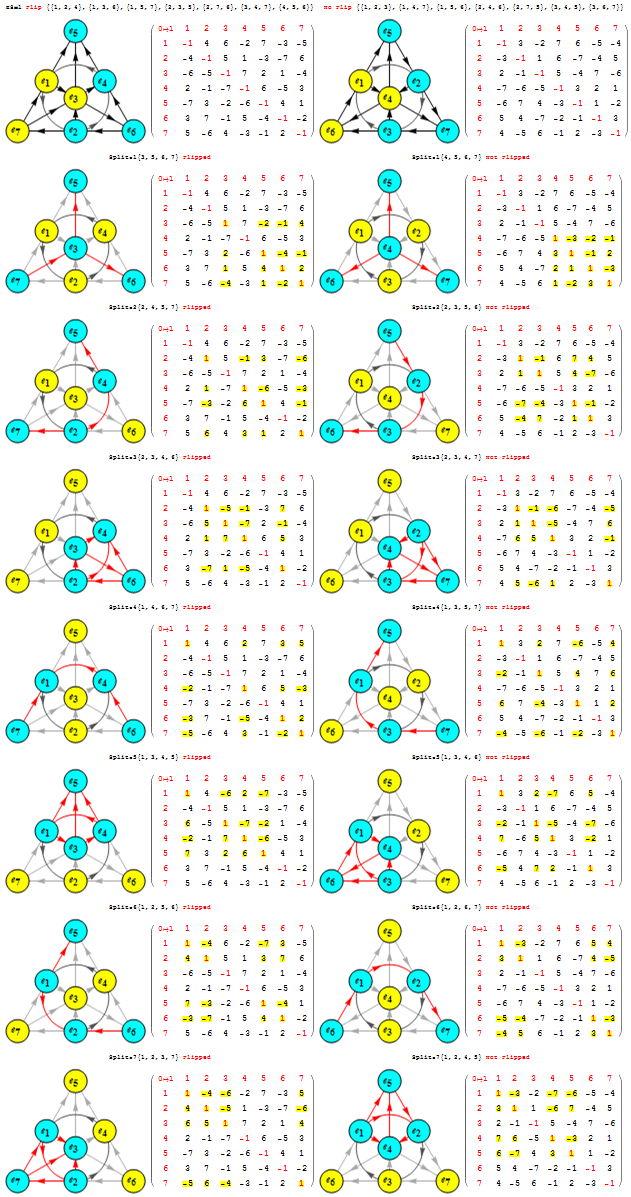
I am pleased to announce the availability of splitFano.pdf, a 321 page pdf file with the 3840=480*8 split octonion permutations (with Fano planes and multiplication tables). These are organized into “flipped” and “non-flipped” pairs associated with the 240 assigned particles to E8 vertices (sorted by Fano plane index or fPi).

There are 7 sets of split octonions for each of the 480 “parent” octonions (each of which is defined by 30 sets of 7 triads and 16 7 bit “sign masks” which reverse the direction of the triad multiplication). The 7 split octonions are identified by selecting a triad. The complement of {1,2,3,4,5,6,7} and the triad list leaves 4 elements which are the rows/colums corresponding to the negated elements in the multiplication table (highlighted with yellow background). The red arrows in the Fano Plane indicate the potential reversal due to this negation that defines the split octonions. The selected triad nodes are yellow, and the other 4 are cyan (25MB).

These allow for the simplification of Maxwell’s four equations which define electromagnetism (aka.light) into a single equation.

I believe this is the only comprehensive presentation of all 3840 Split Fano Planes with their multiplication tables available.

Below is the first page of the comprehensive split octonion list.

splitFano