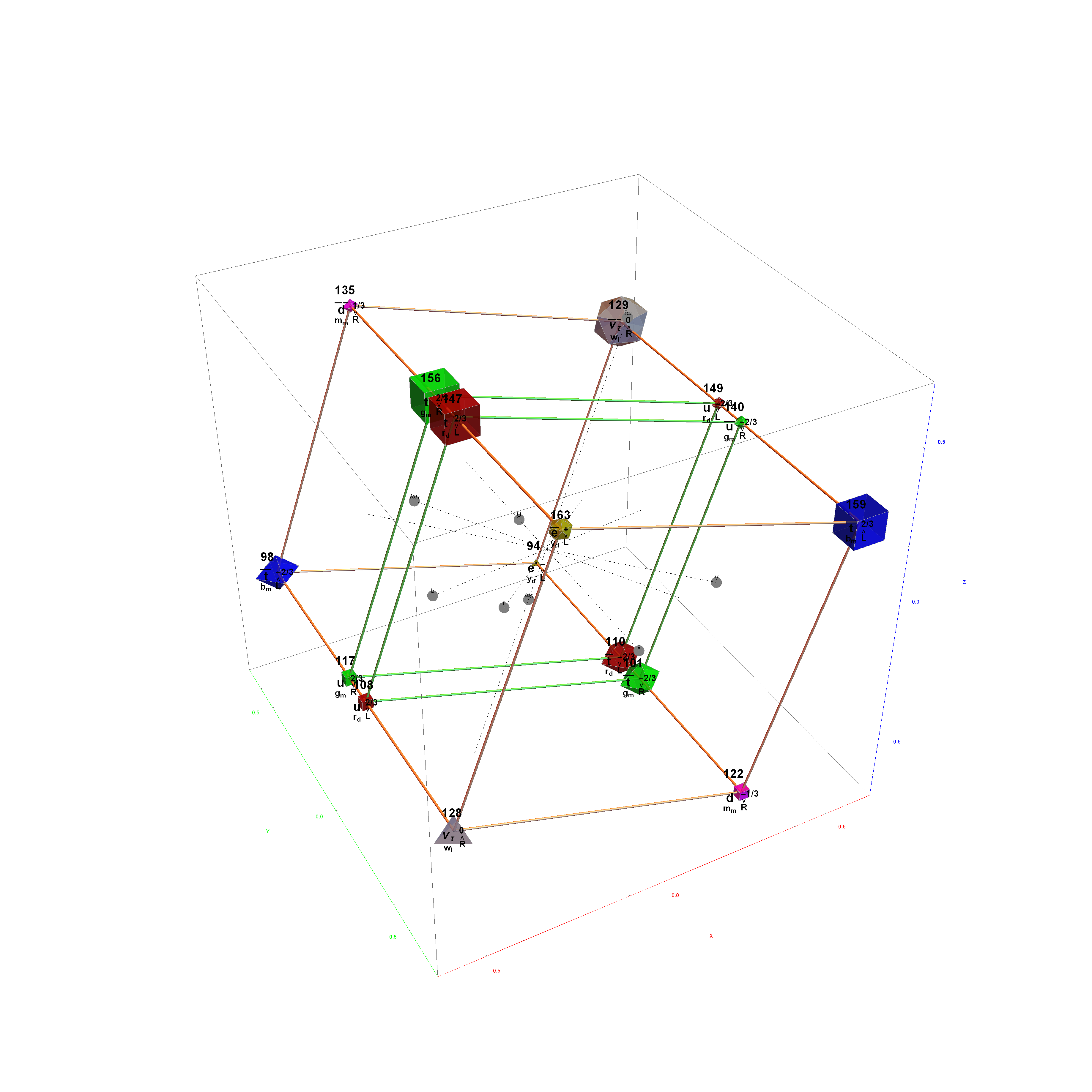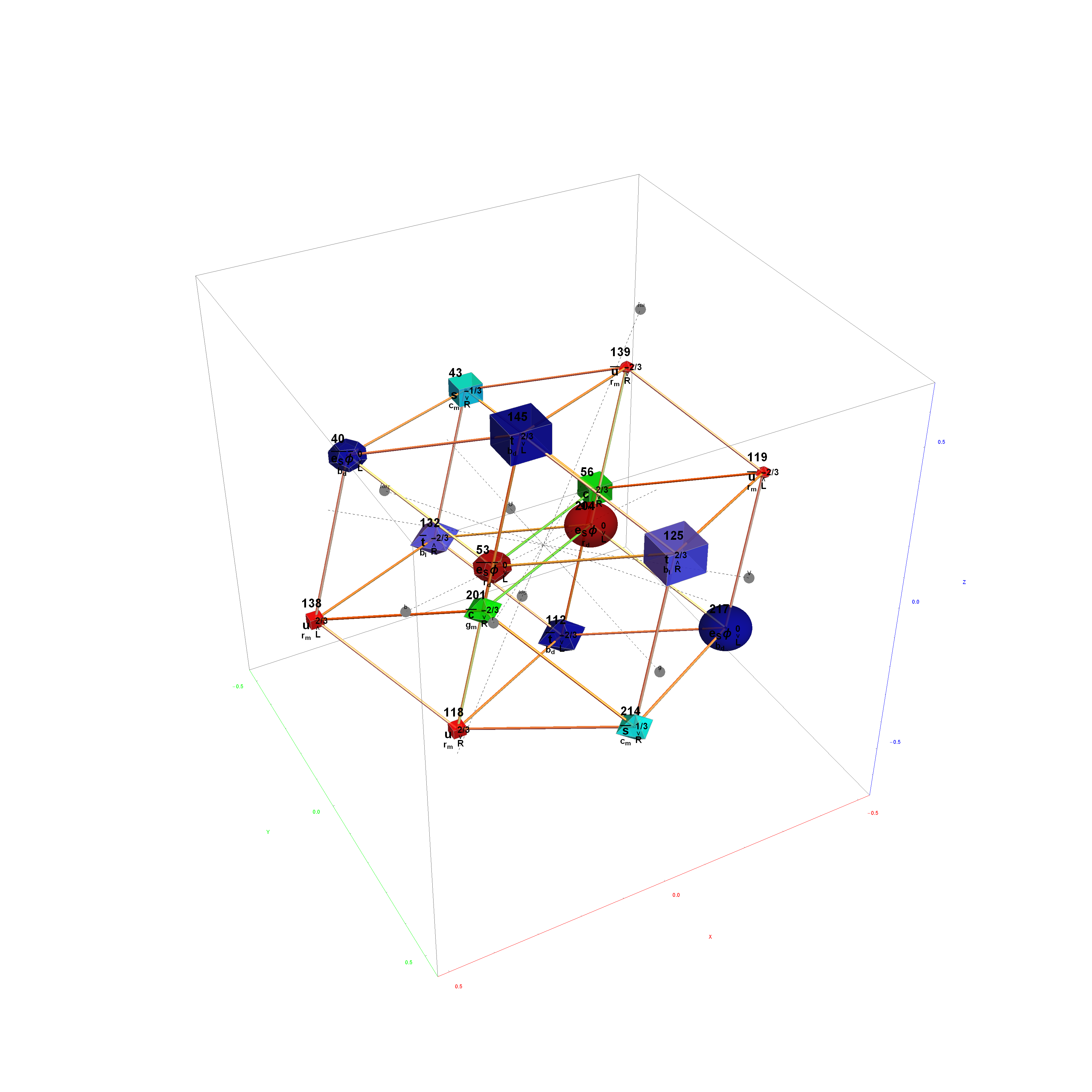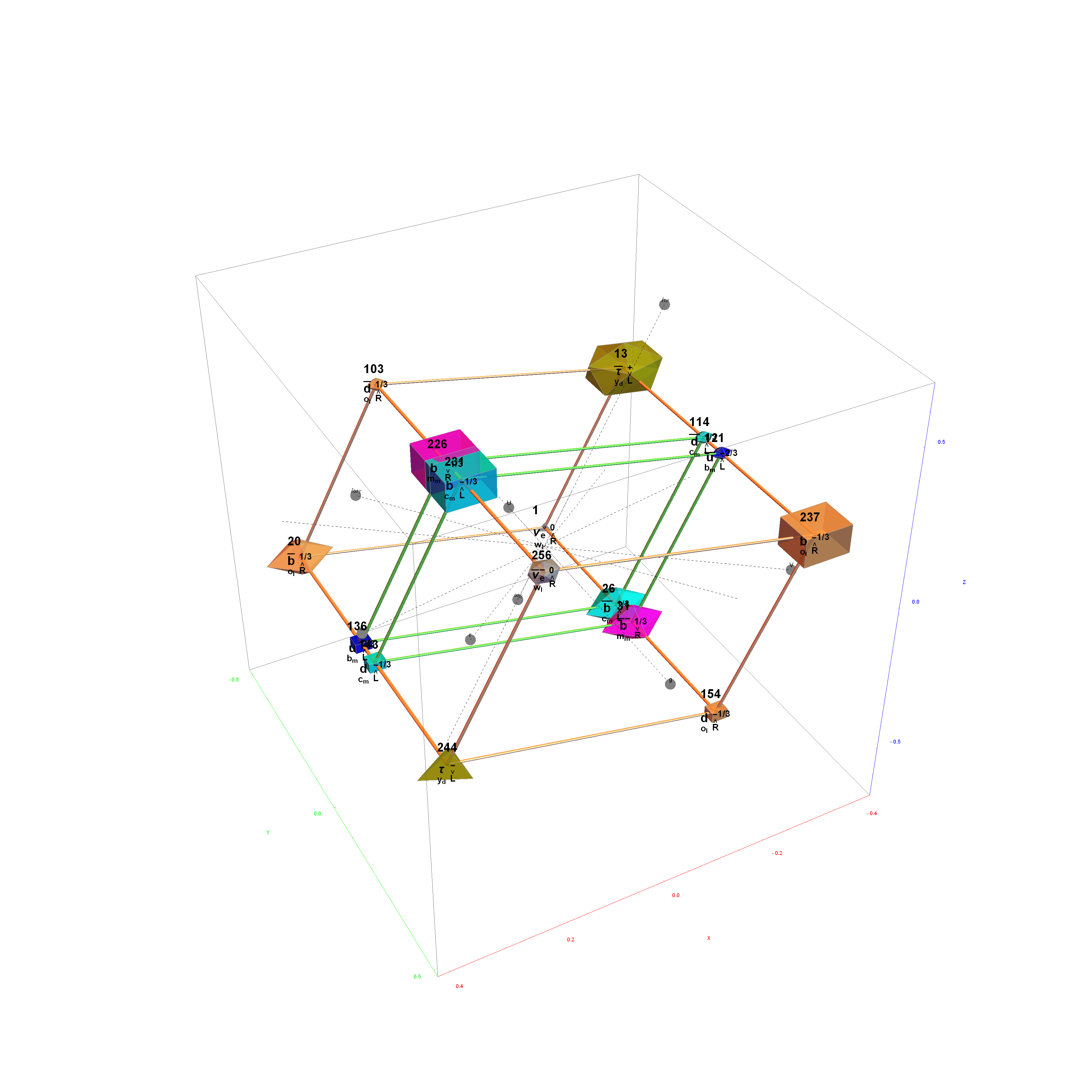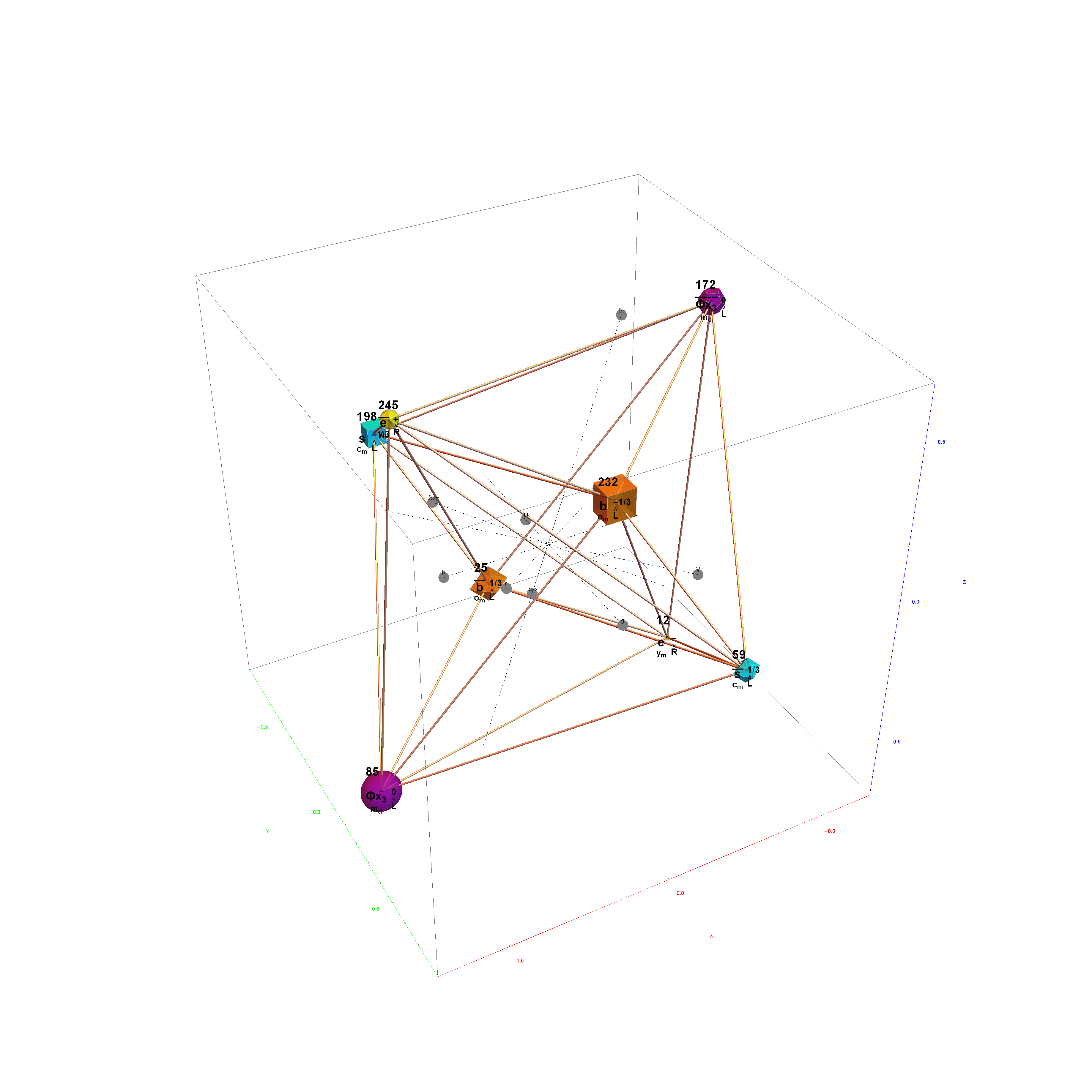
All posts by jgmoxness

Revised VisibLie_E8 viewers released for both Mathematica 9.01 and 10.02 ! Free (web interactive & stand-alone .CDF) and Licensed (.nb)

This version has bug fixes, enhanced performance by using faster memory localization, parallel CPU, OpenCL GPU, and/or compiled processing for functions that are compute intensive.

I also put the default comet path metadata for “CometC2007K5Lovejoy” in the Recombination (Solar System) epoch of the NBody pane.

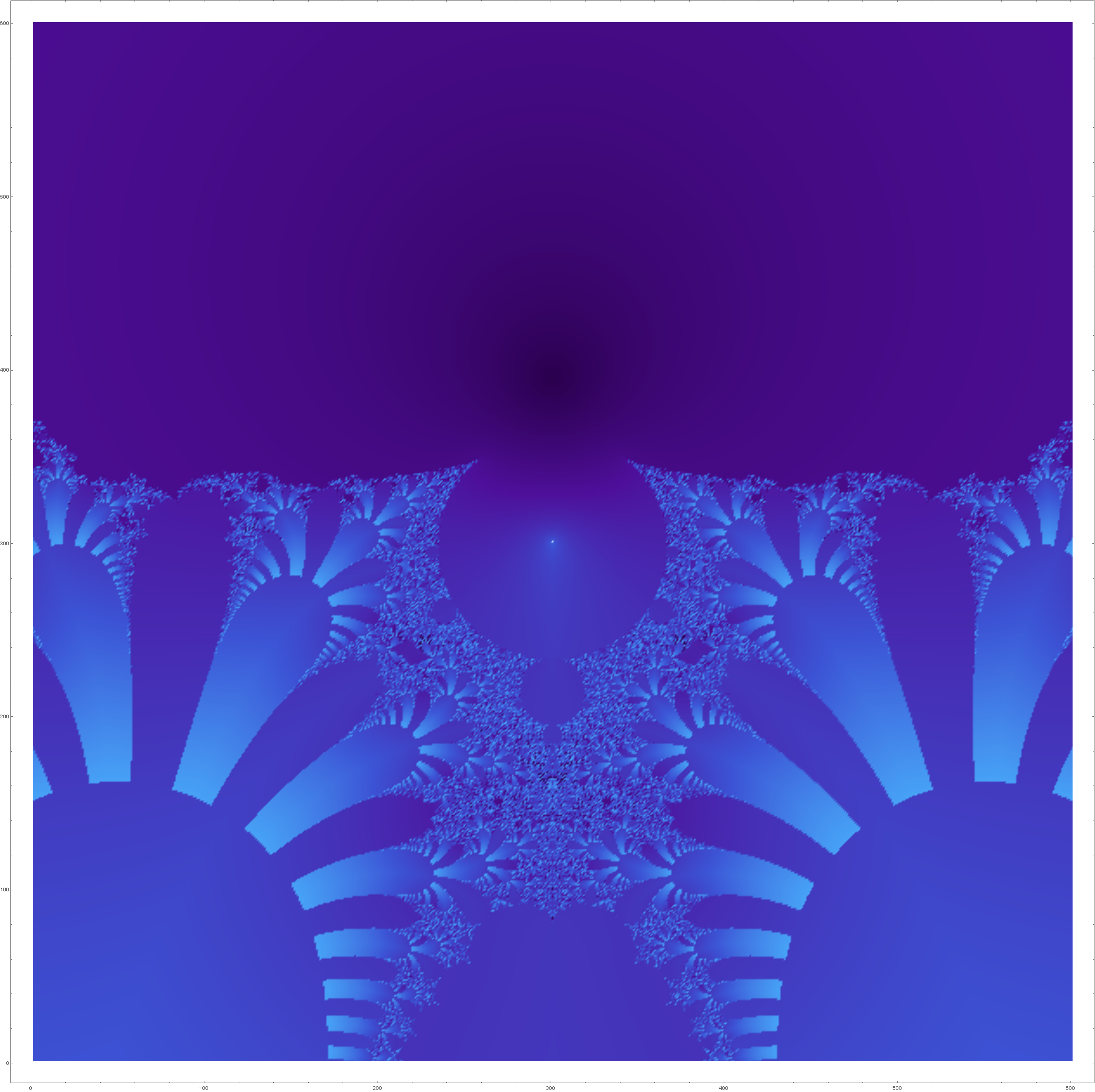
This version has a more extensive 2D/3D fractal collection as well, enjoy!

If anyone is interested, I also have versions deployed on the Wolfram Cloud, so you can interact via your Android or iPhone. If you’re interested in these or full source code for working with SuperLie and LieArt packages – just ask.

BTW – I try to do reasonable regression testing on all these versions, but if you are using my stuff (and/or find a bug), please give me a shout at: JGMoxness@TheoryOfEverything.org

Hopf Fibration and Chaotic Attractors, etc.

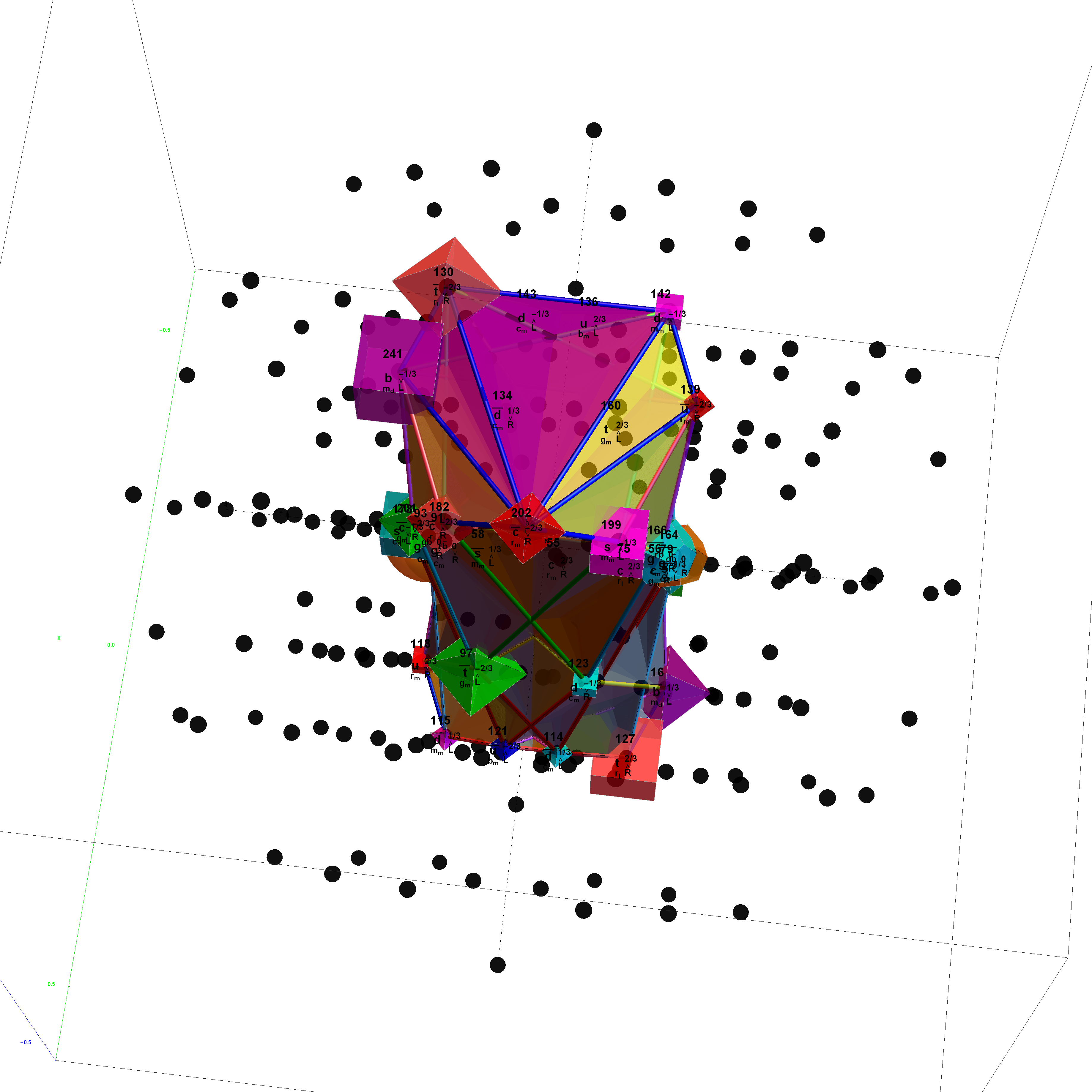
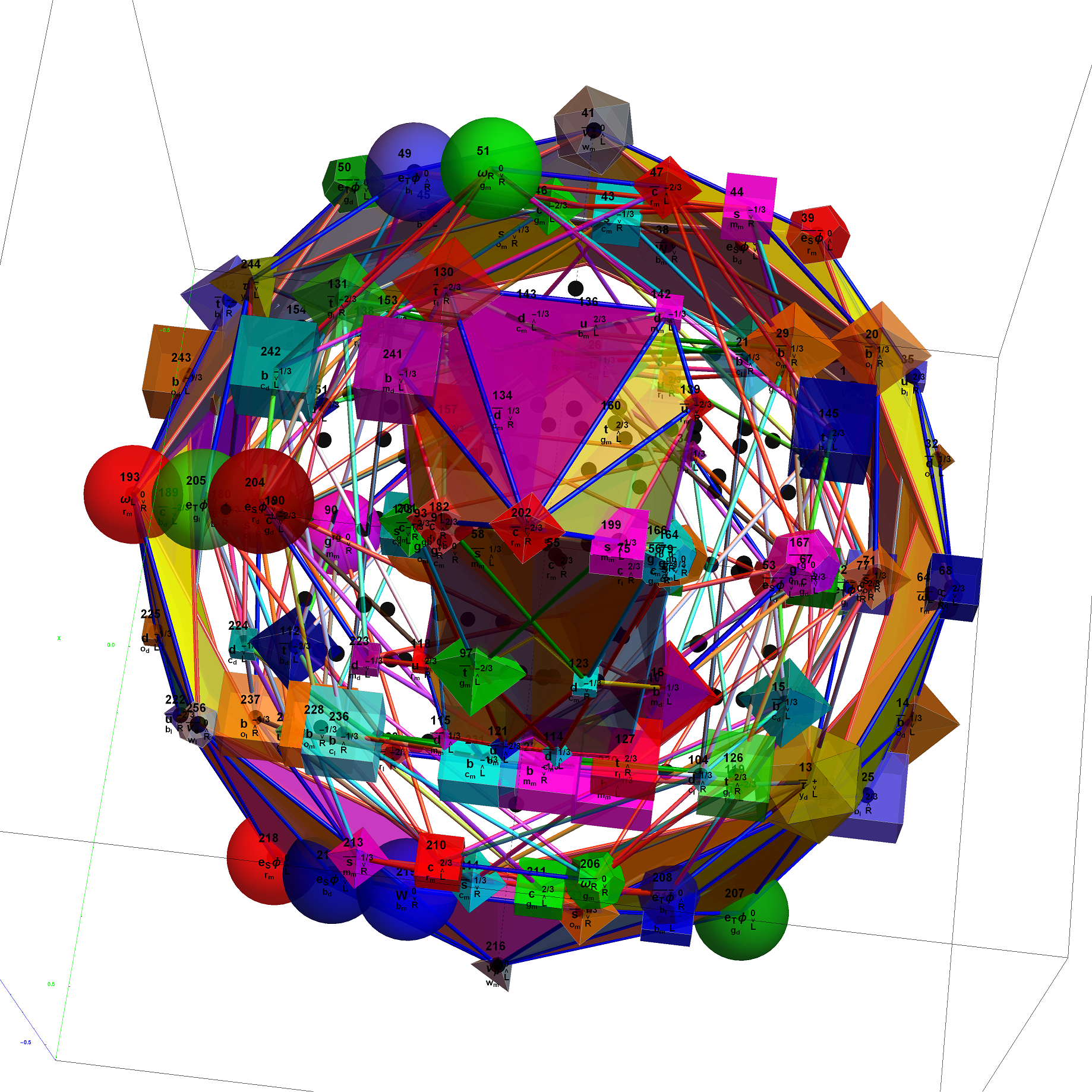
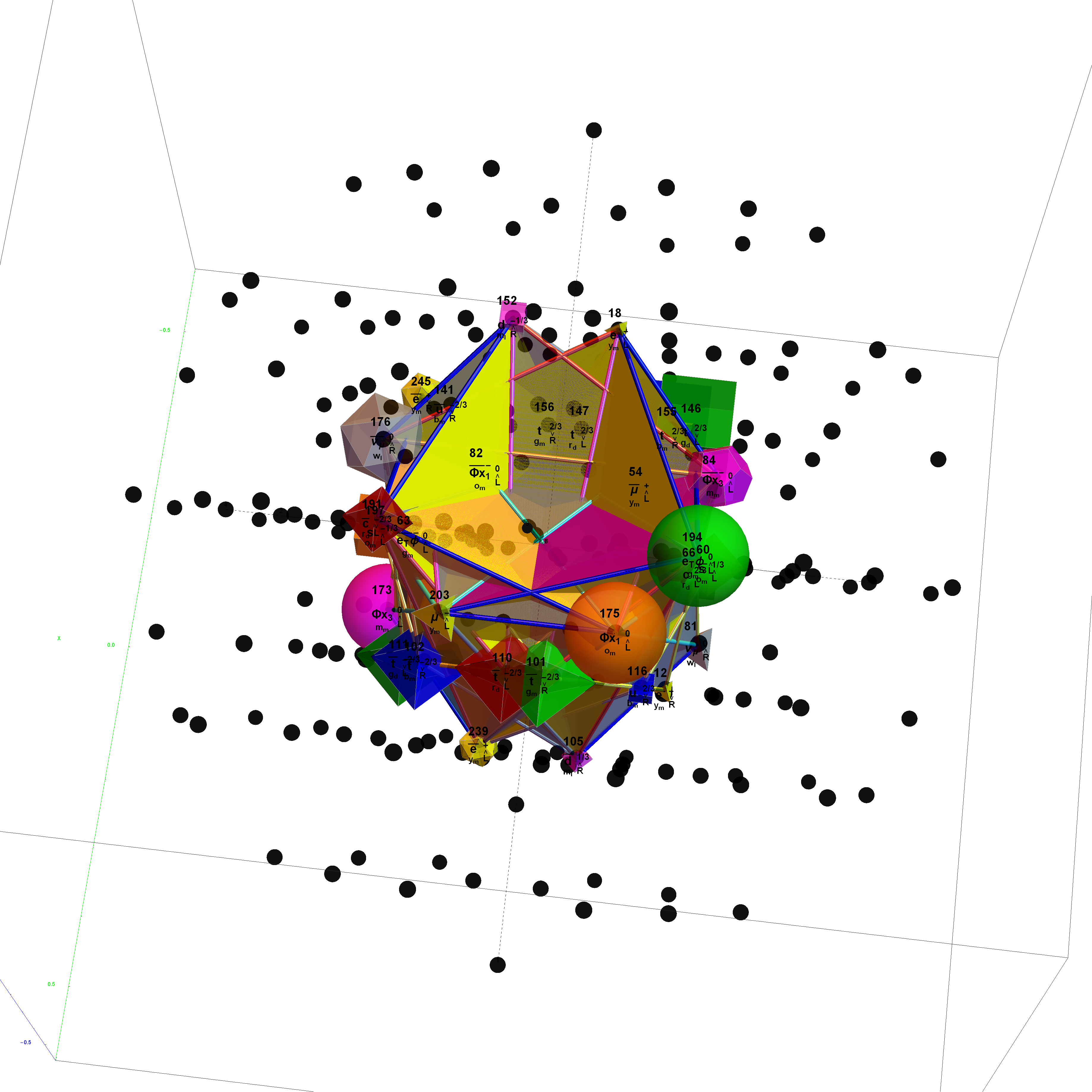
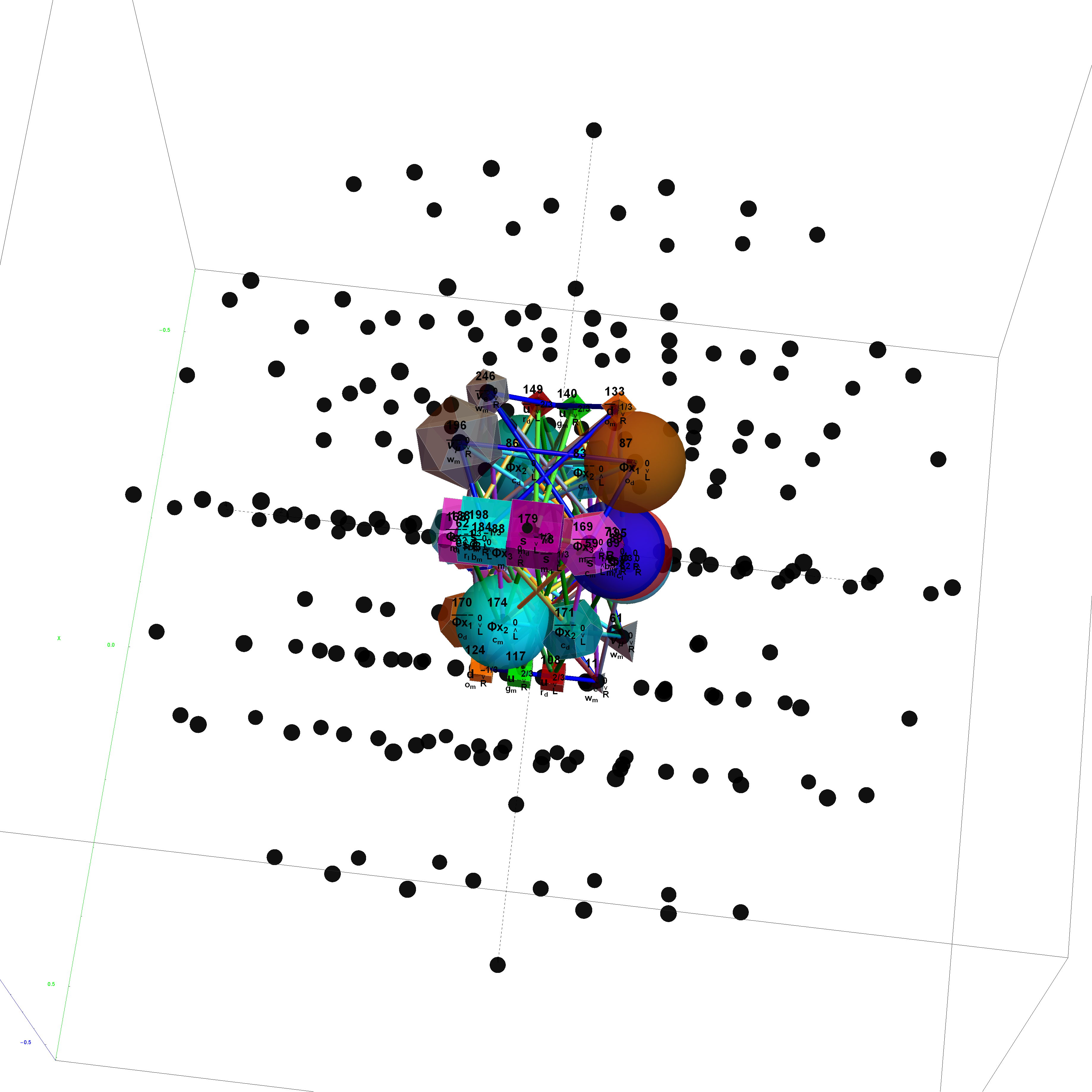
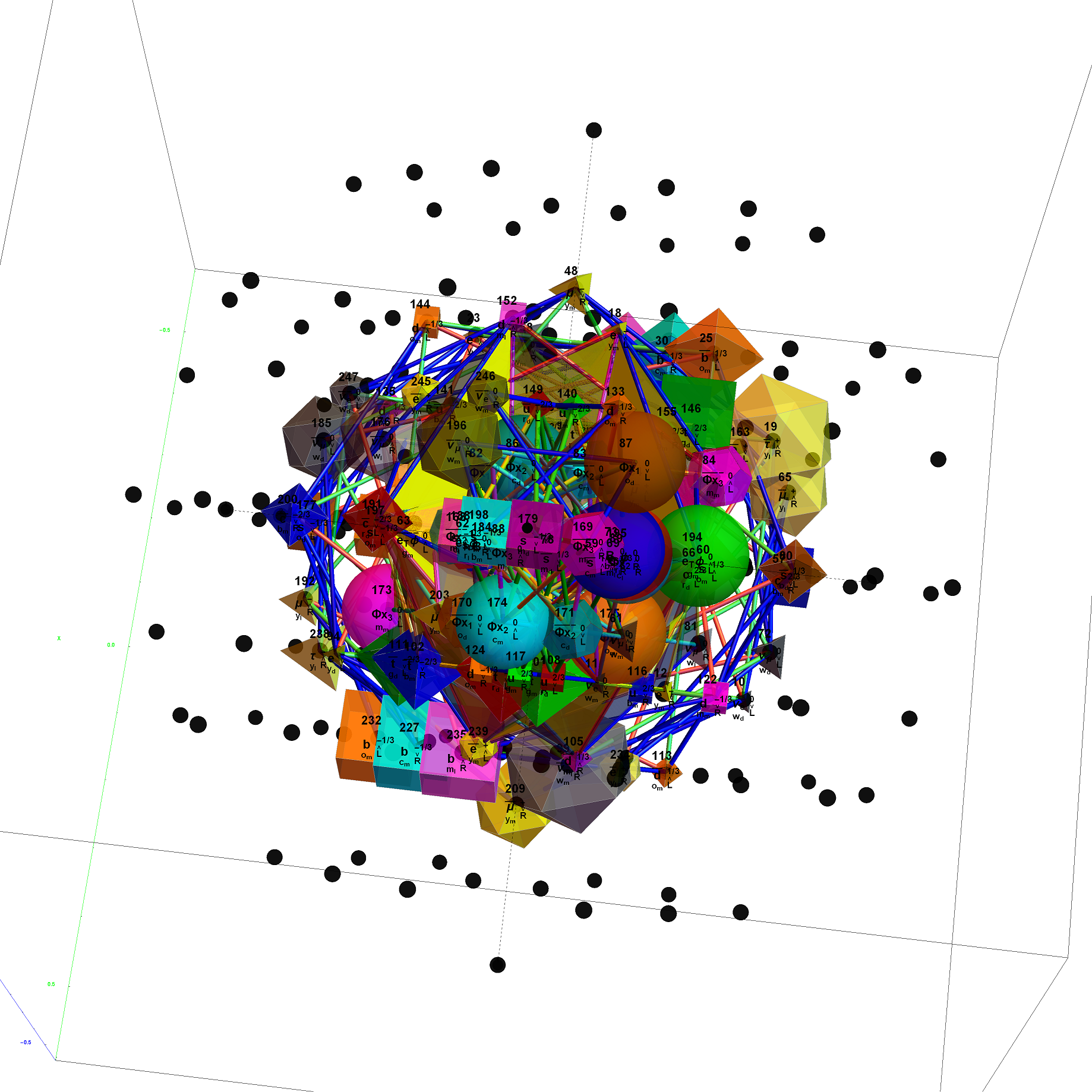
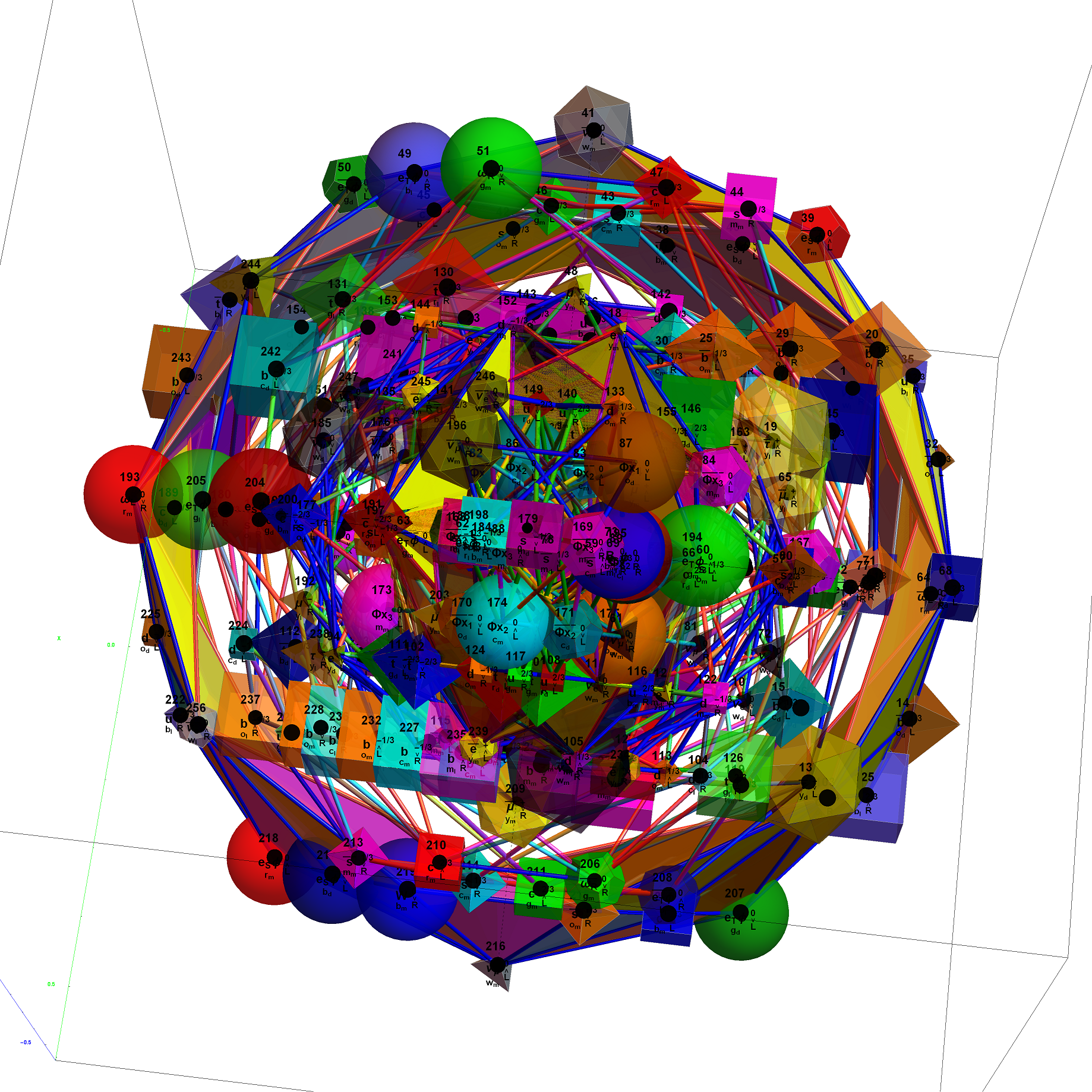
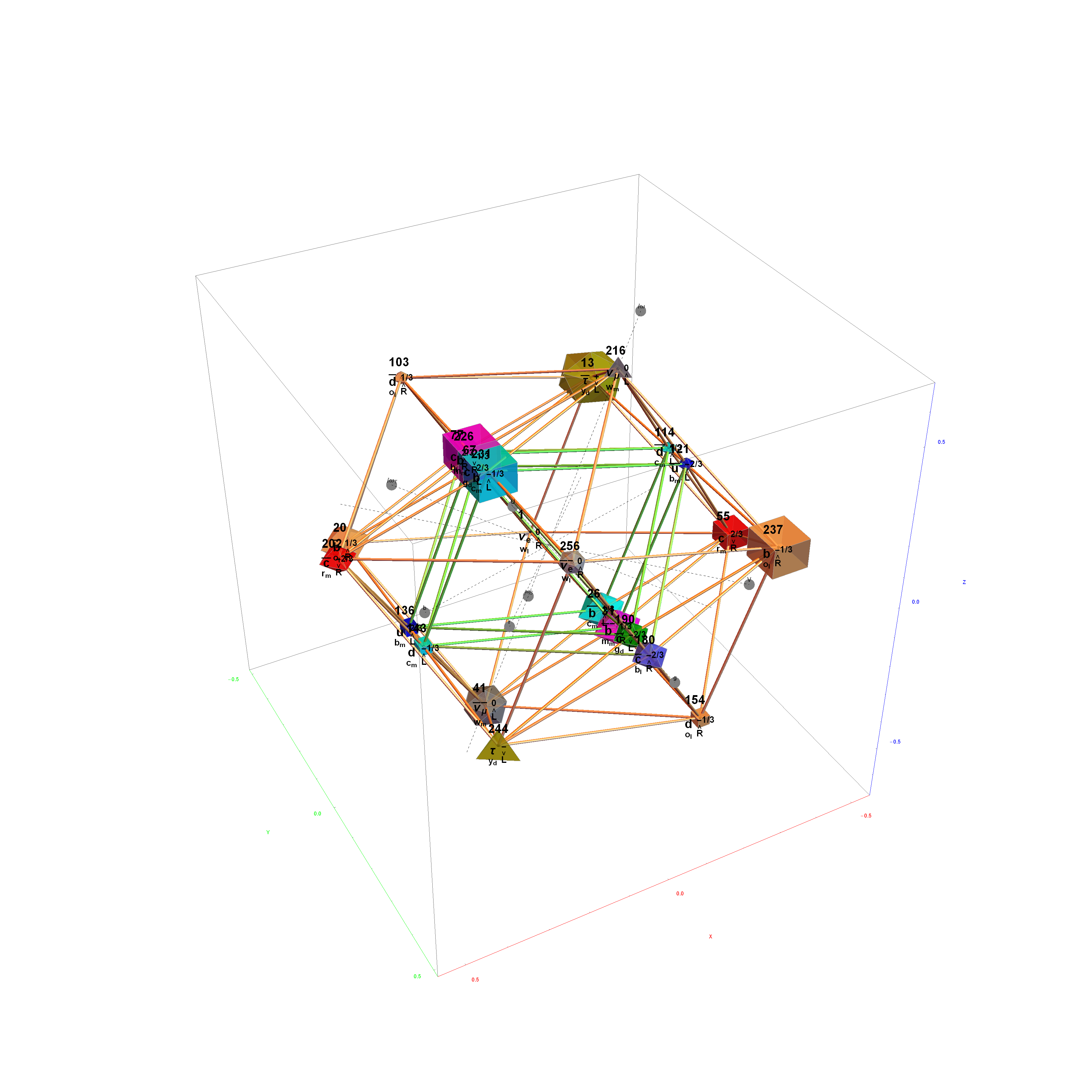
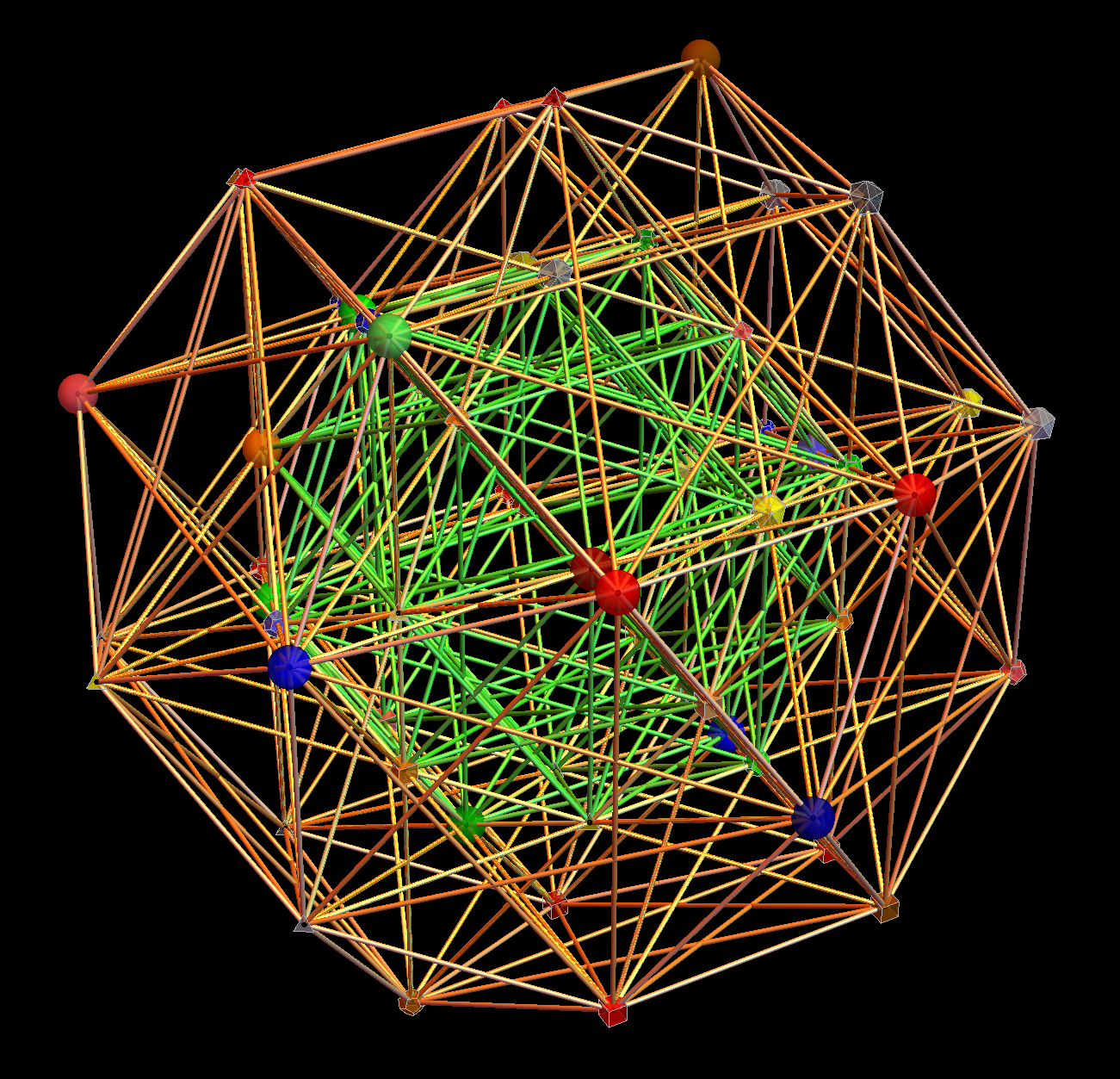
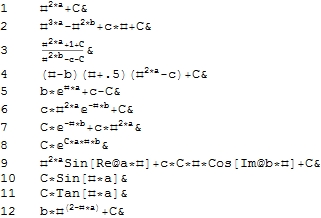
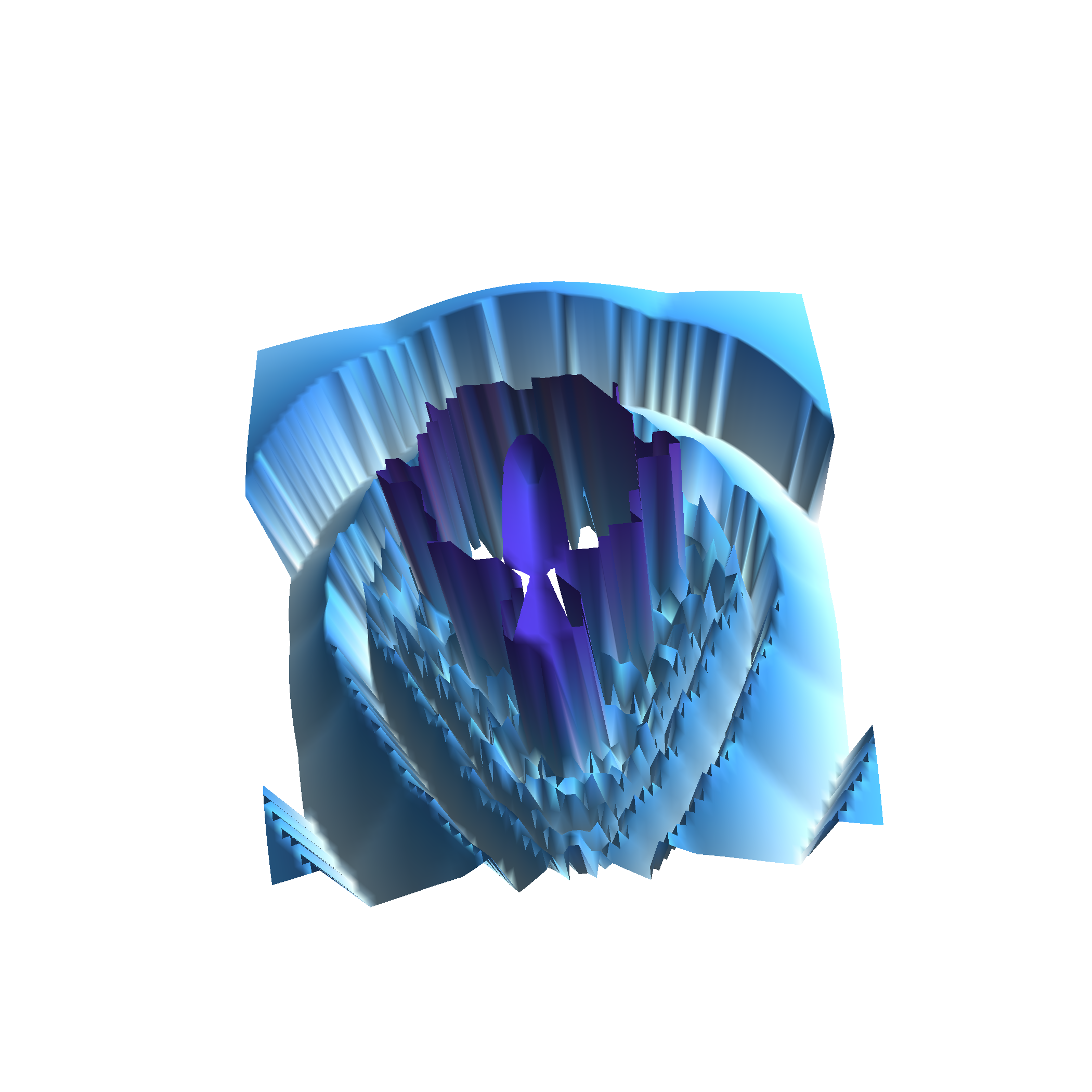
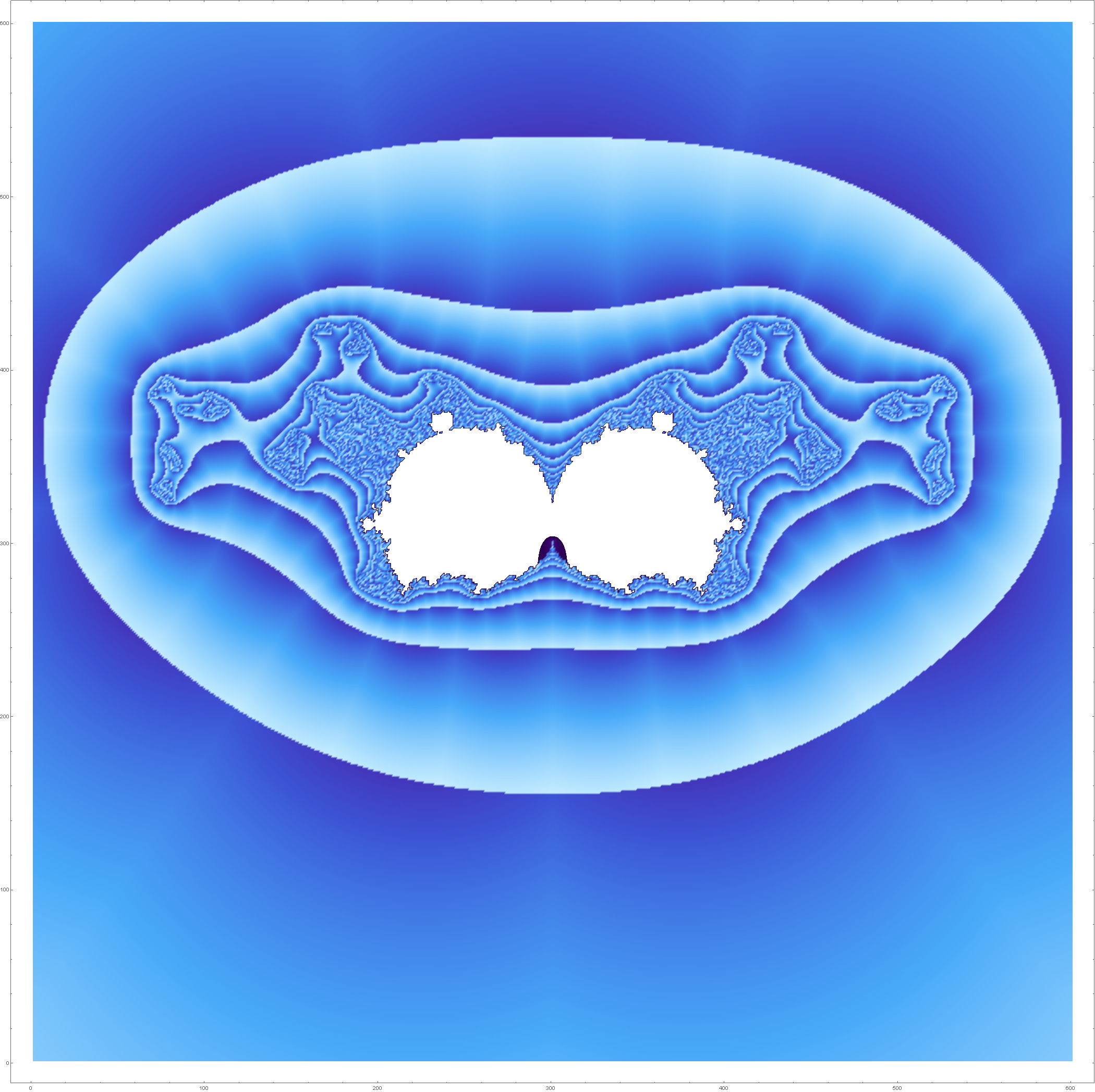
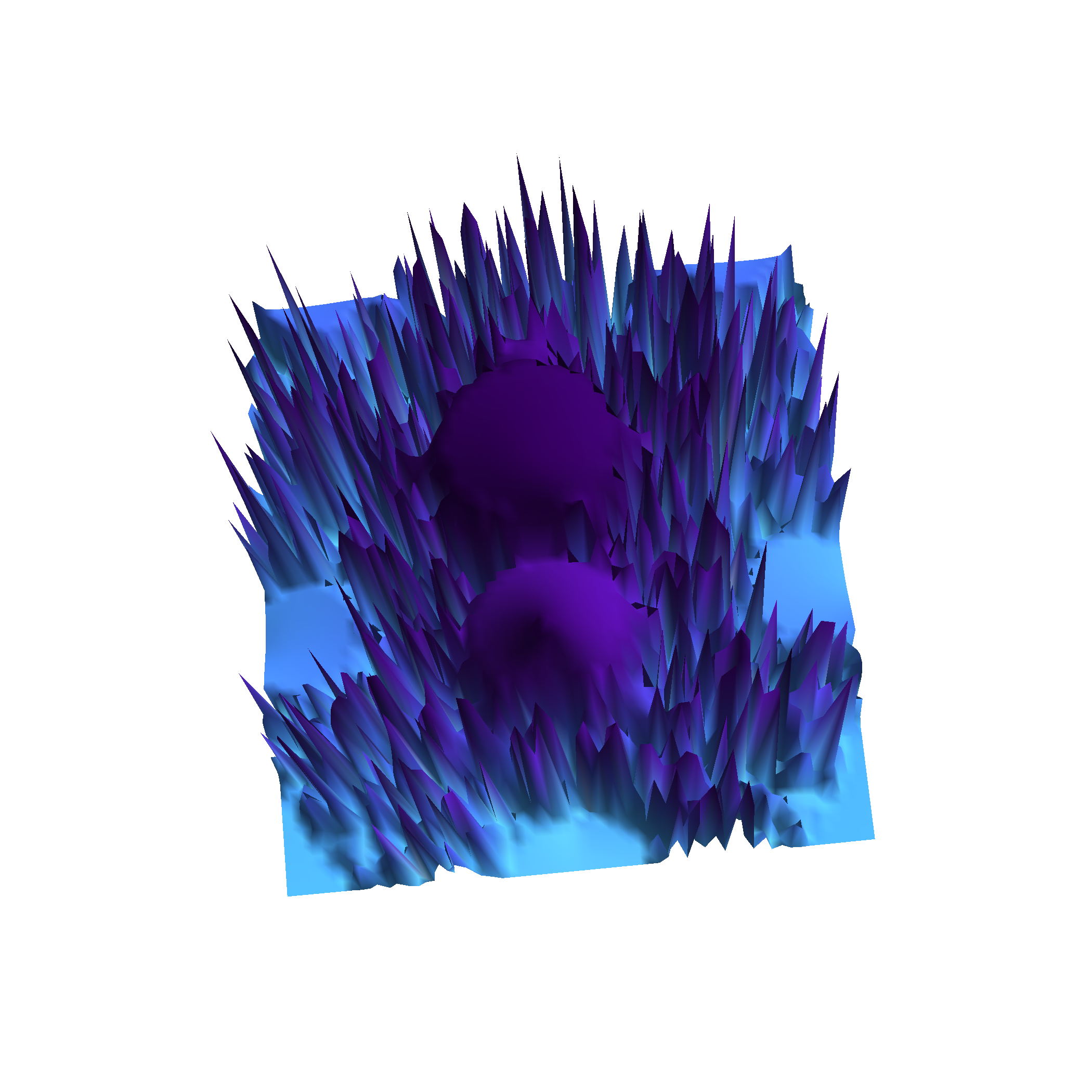
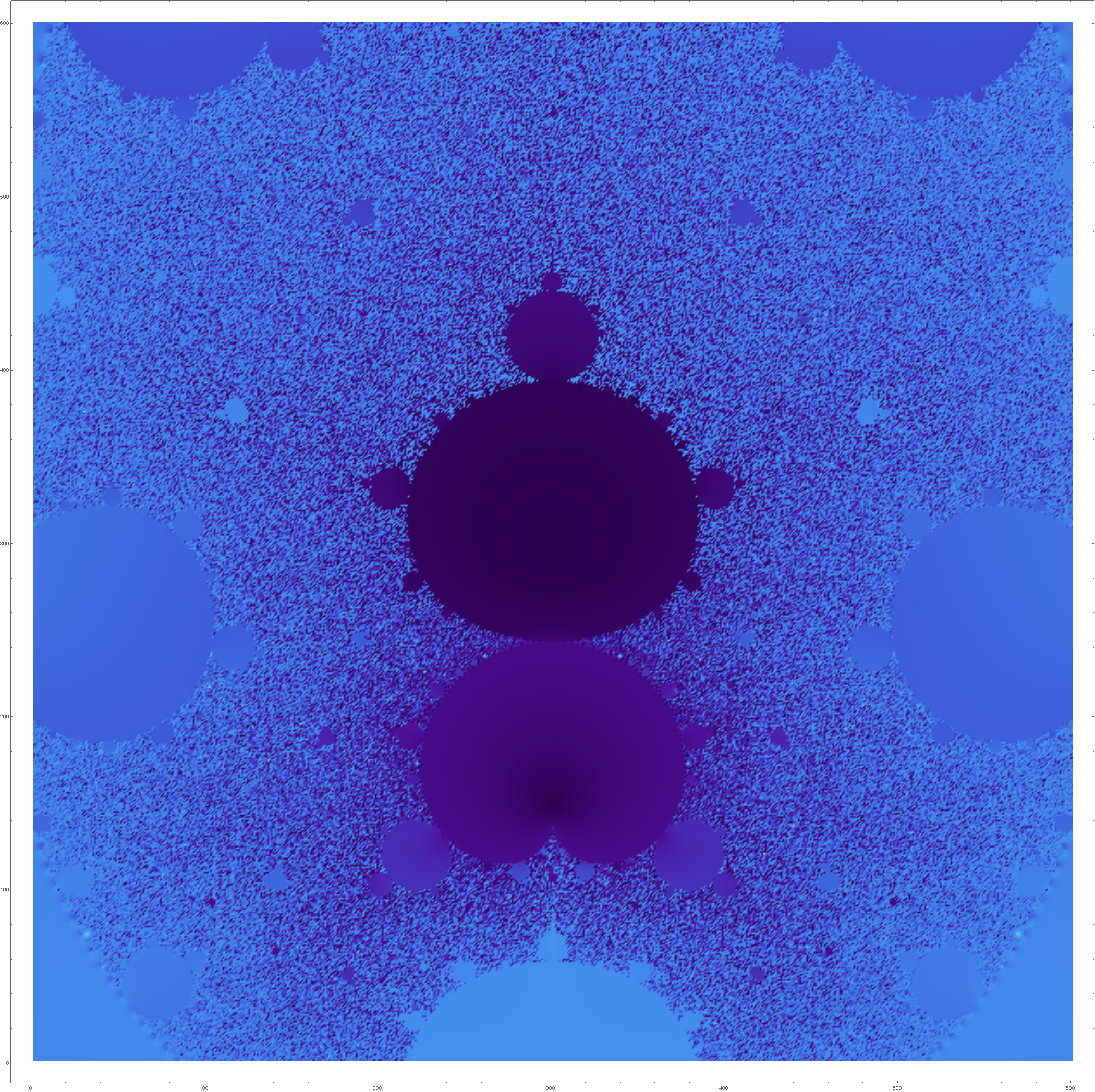
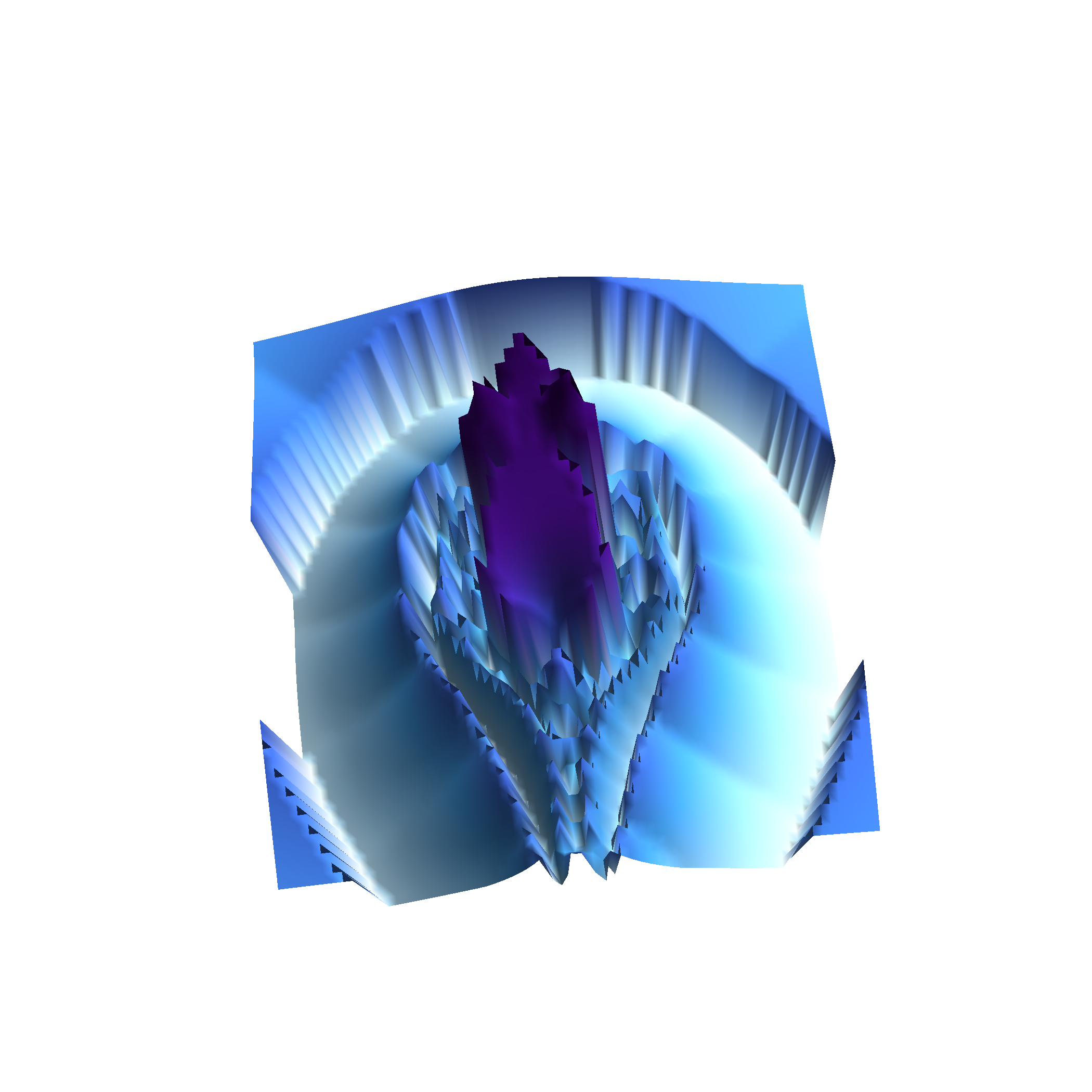
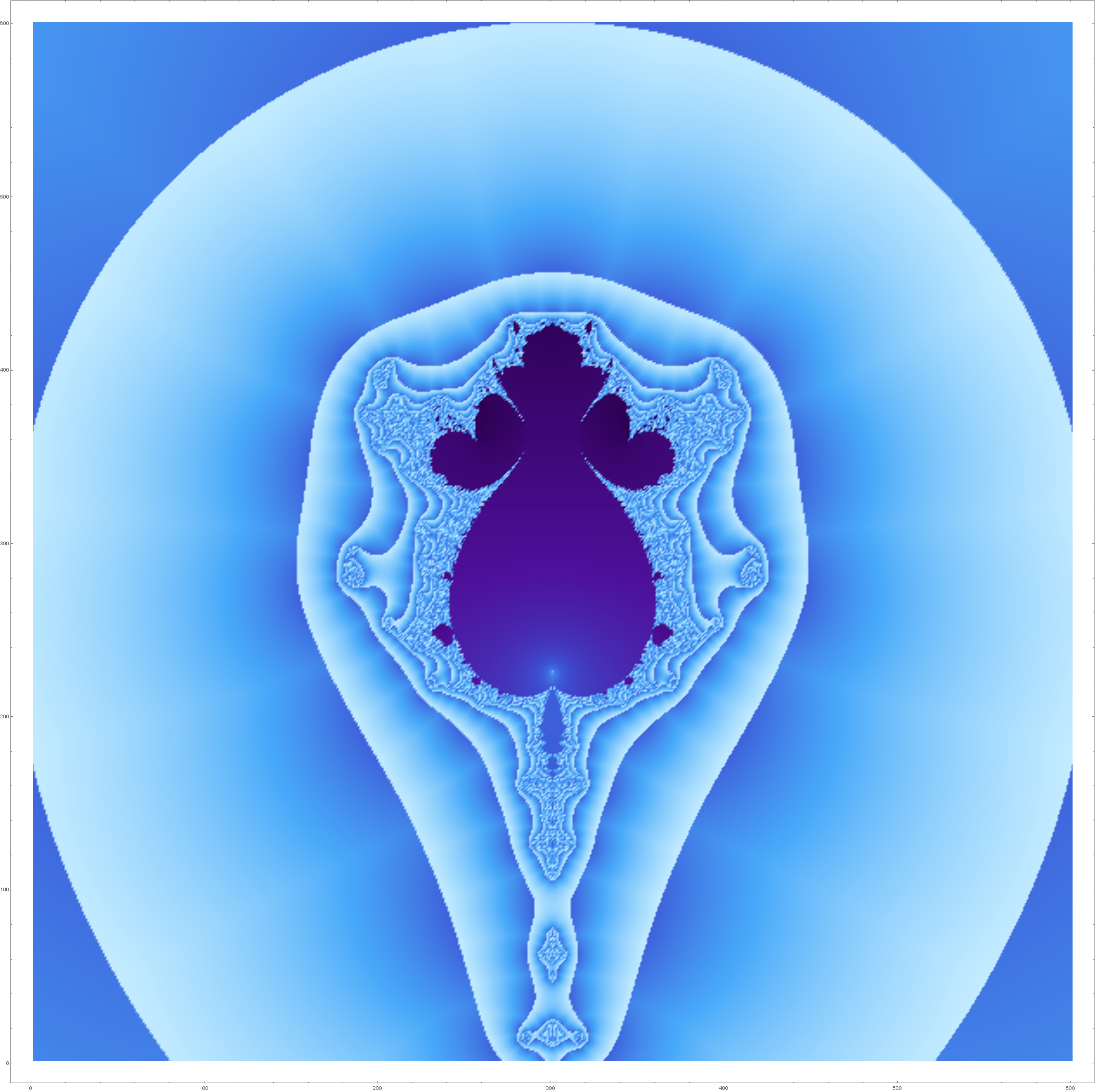
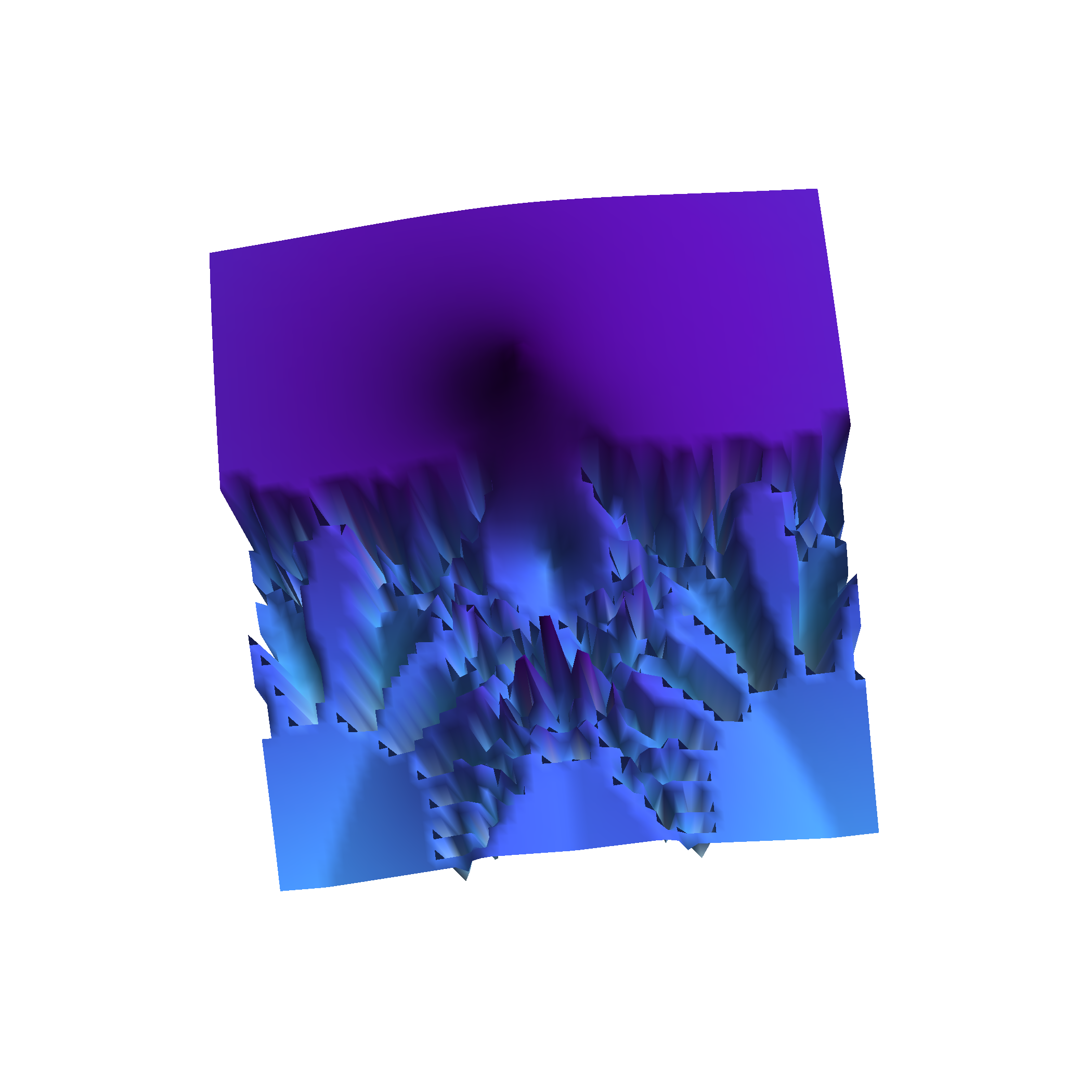
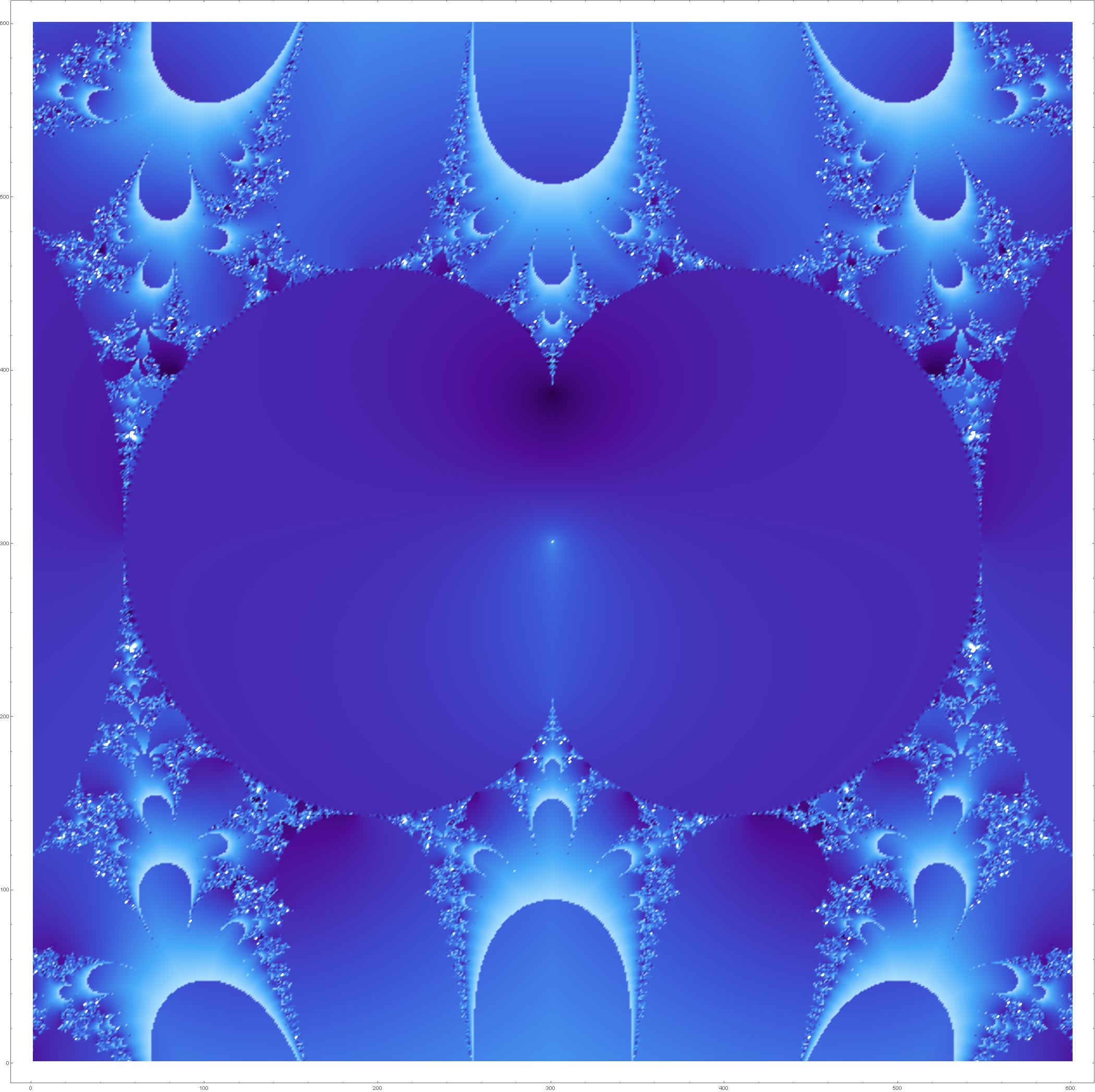
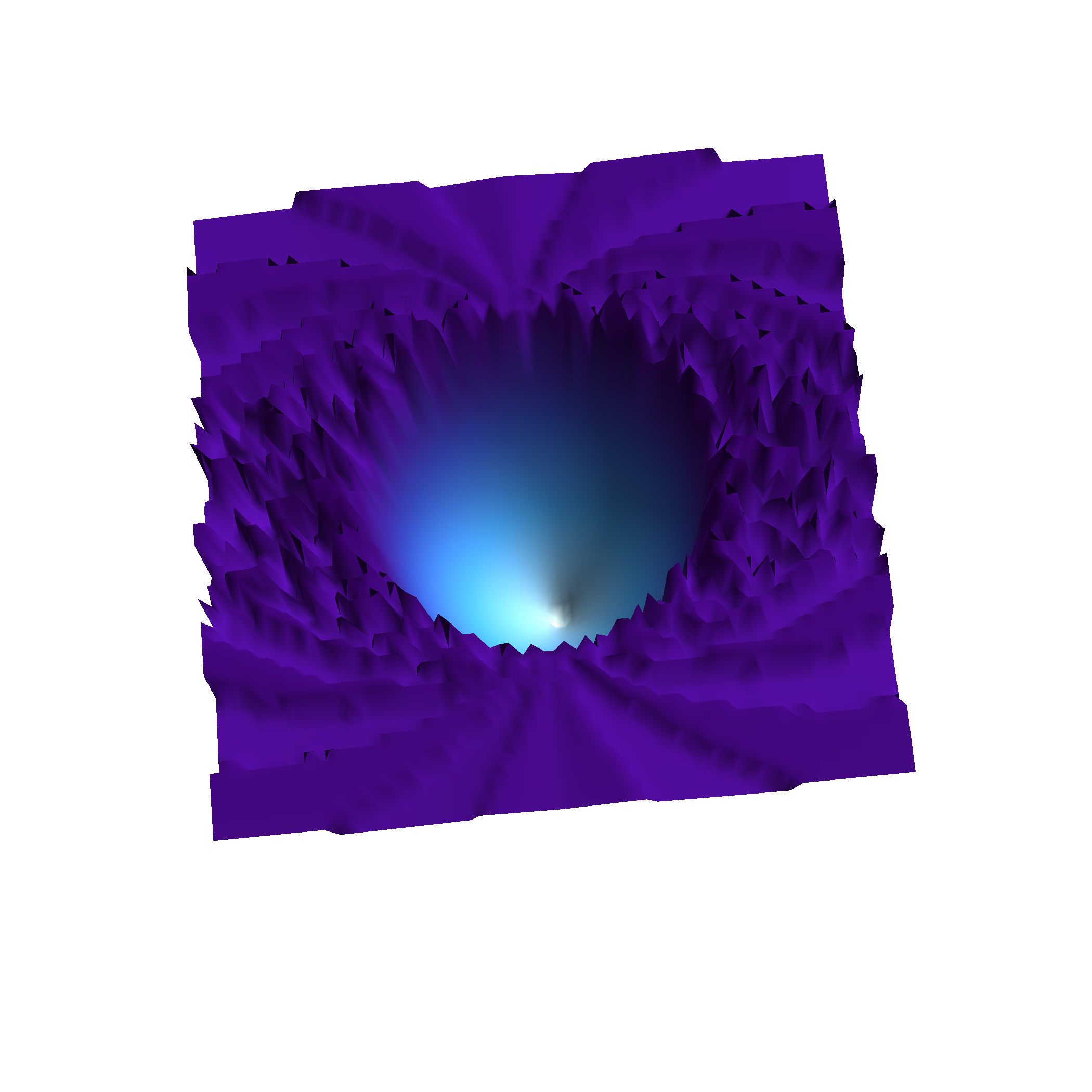
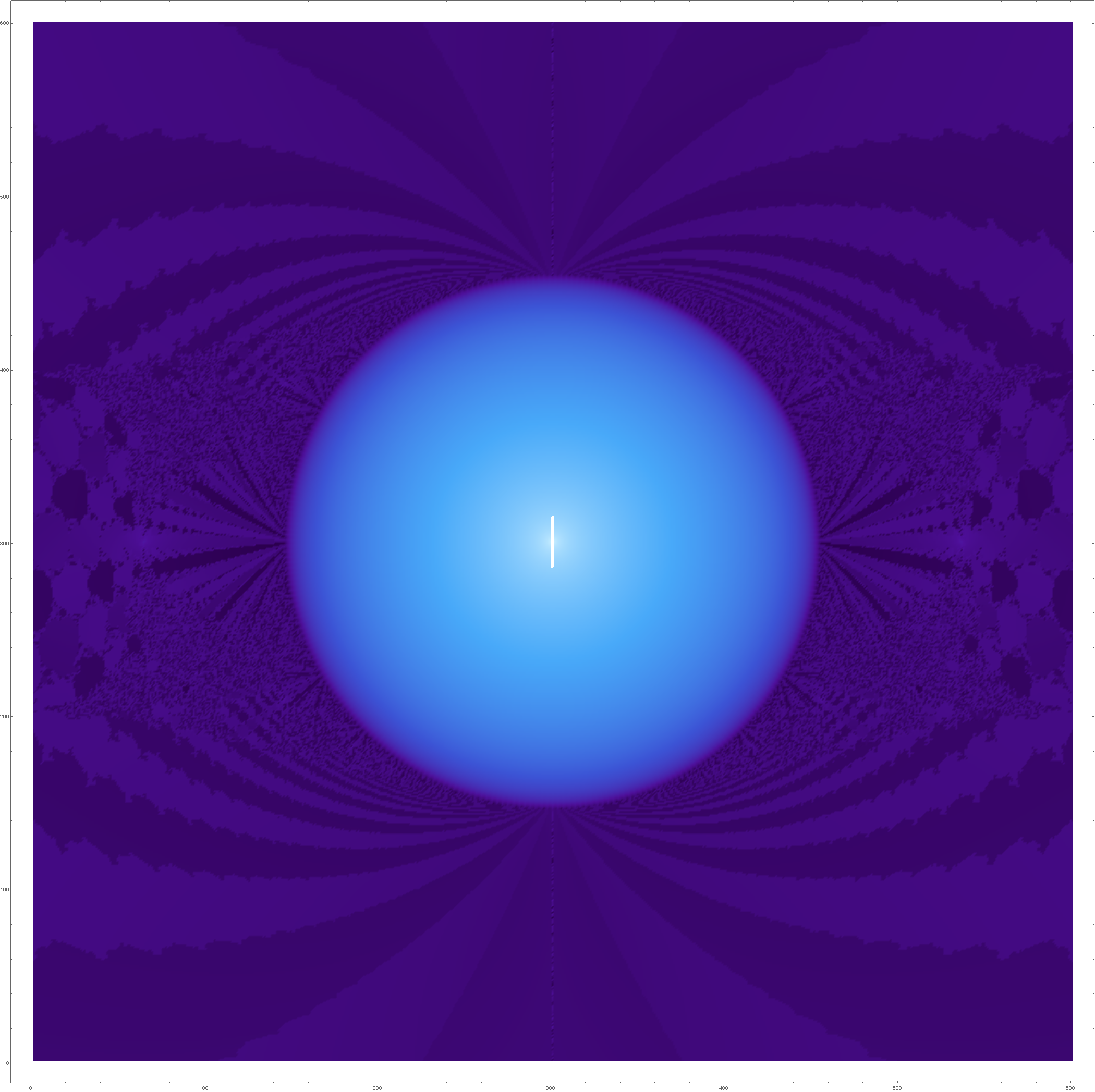
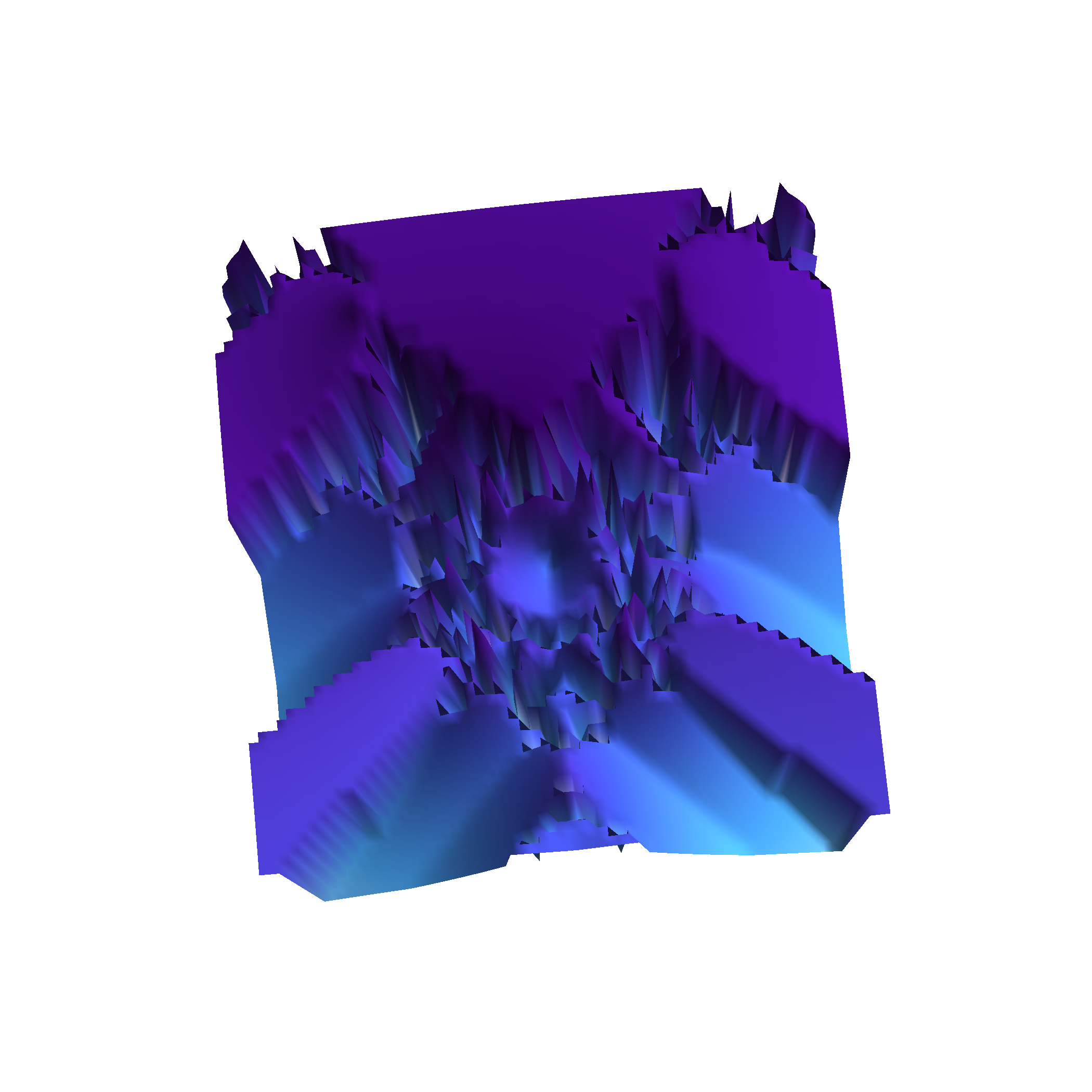
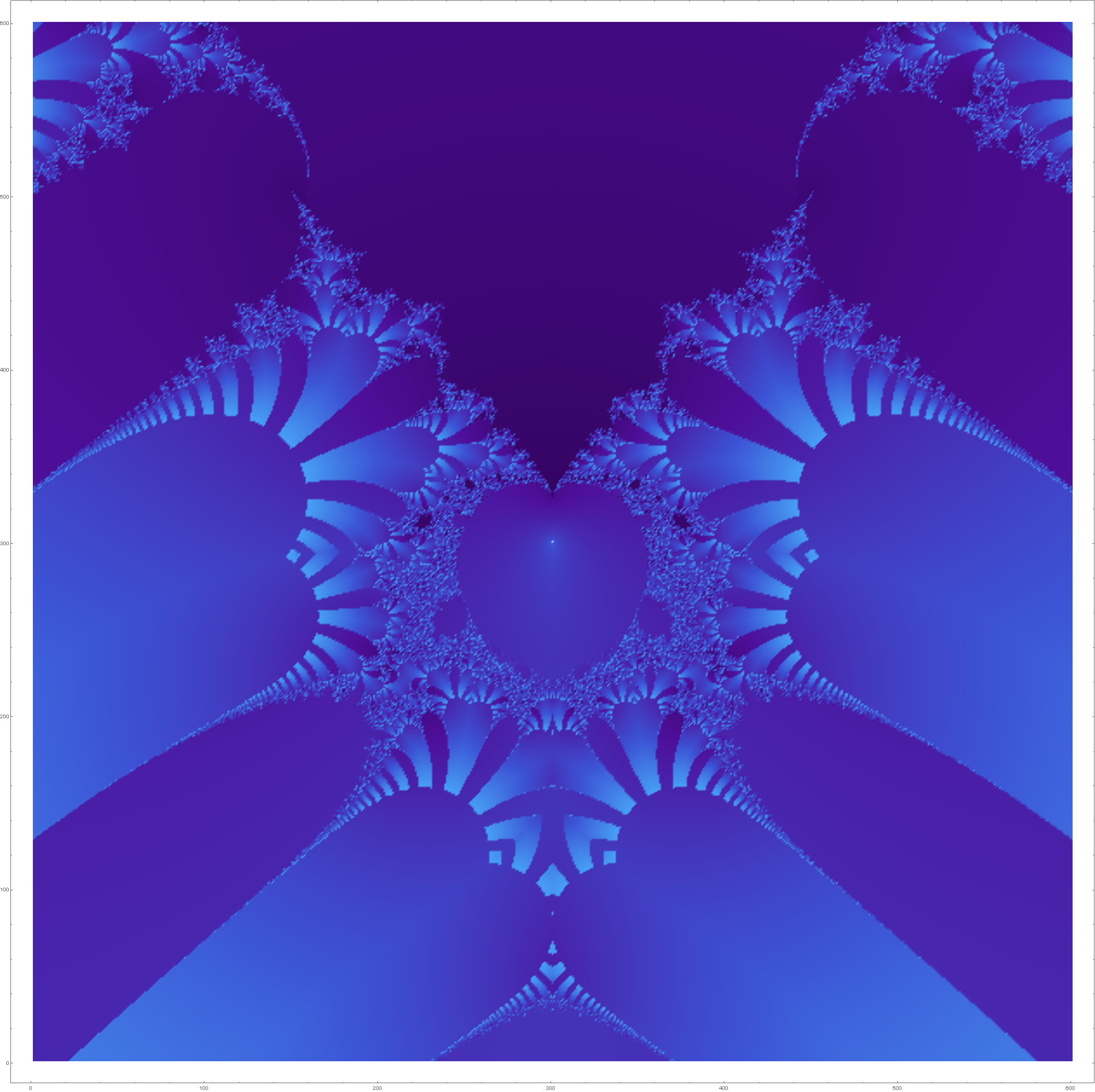
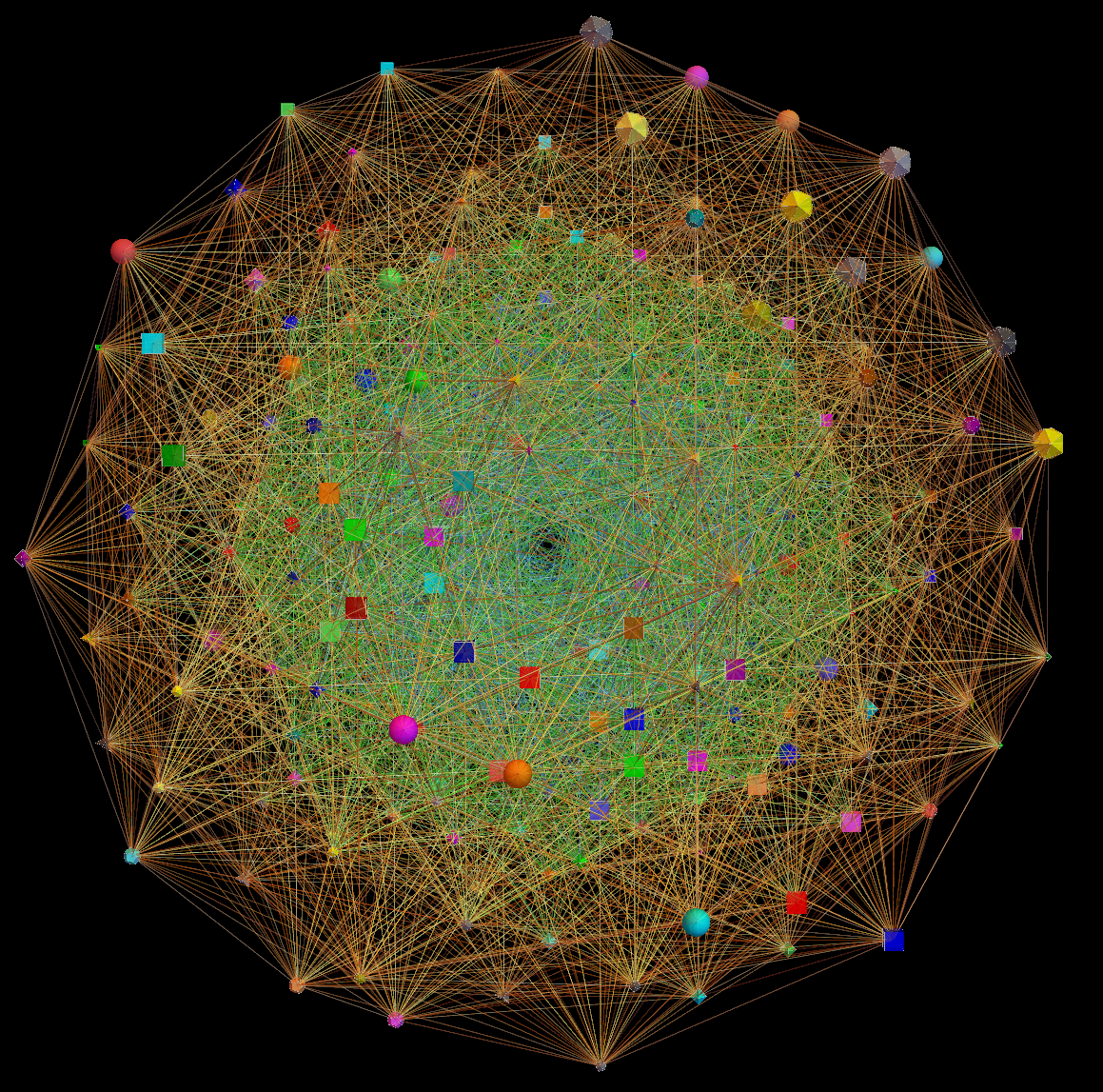
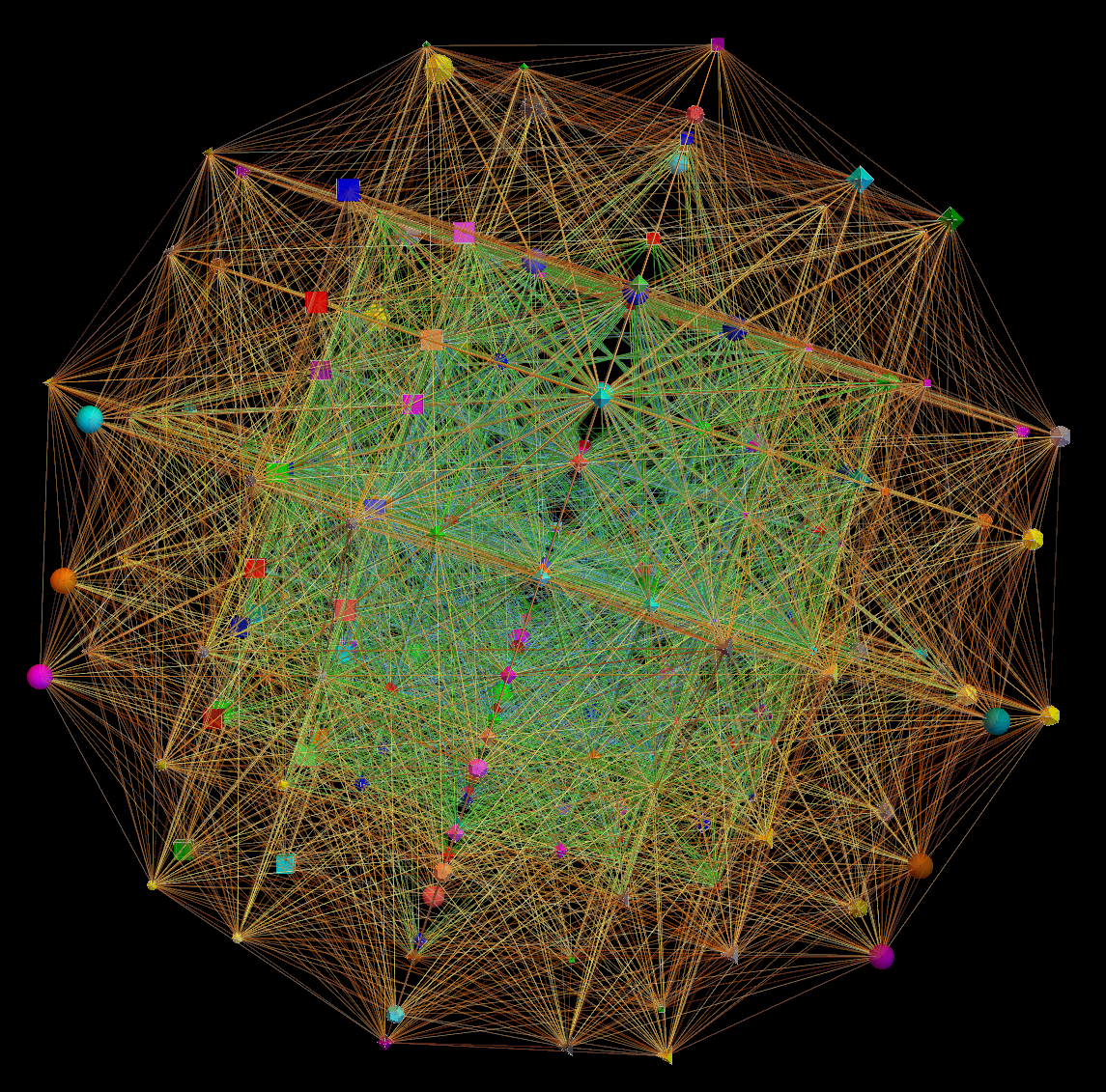
I’ve added some new features to my VisibLie_E8 ToE Demonstration. Some of it comes from Richard Hennigan’s Rotating The Hopf Fibration and Enrique Zeleny’s A Collection Of Chaotic Attractors . These are excellent demonstrations that I’ve now included with the features of my integrated ToE demonstration, since they are not only great visualizations, but relate to the high-dimensional physics of E8, octonions and their projections. This gives the opportunity to change the background and color schemes, as well as output 3D models or stereoscopic L/R and red-cyan anaglyph images.

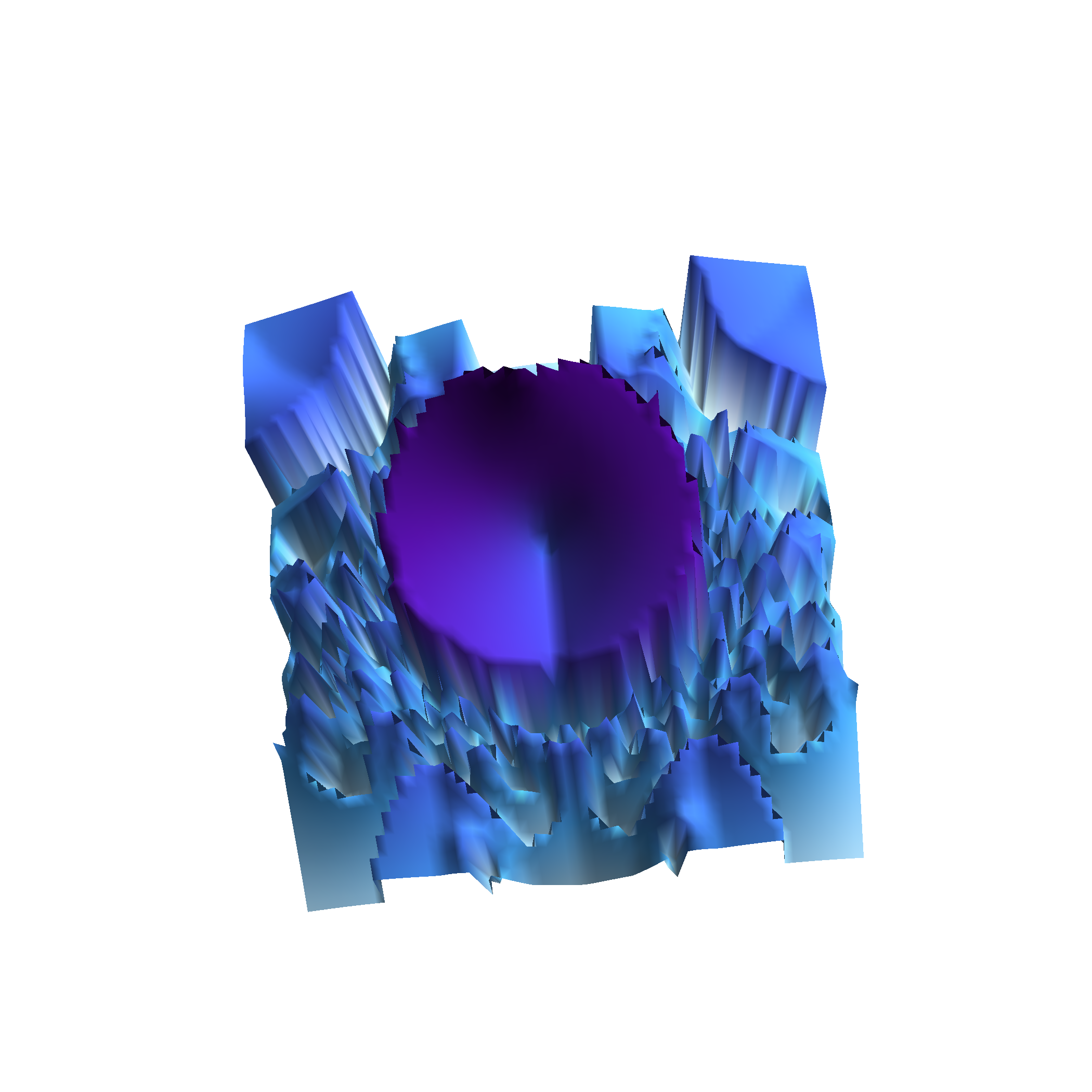
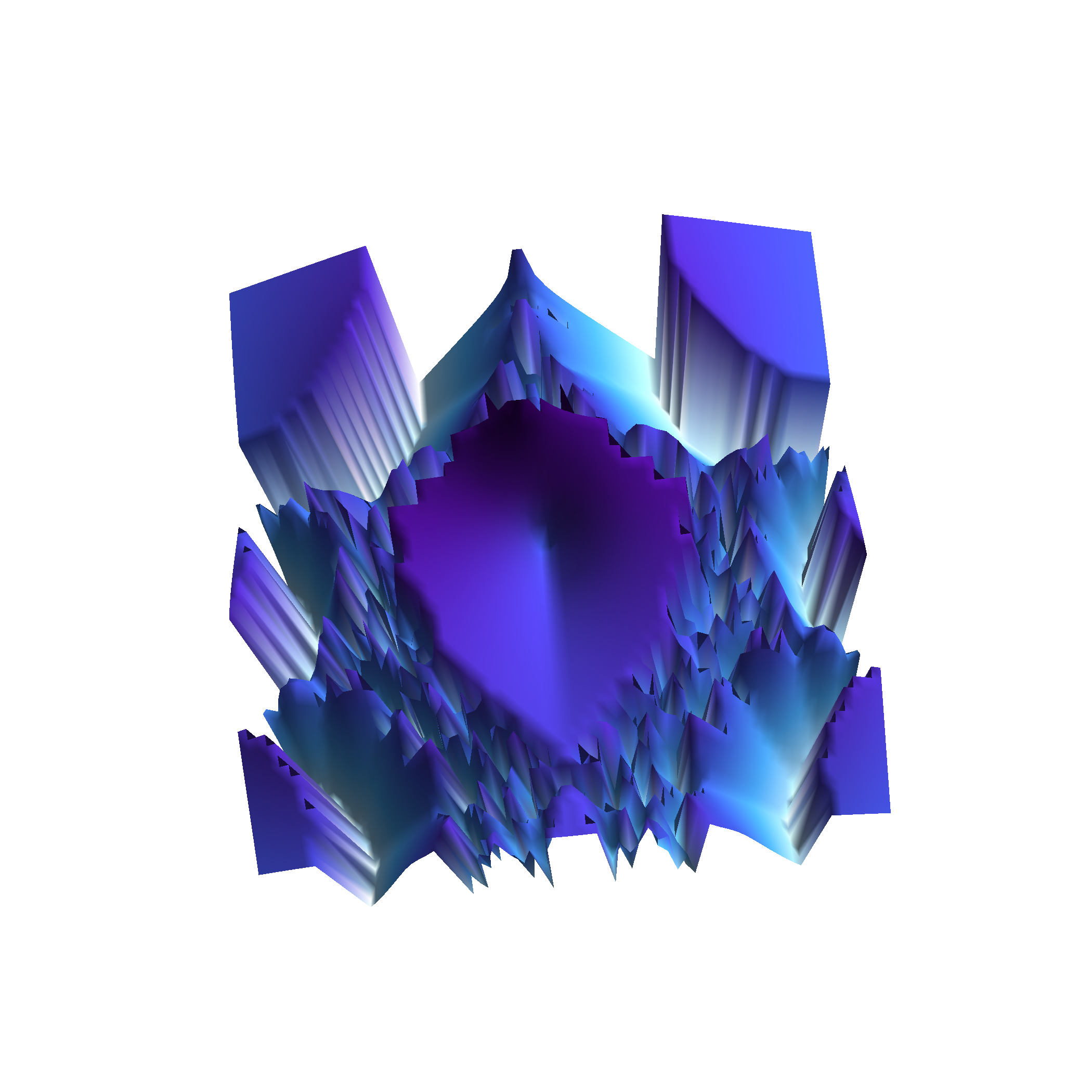
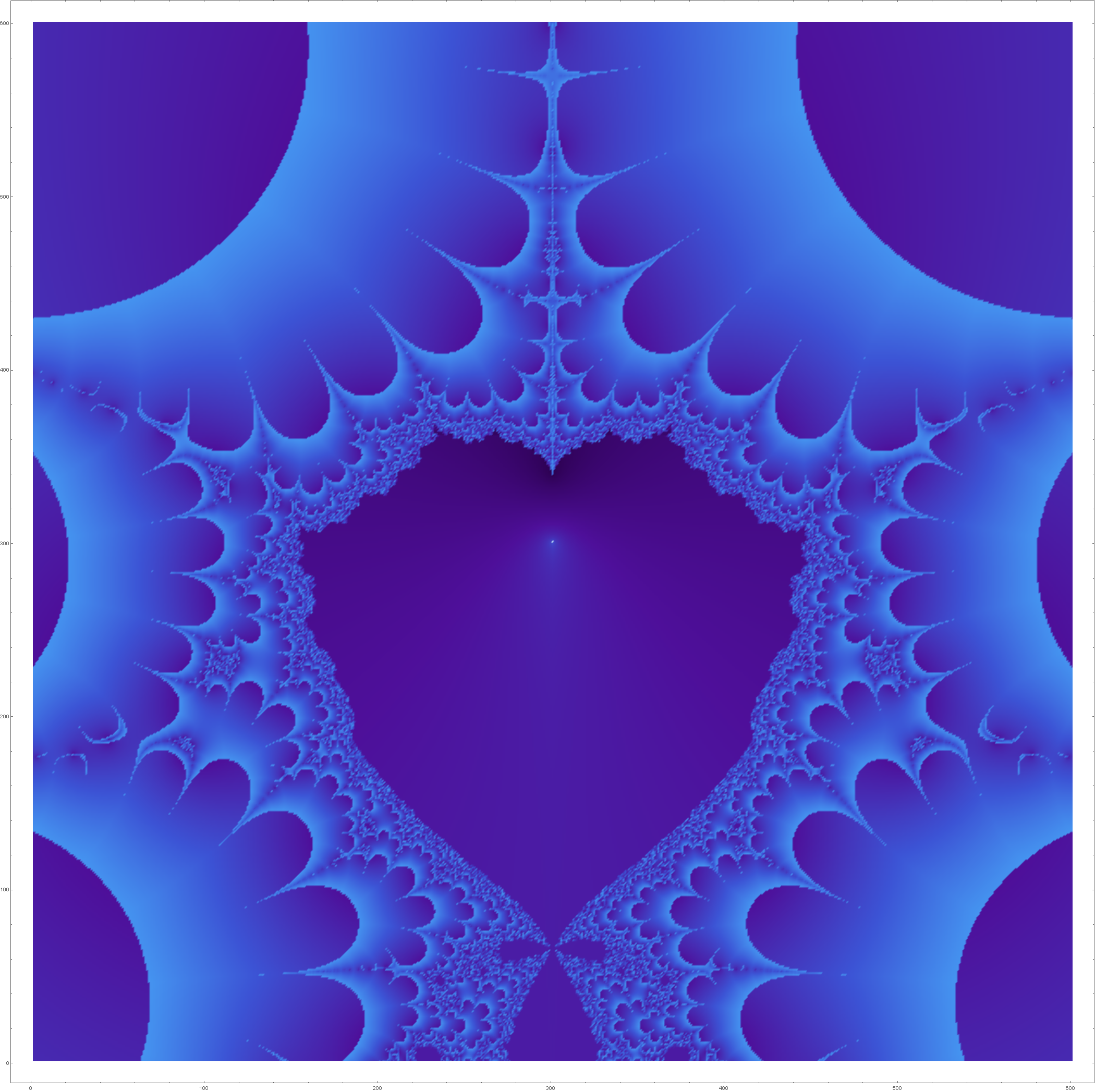
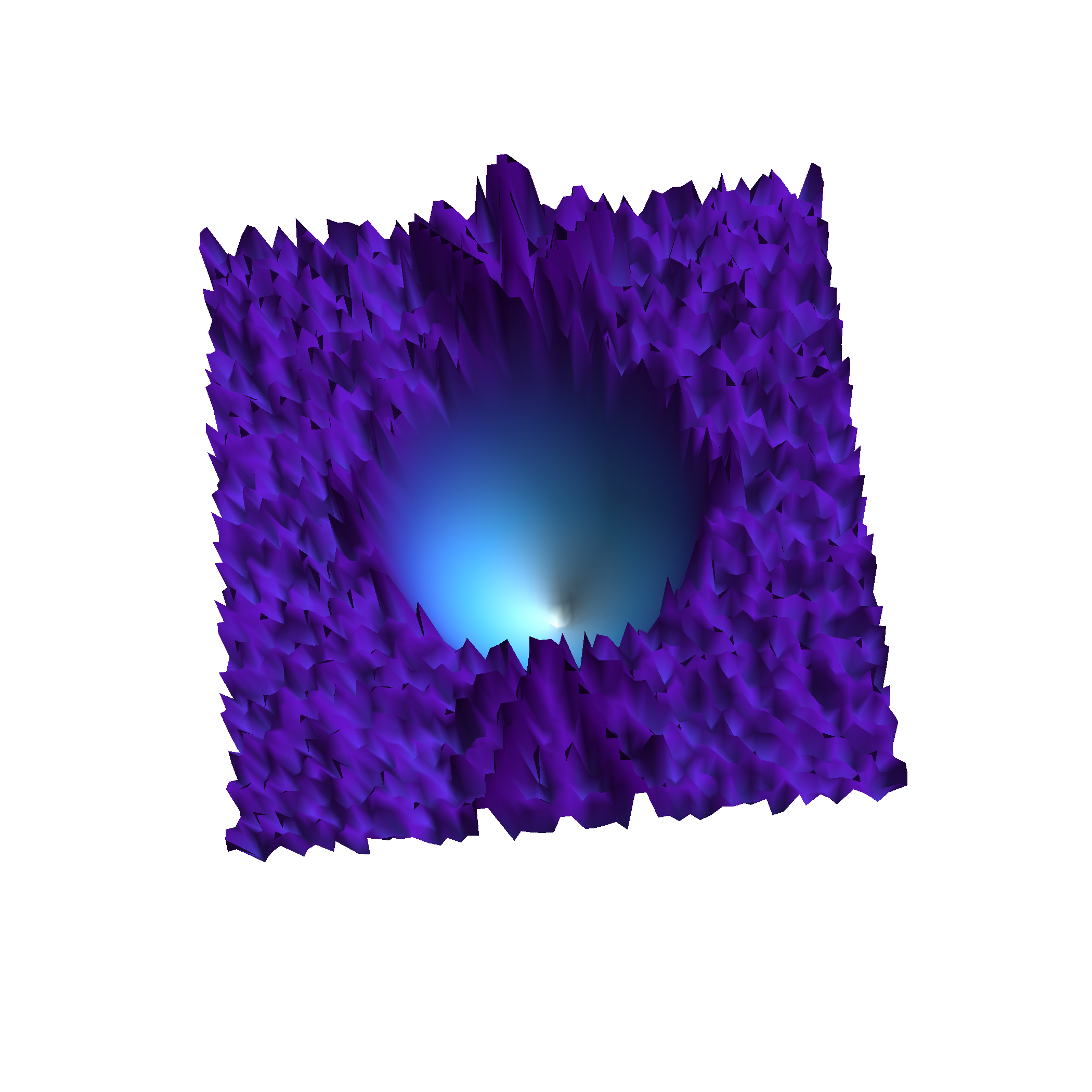
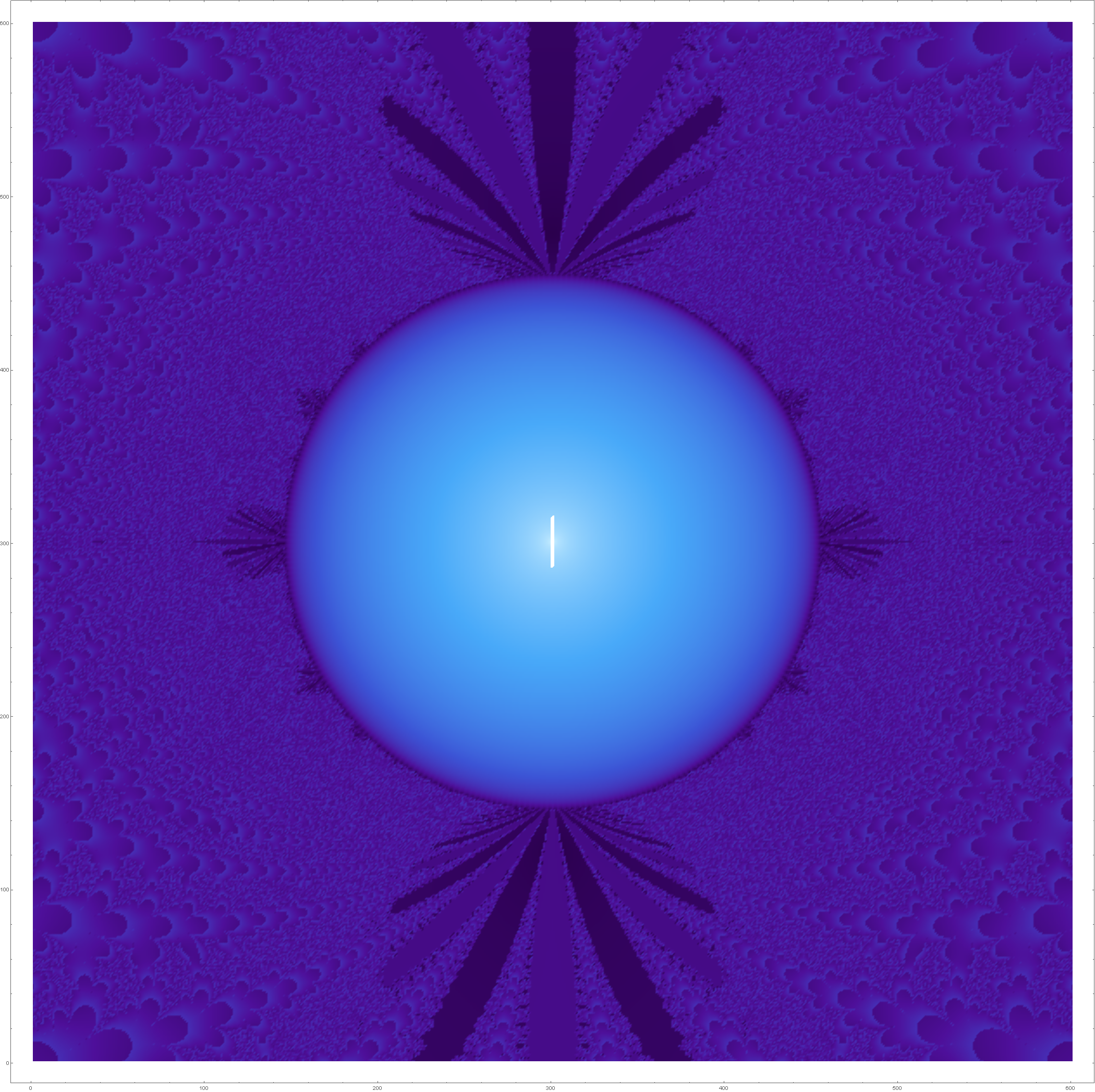
outChaos3

Hopf3Dstereo

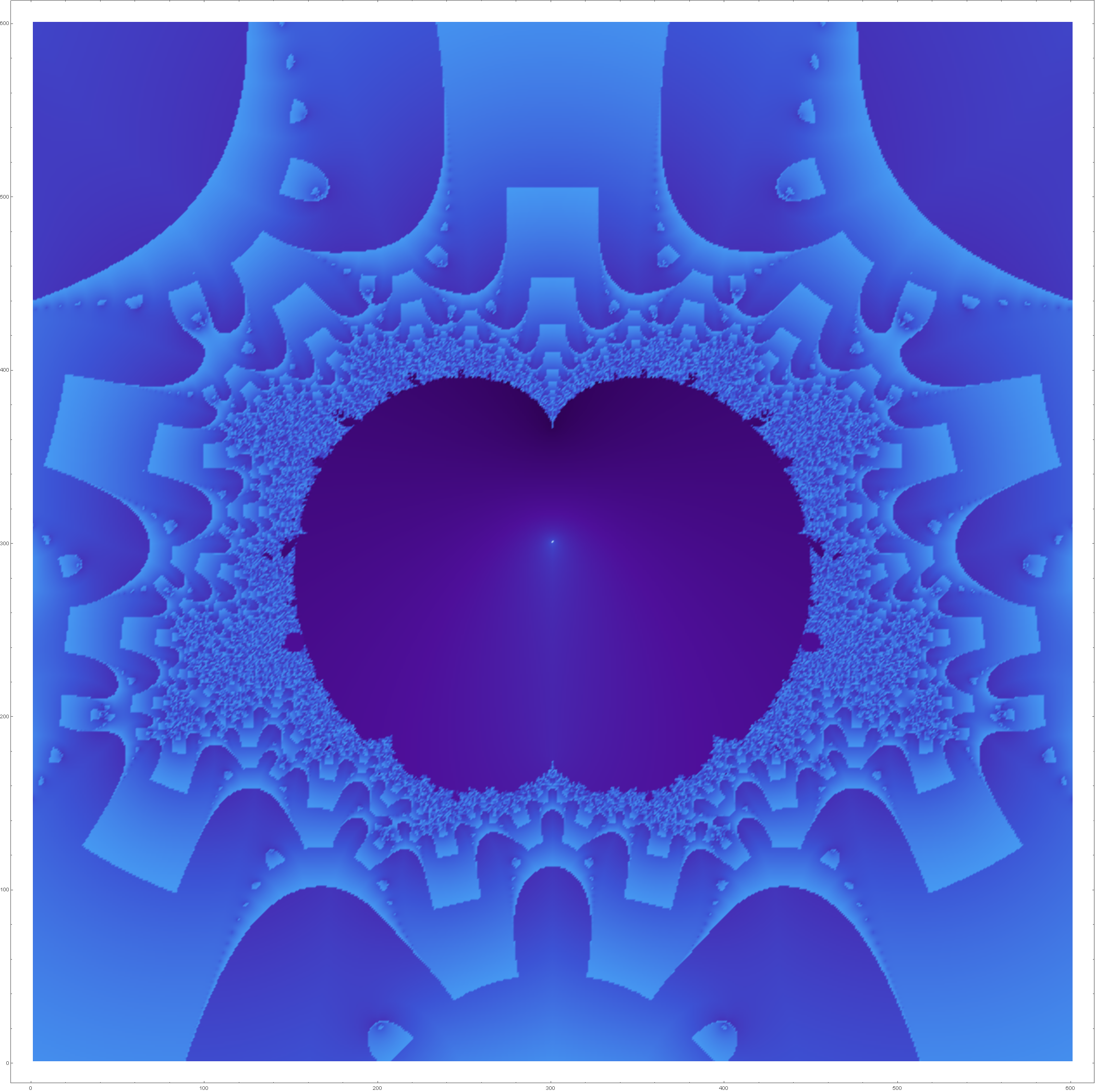
outChaos2

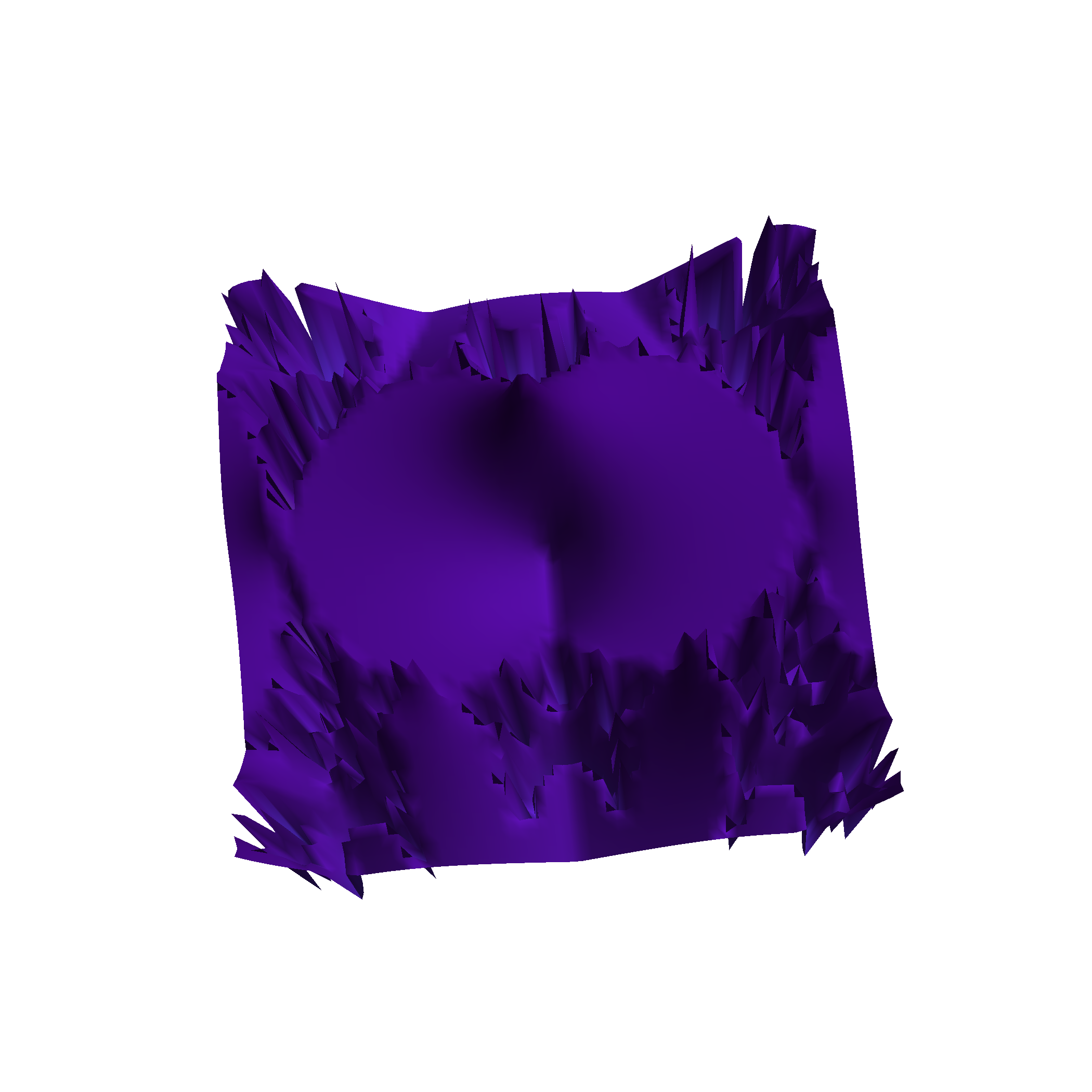
outChaos1

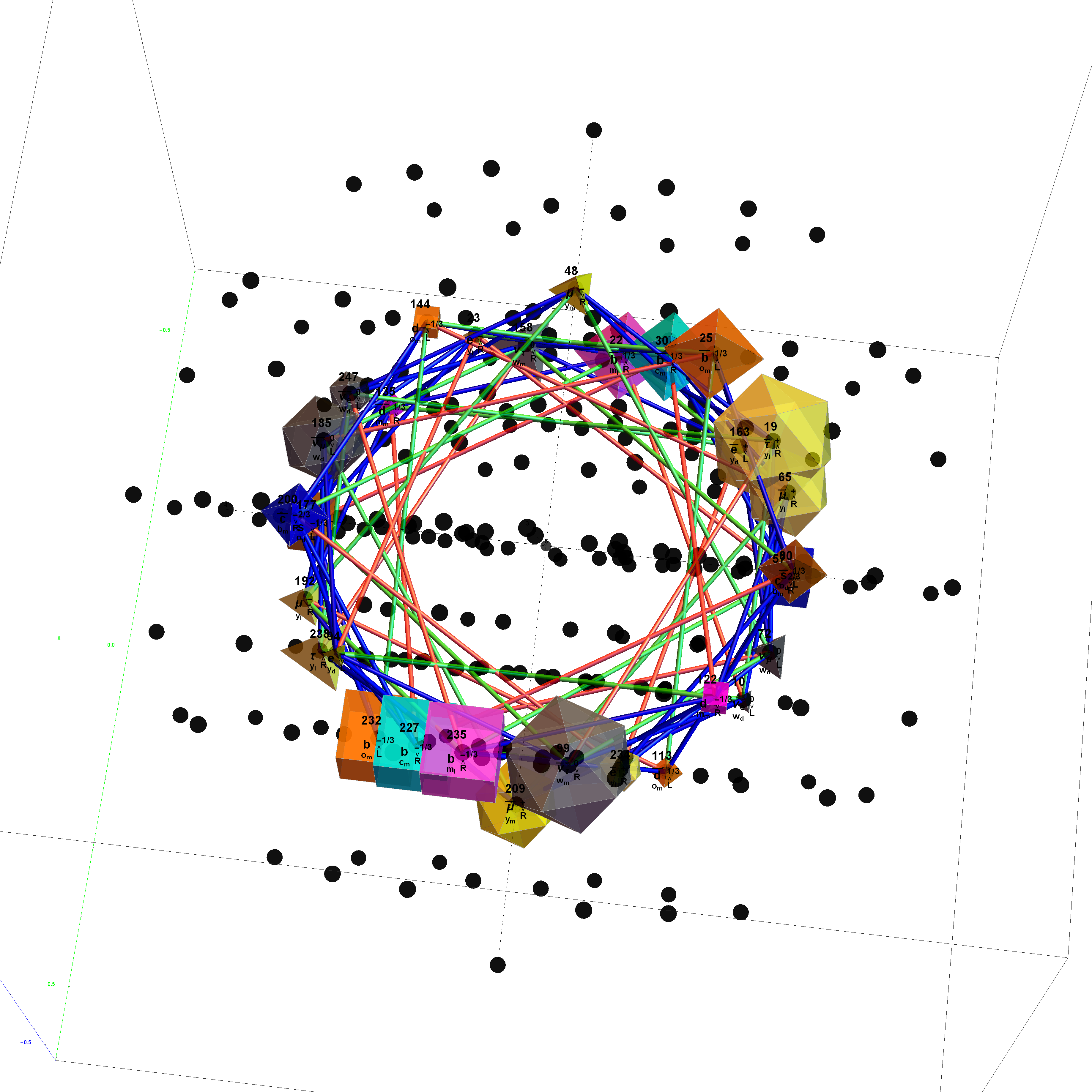
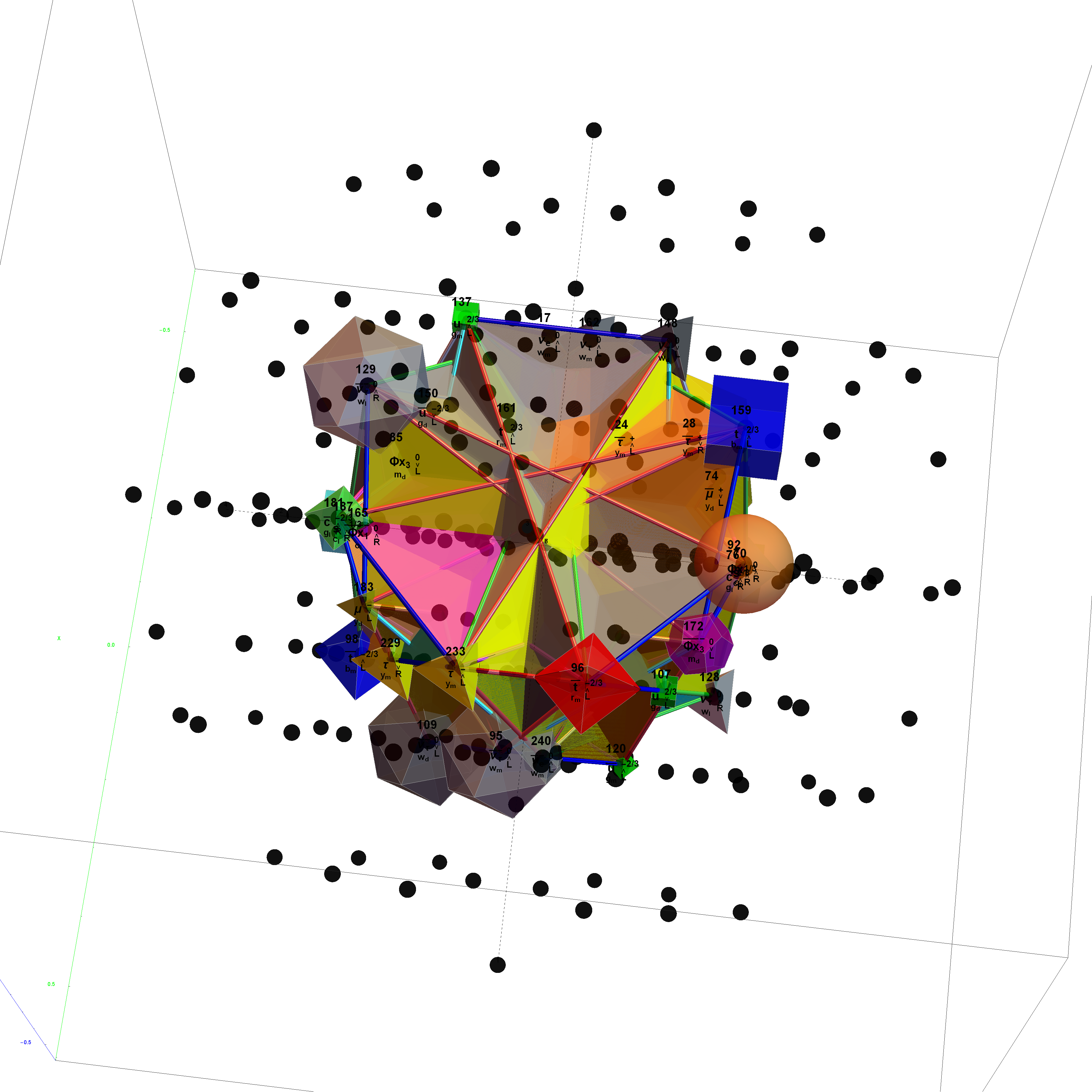
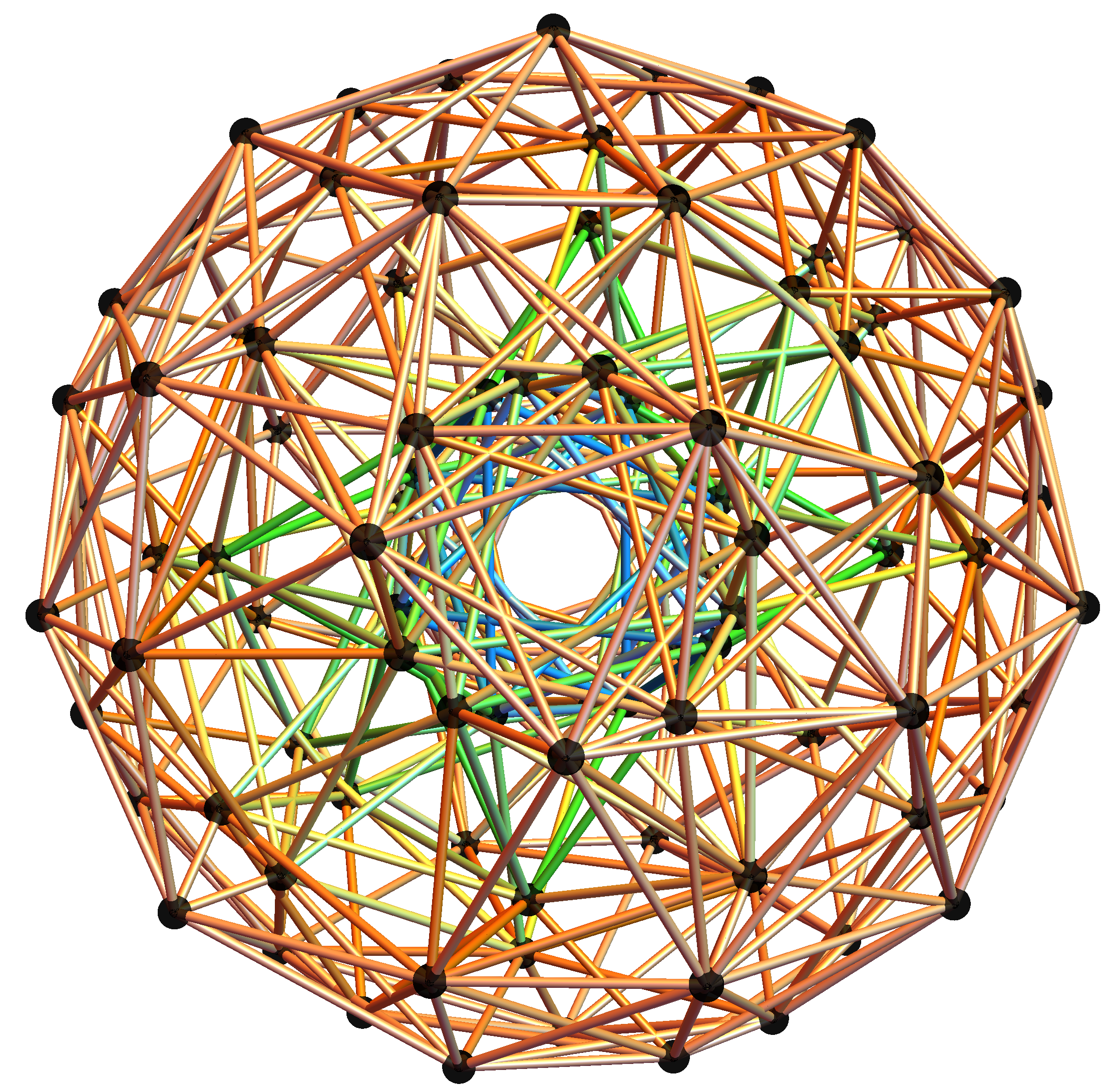
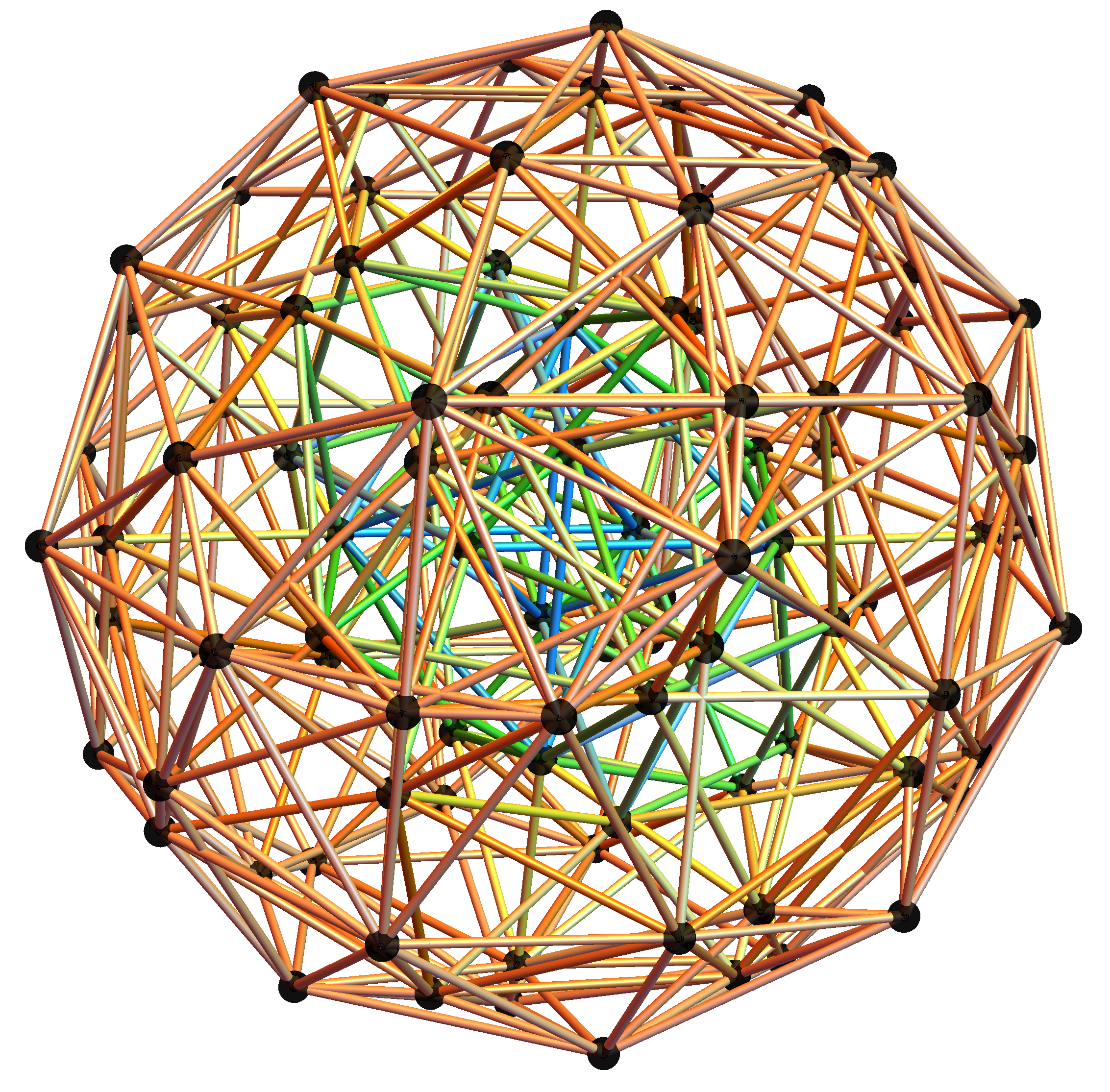
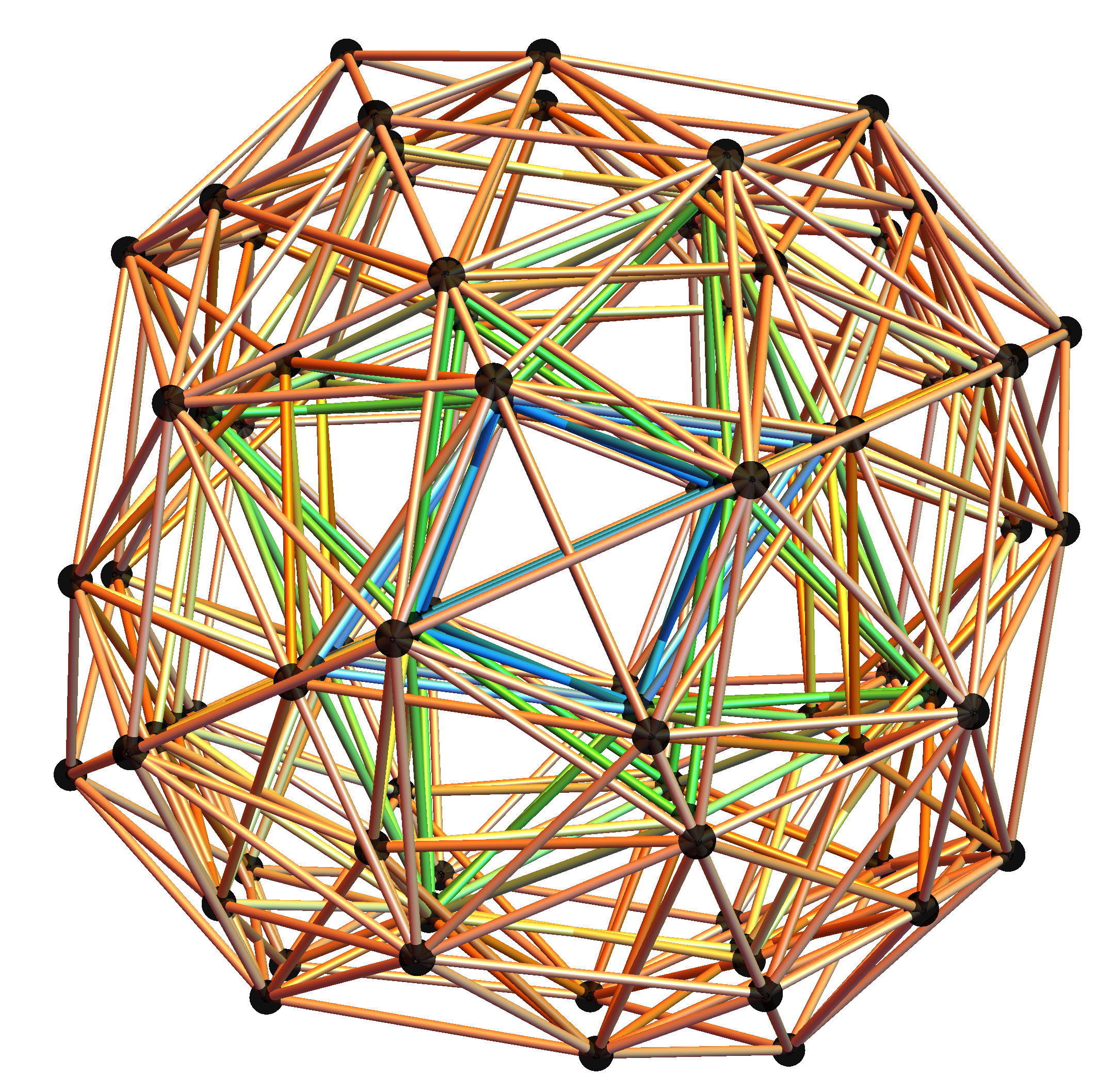
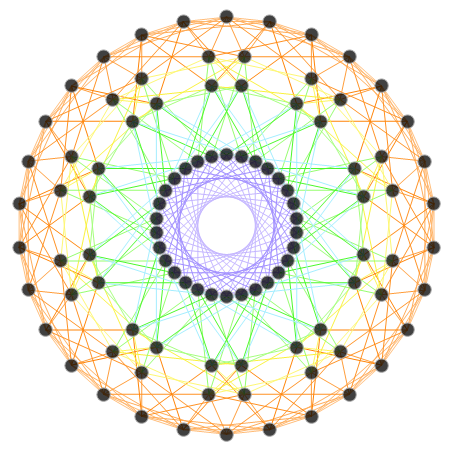
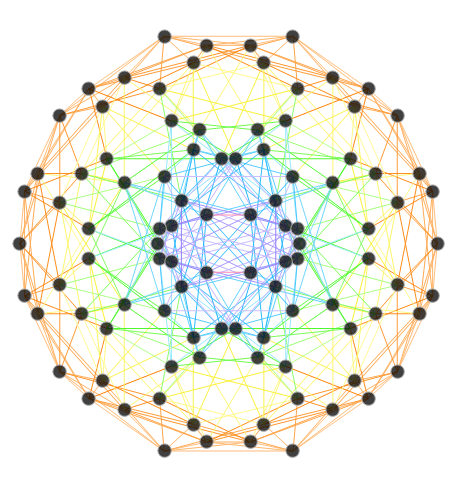
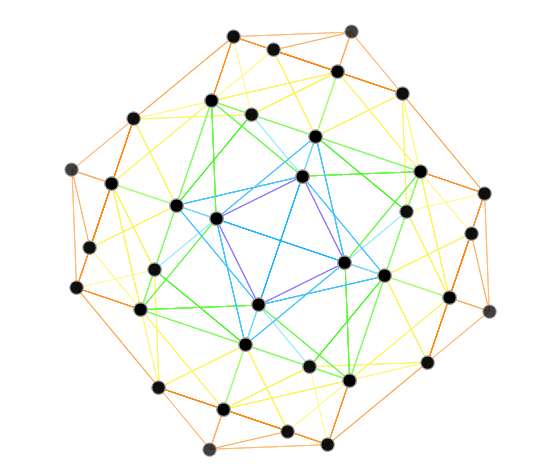
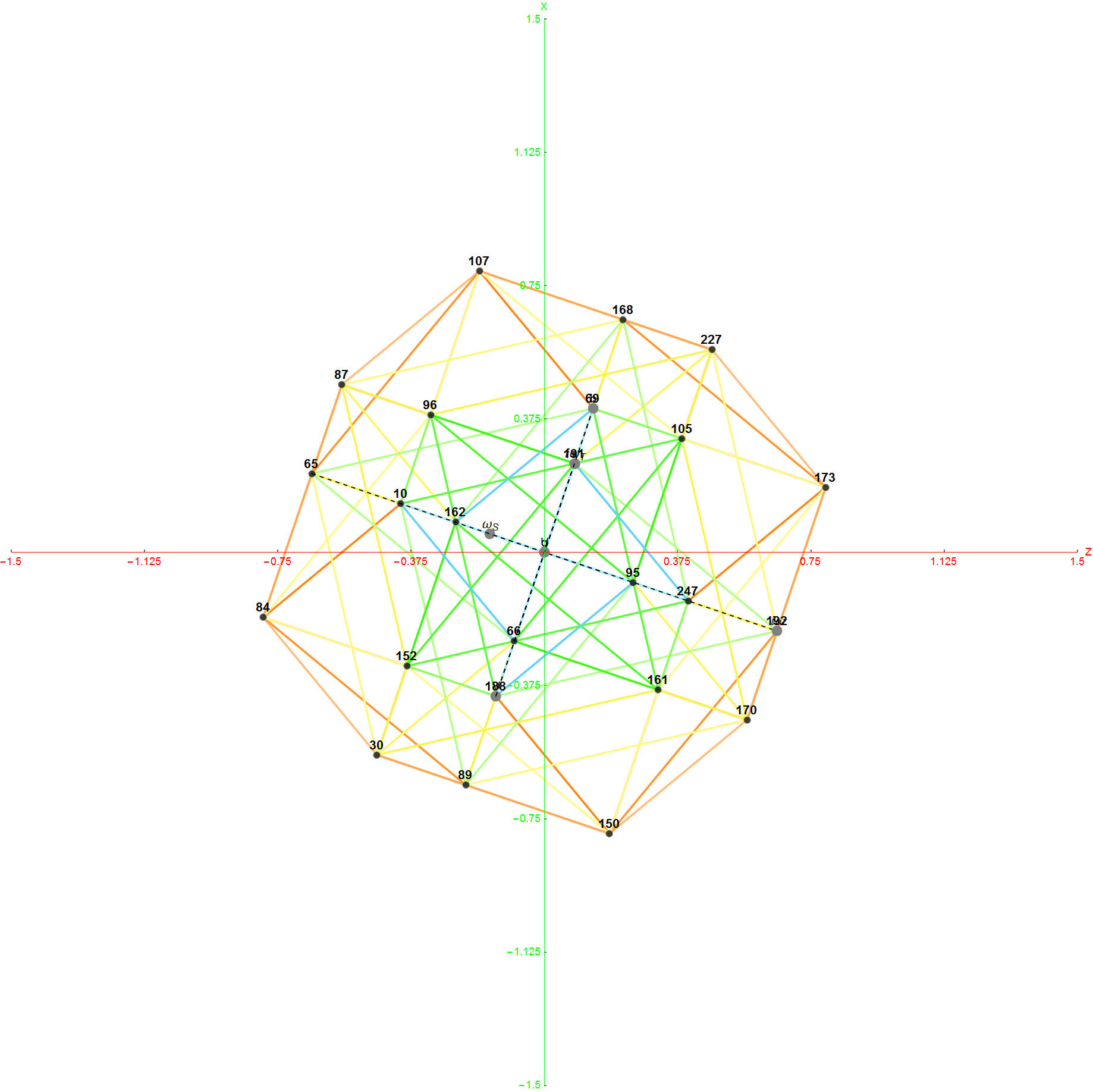
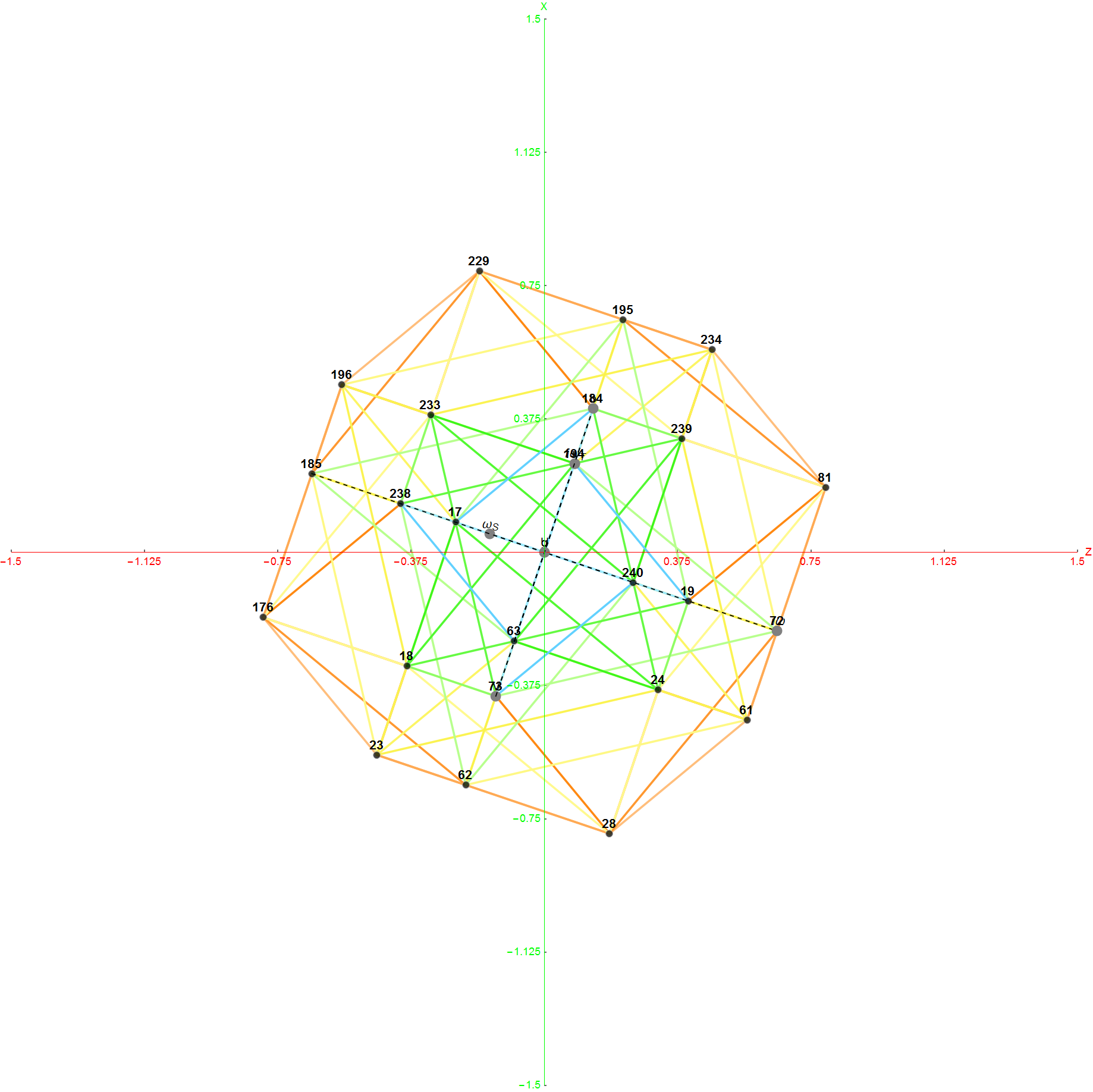
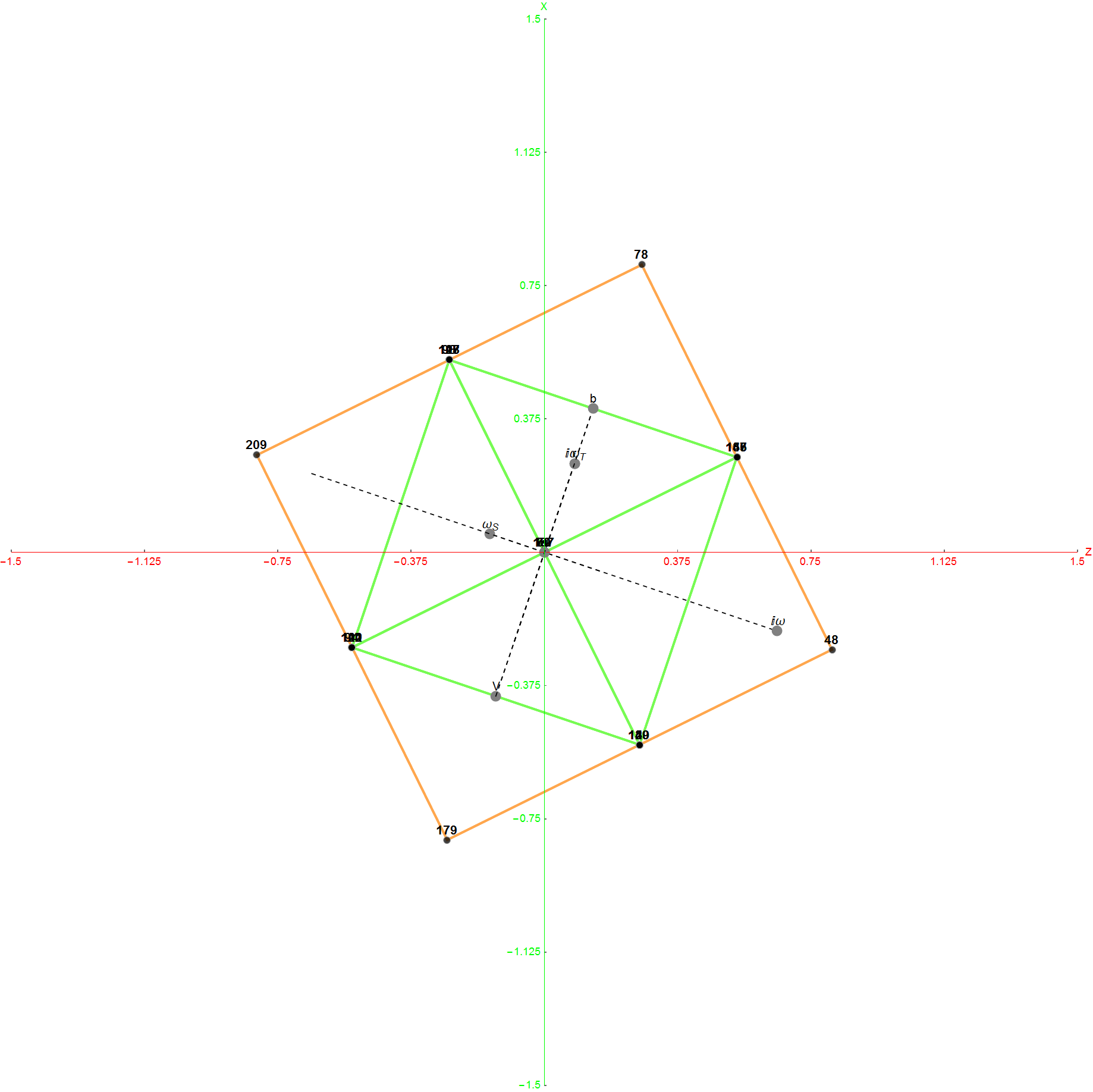
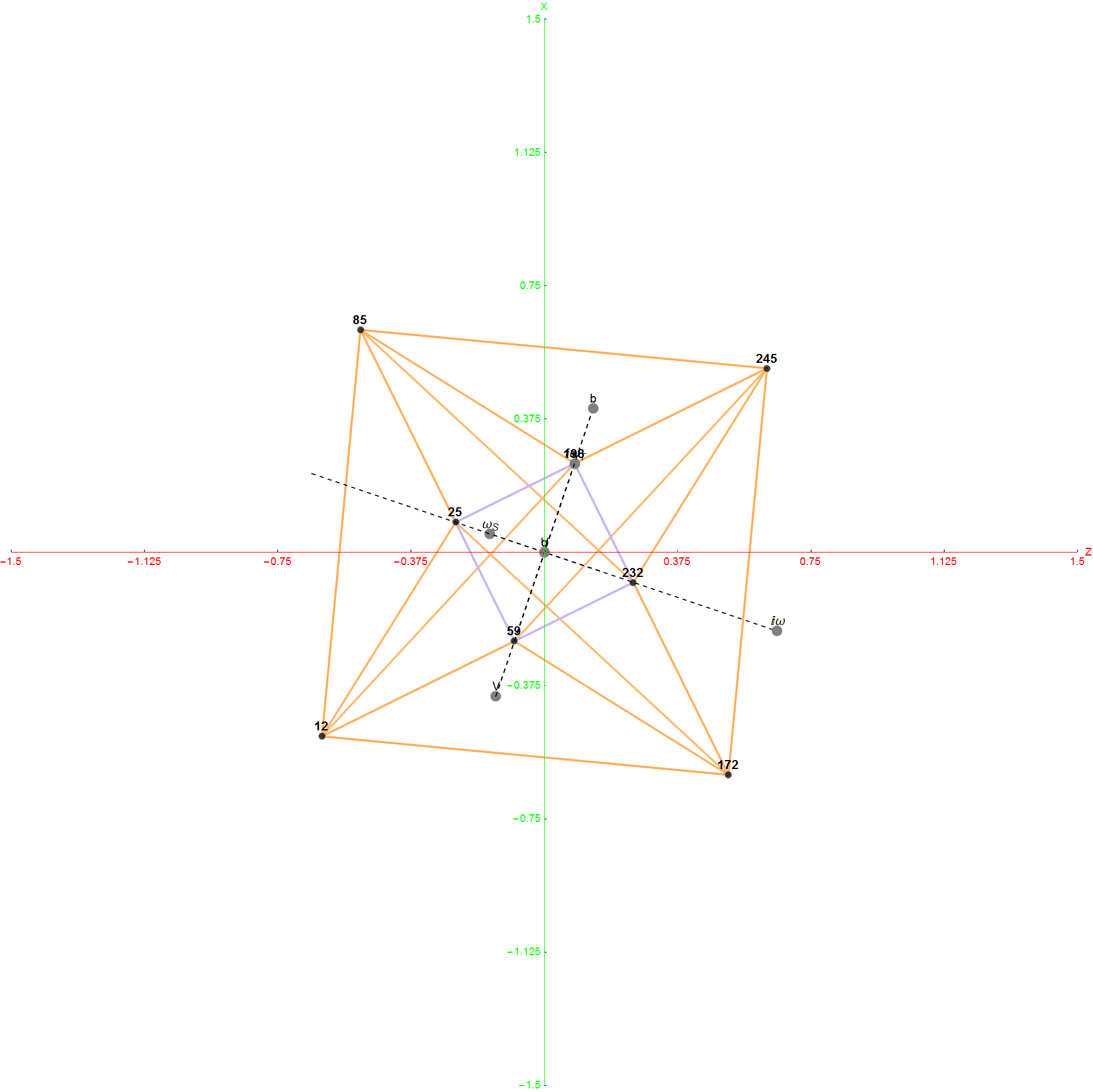
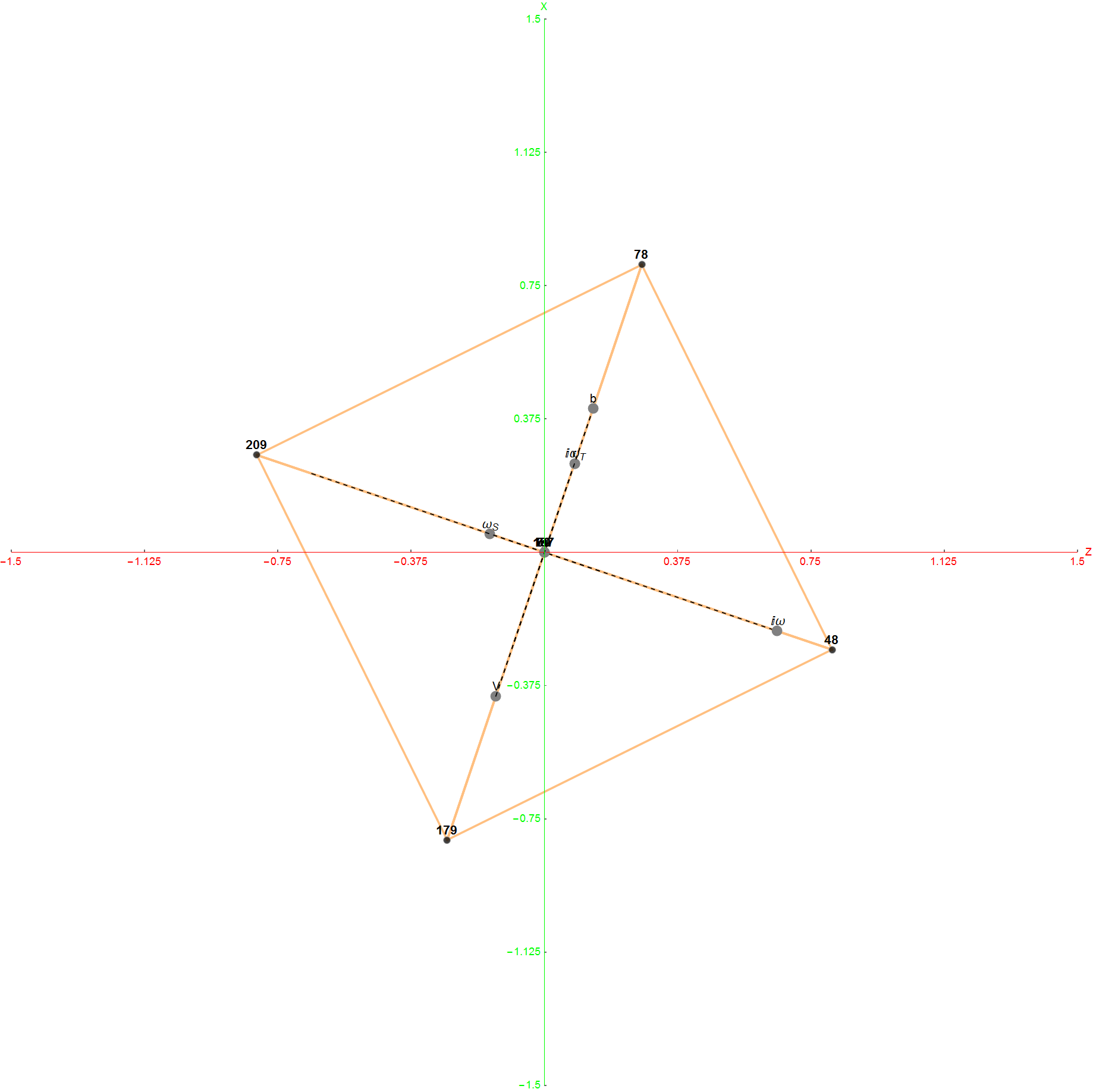
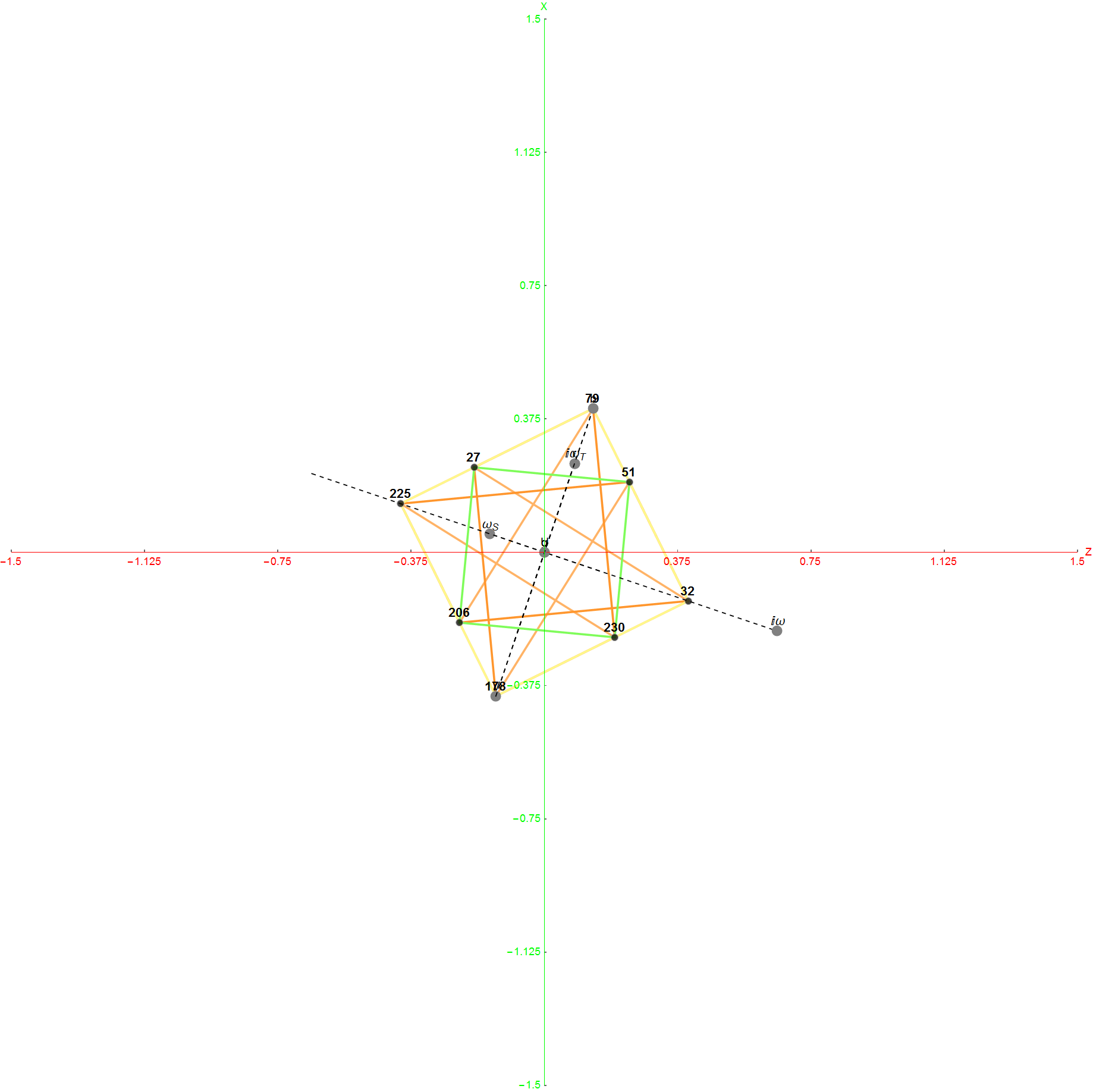
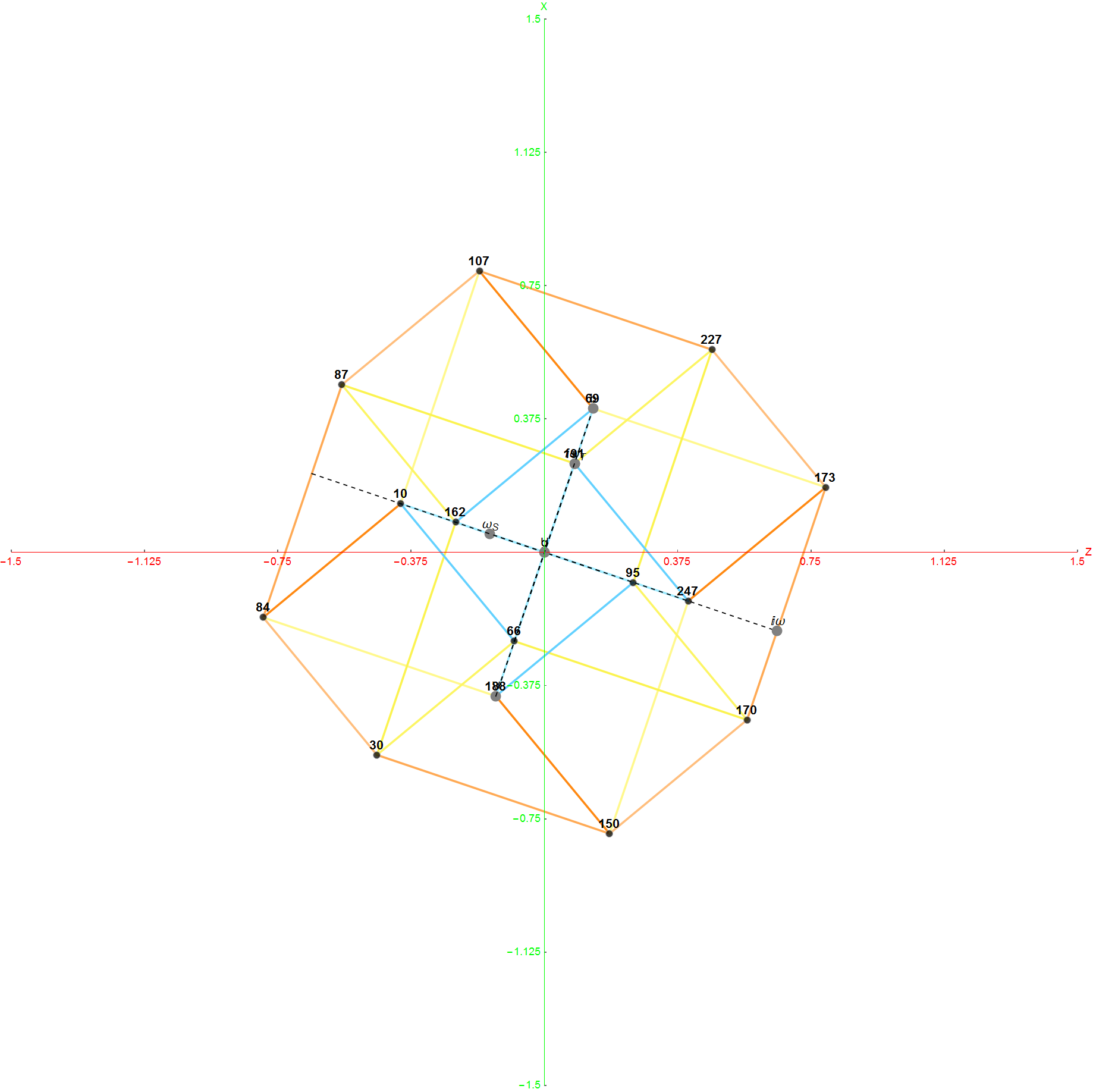
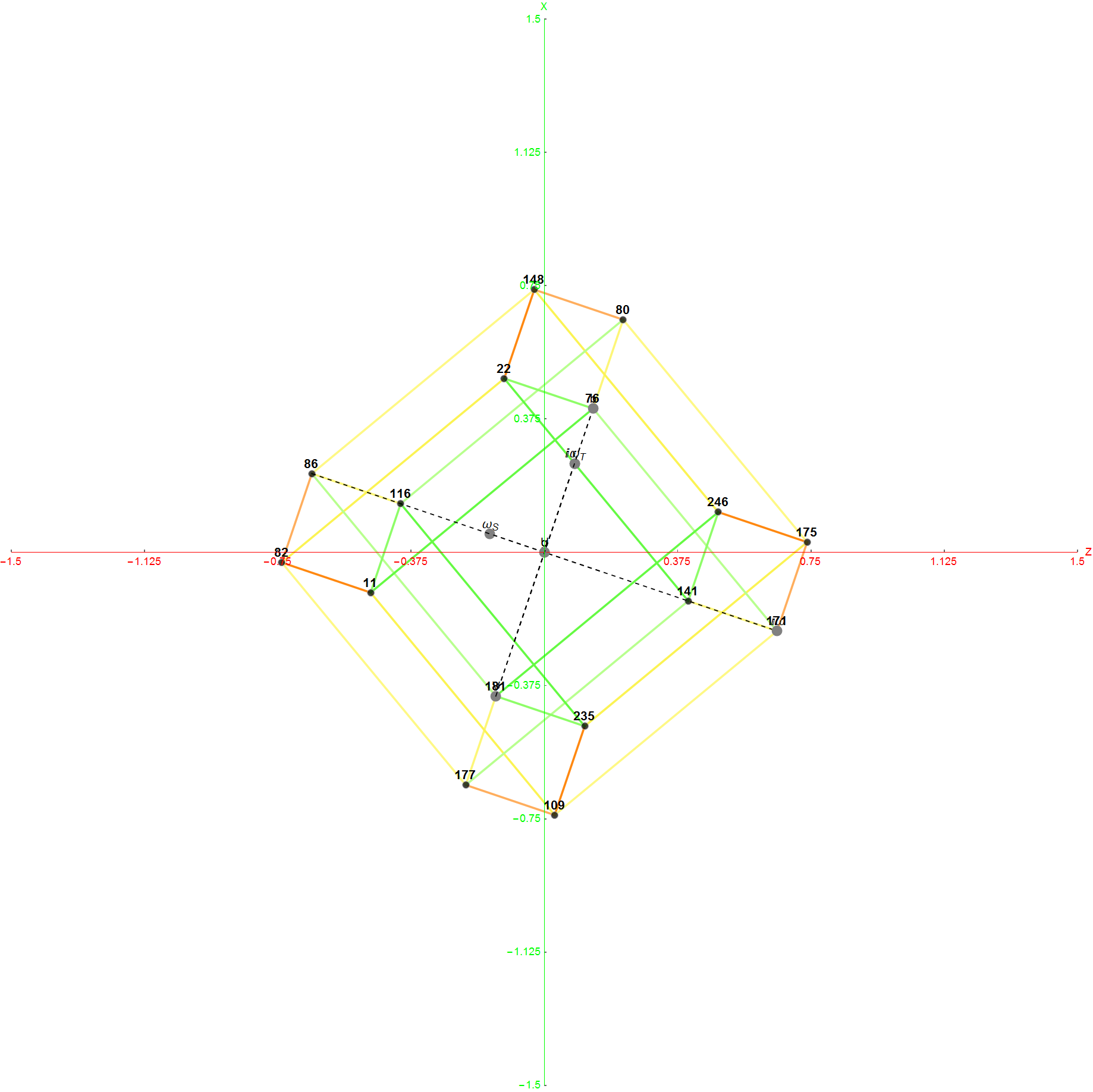
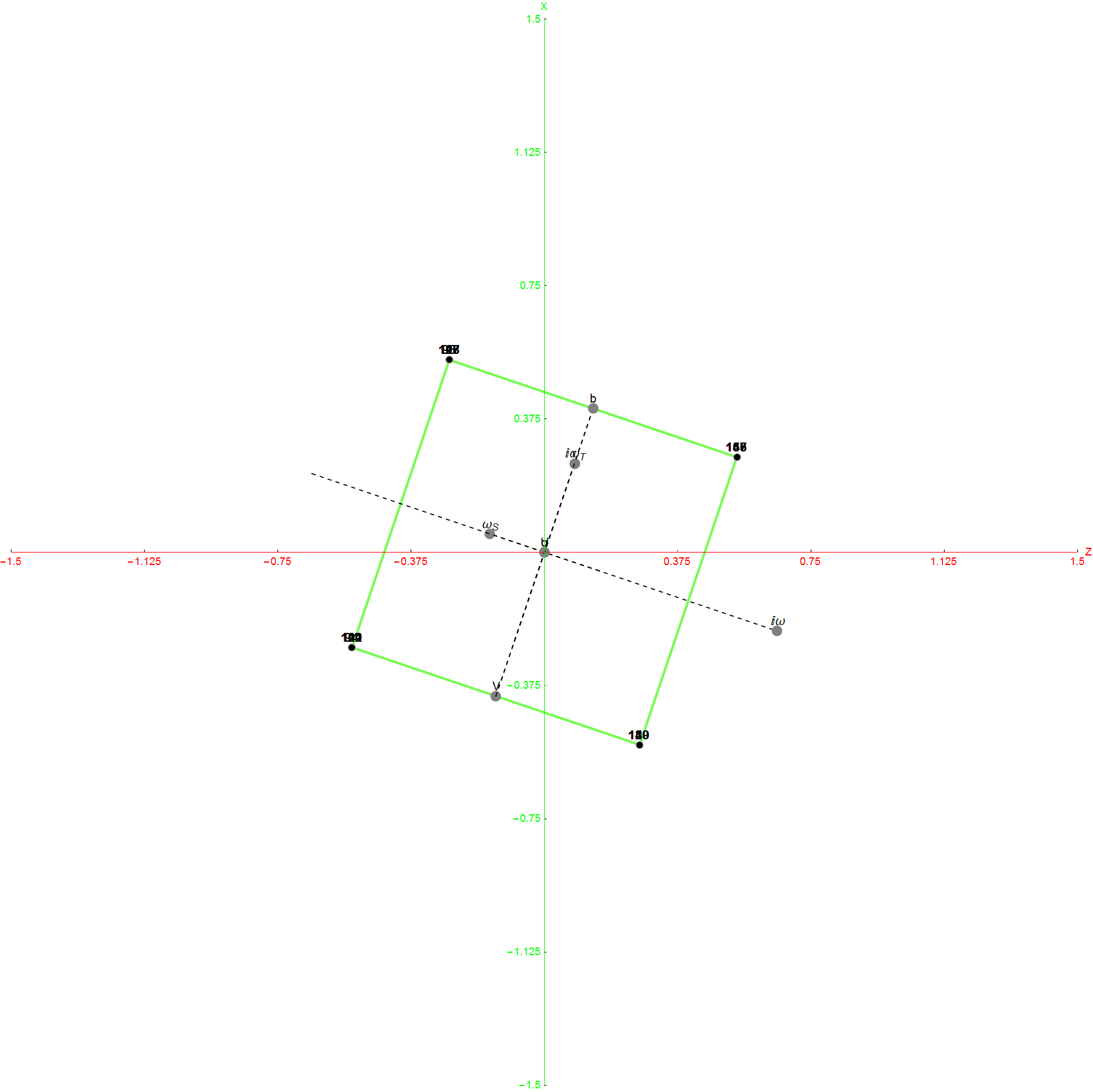
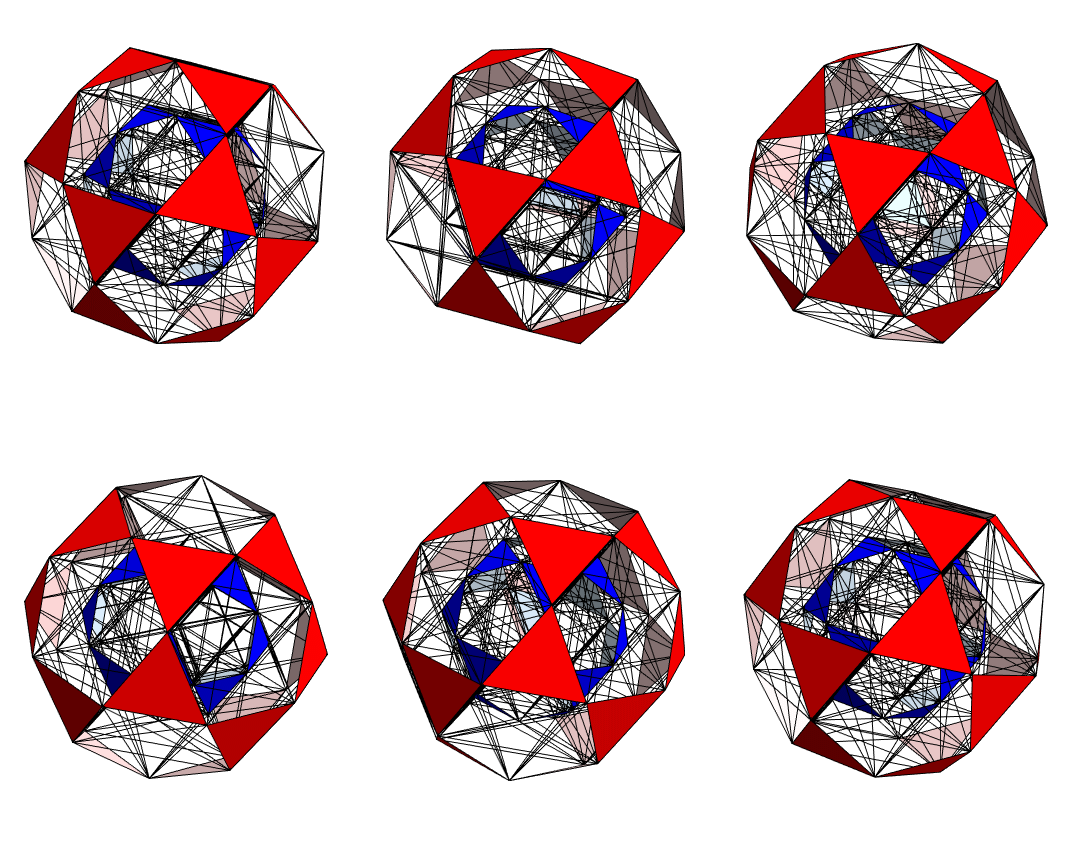
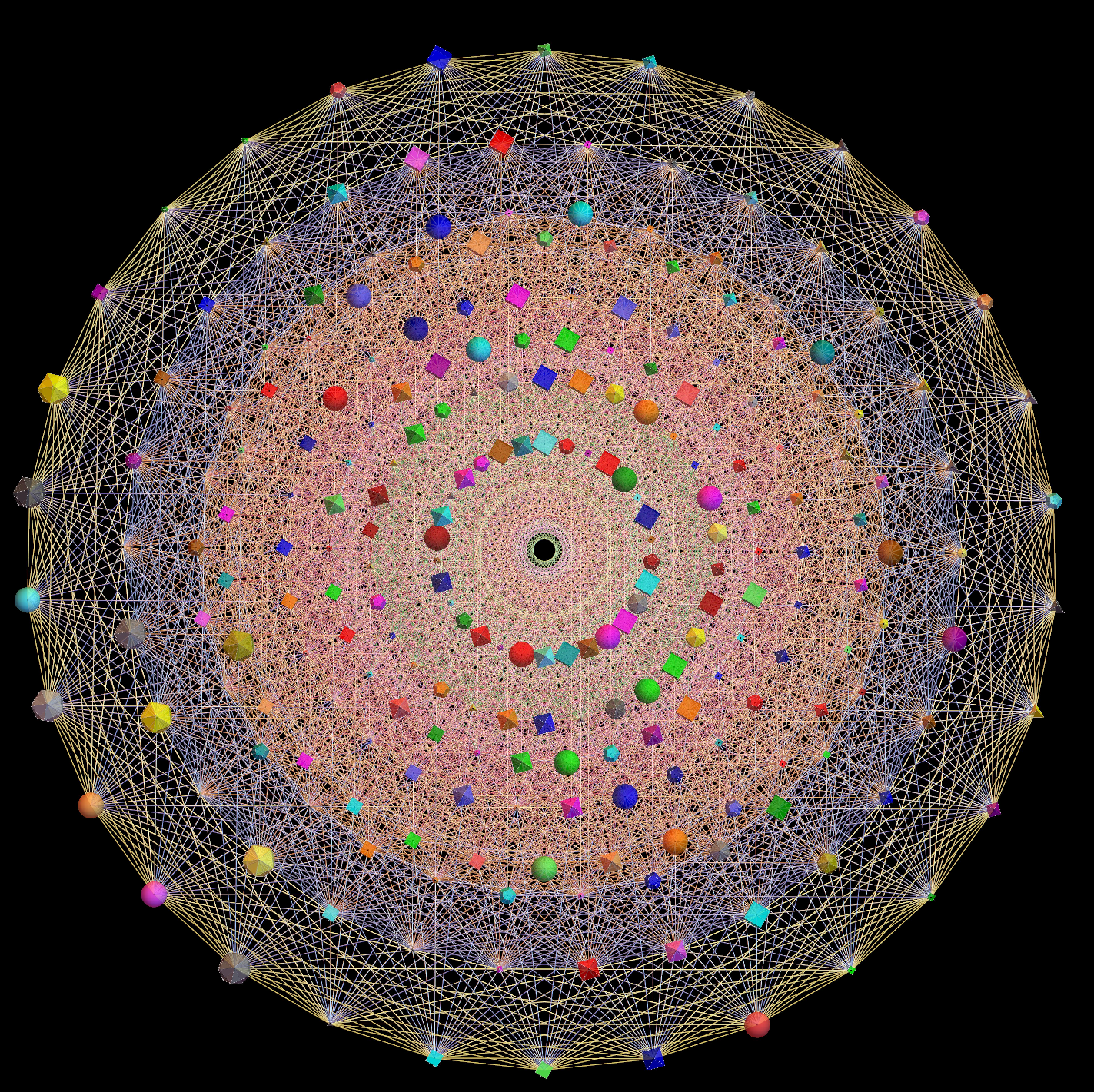
I’ve also used David Madore’s help to calculate the symbolic value of the E7 18-gon and 20-gon symmetries of E8. It uses the nth roots of unity (18 and 20, in this case) and applies a recursive dot product matrix based on the Weyl group centralizer elements of a given conjugacy class of E8. I ended up using a combination of Mathematica Group Theory built-in functions, SuperLie and also LieART packages. These symbolic projection values are:

18-20-gonProjection

outE802

20-gon

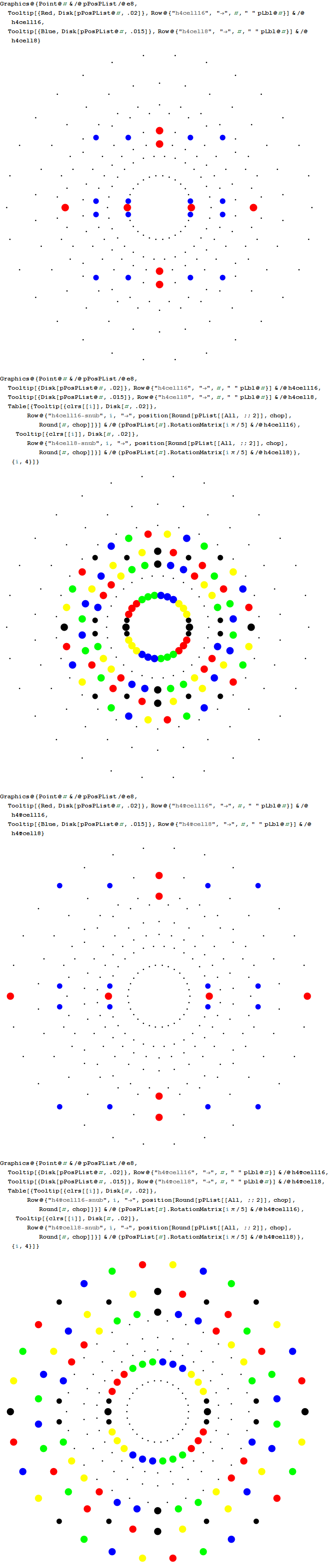
My latest paper on E8, the H4 folding matrix, and integration with octonions and GraviGUT physics models.

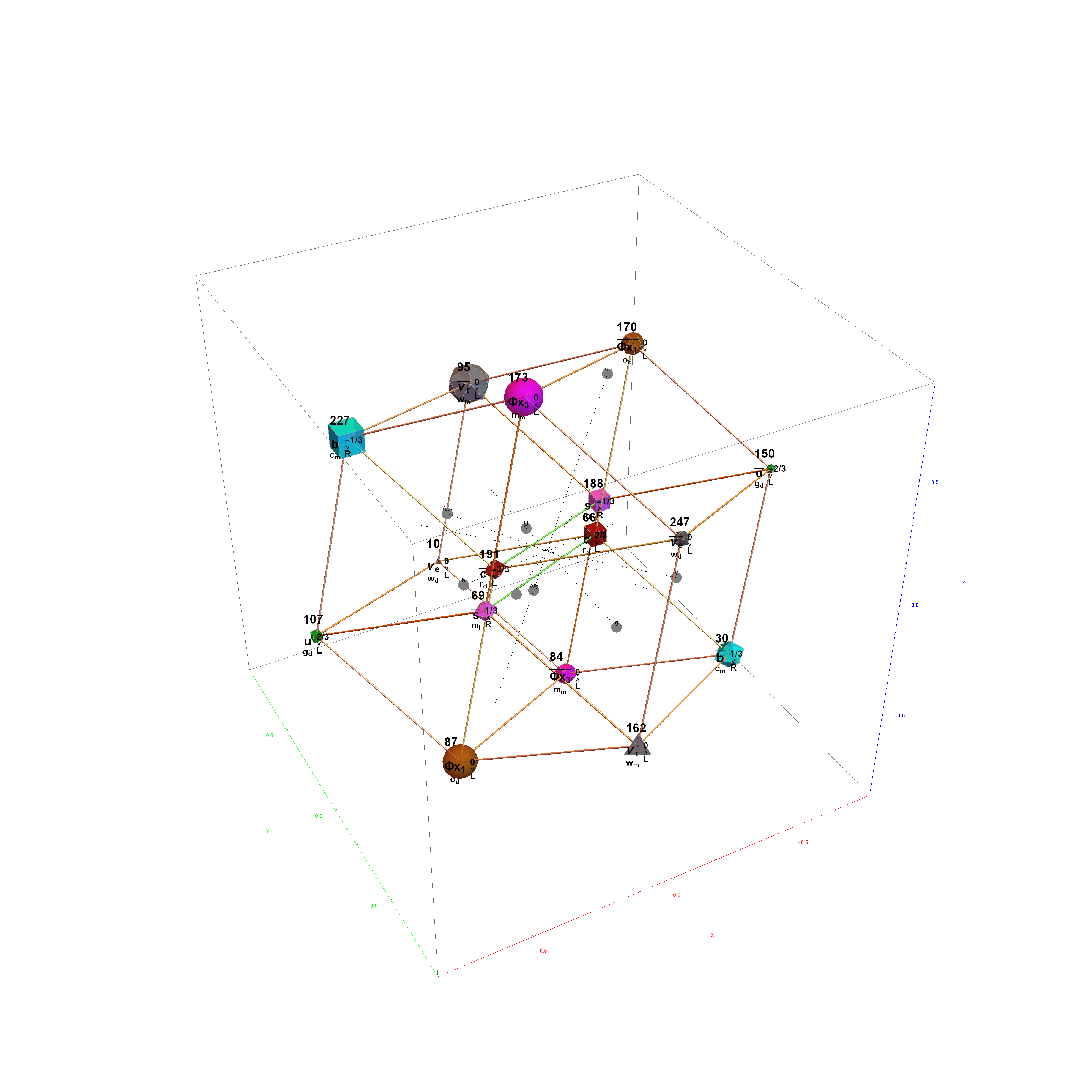
The full paper with appendix can be found on this site, or w/o appendix on viXra. (13 pages, 14 figures, 20Mb). The 22 page appendix contains the E8 algebra roots, Hasse diagram, and a complete integrated E8-particle-octonion list.

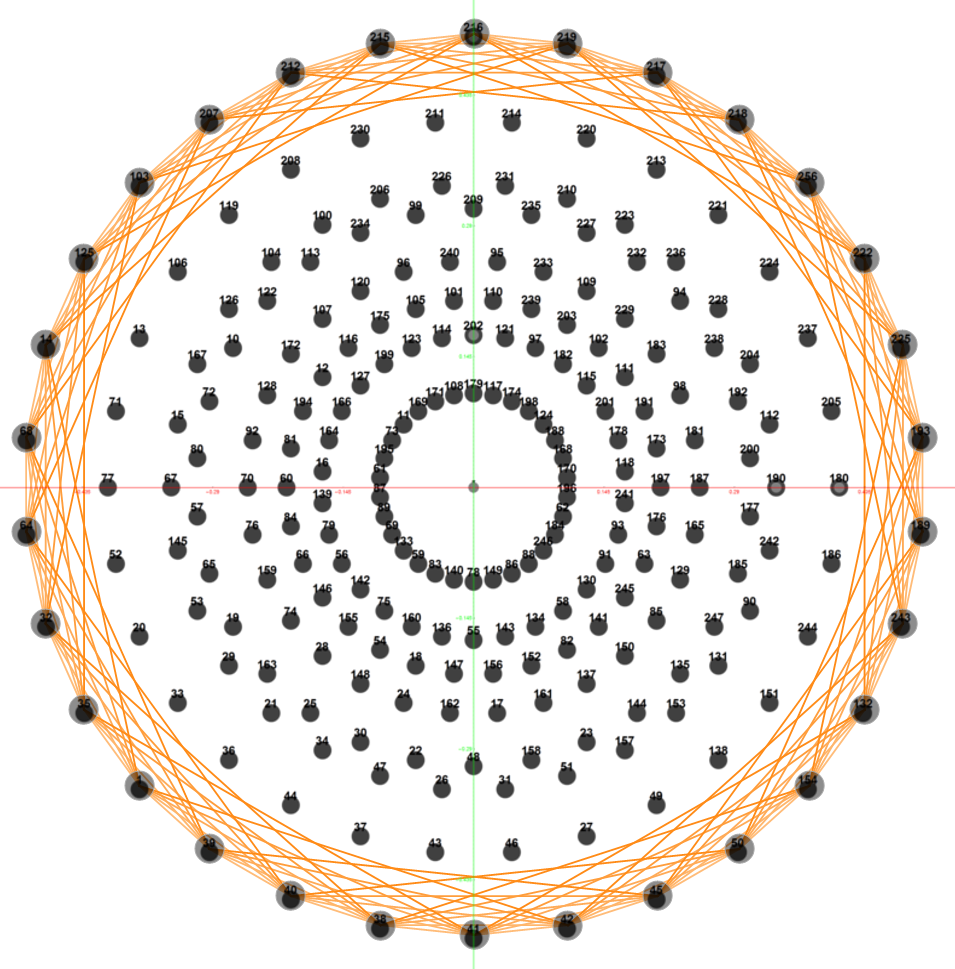
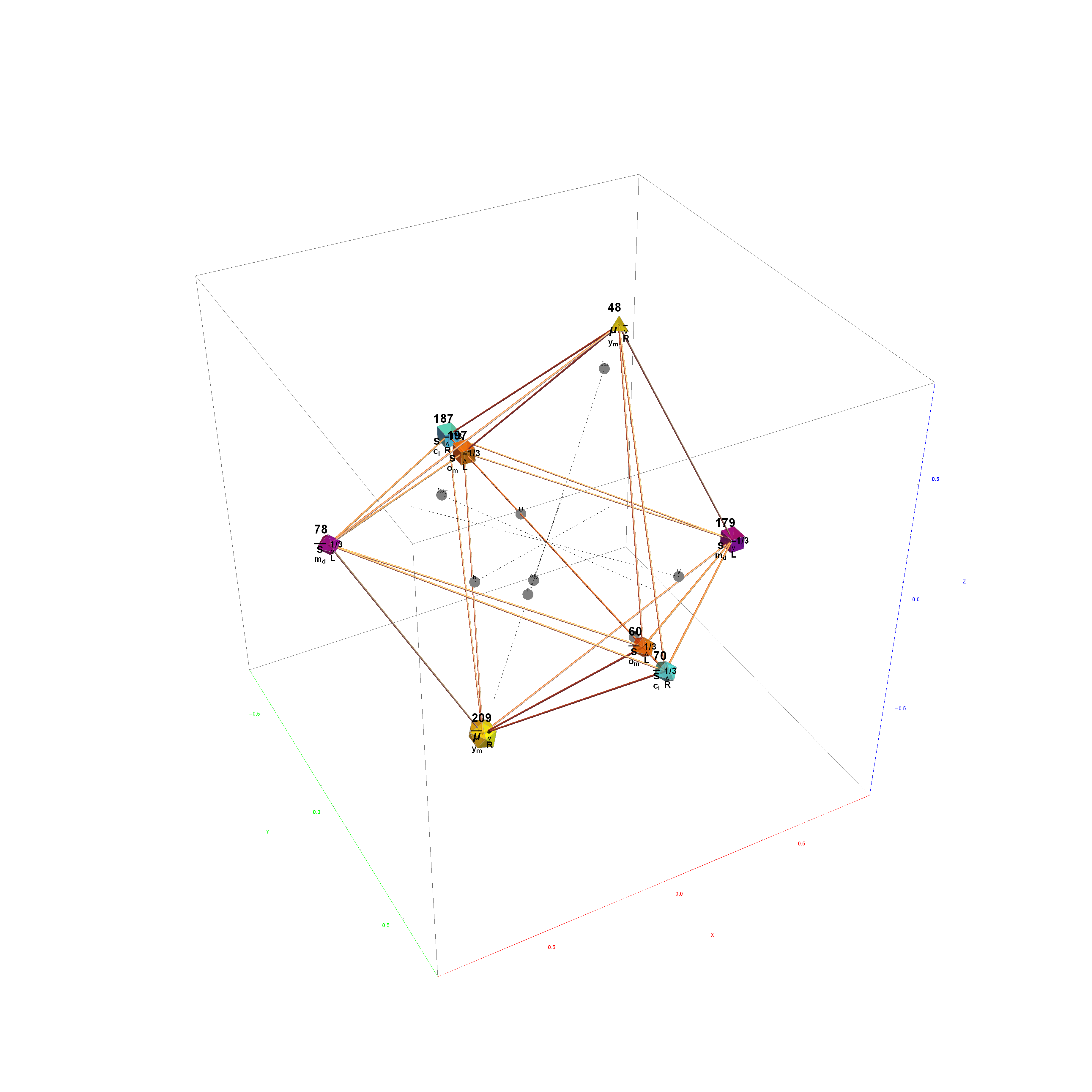
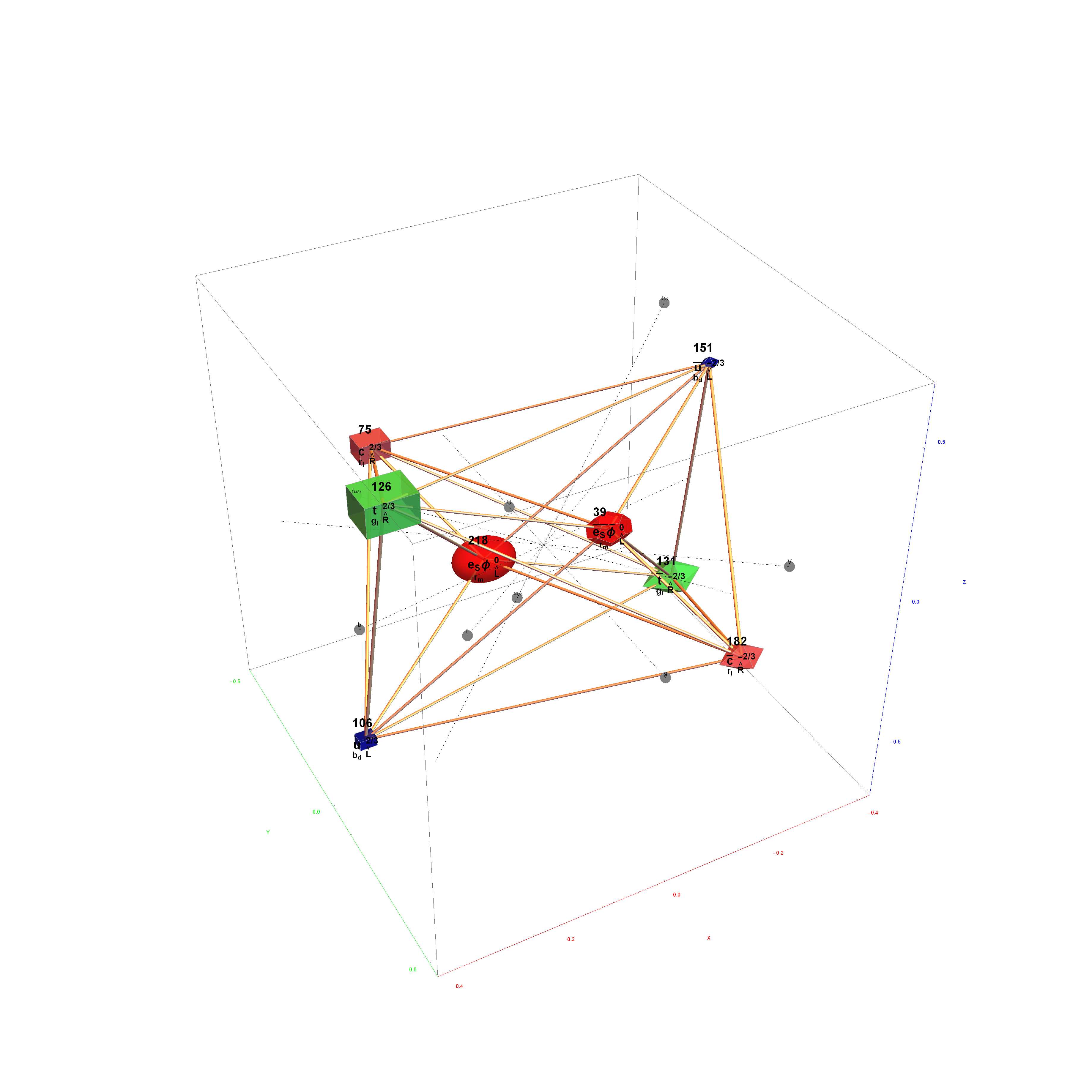
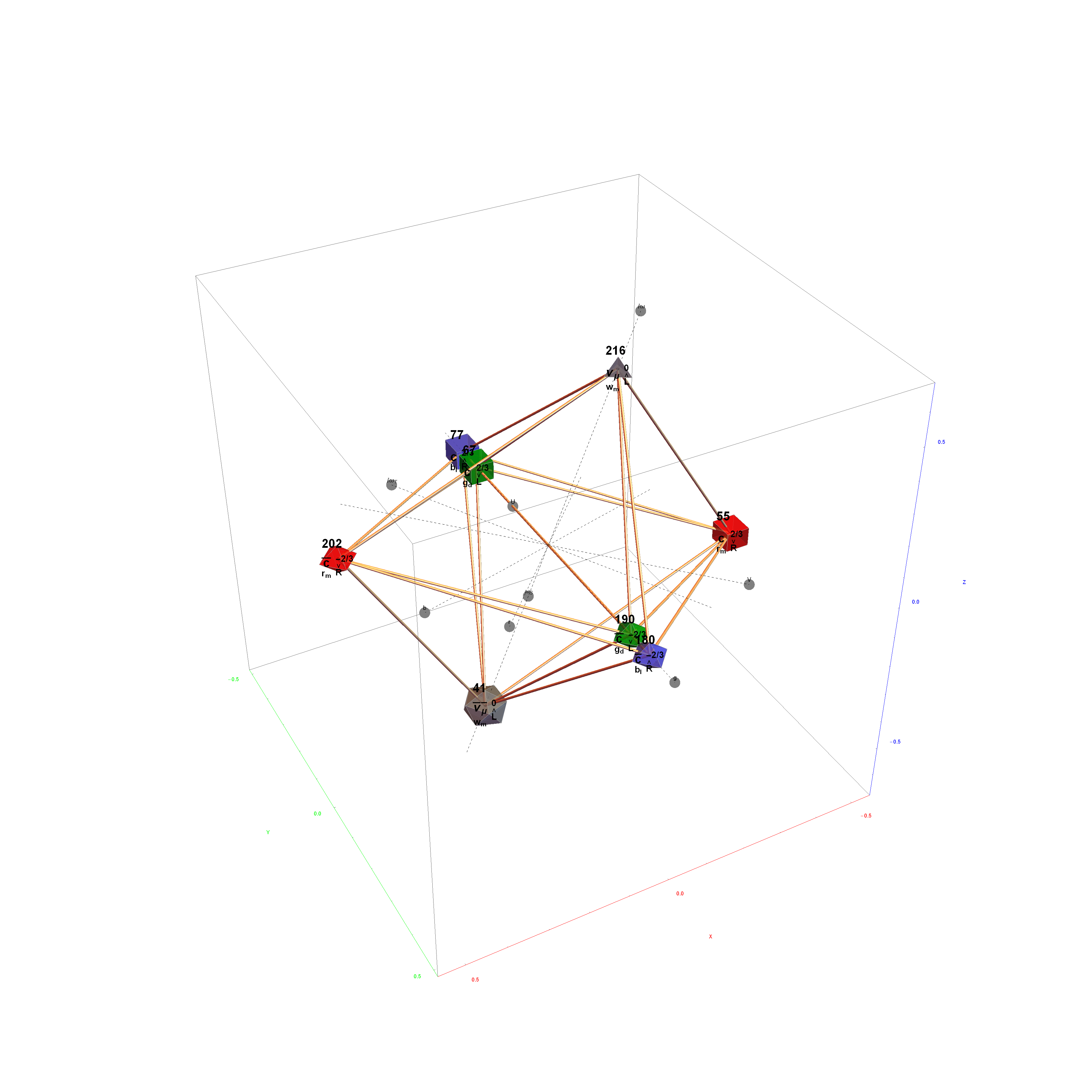
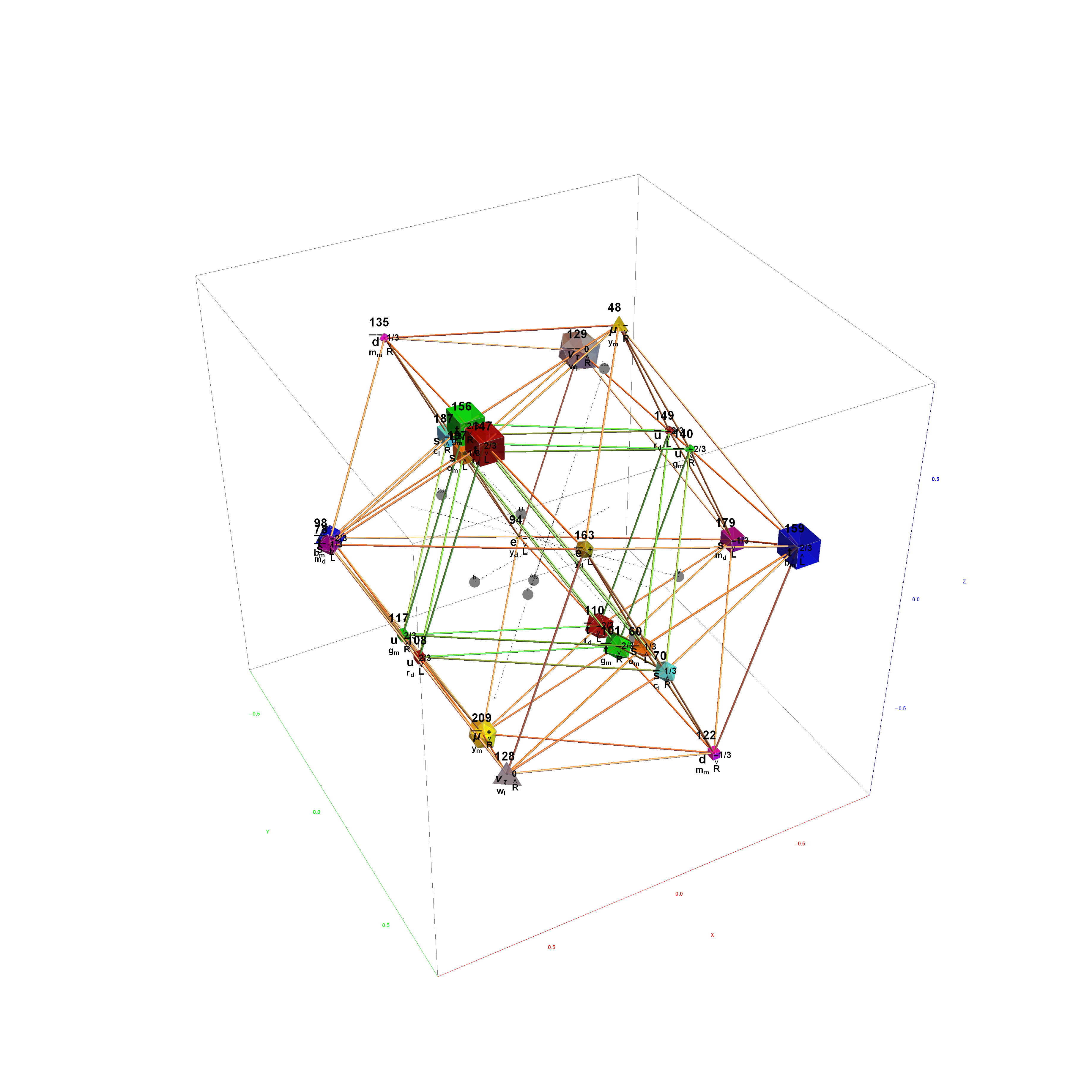
E82DPetriePhysics

Abstract:
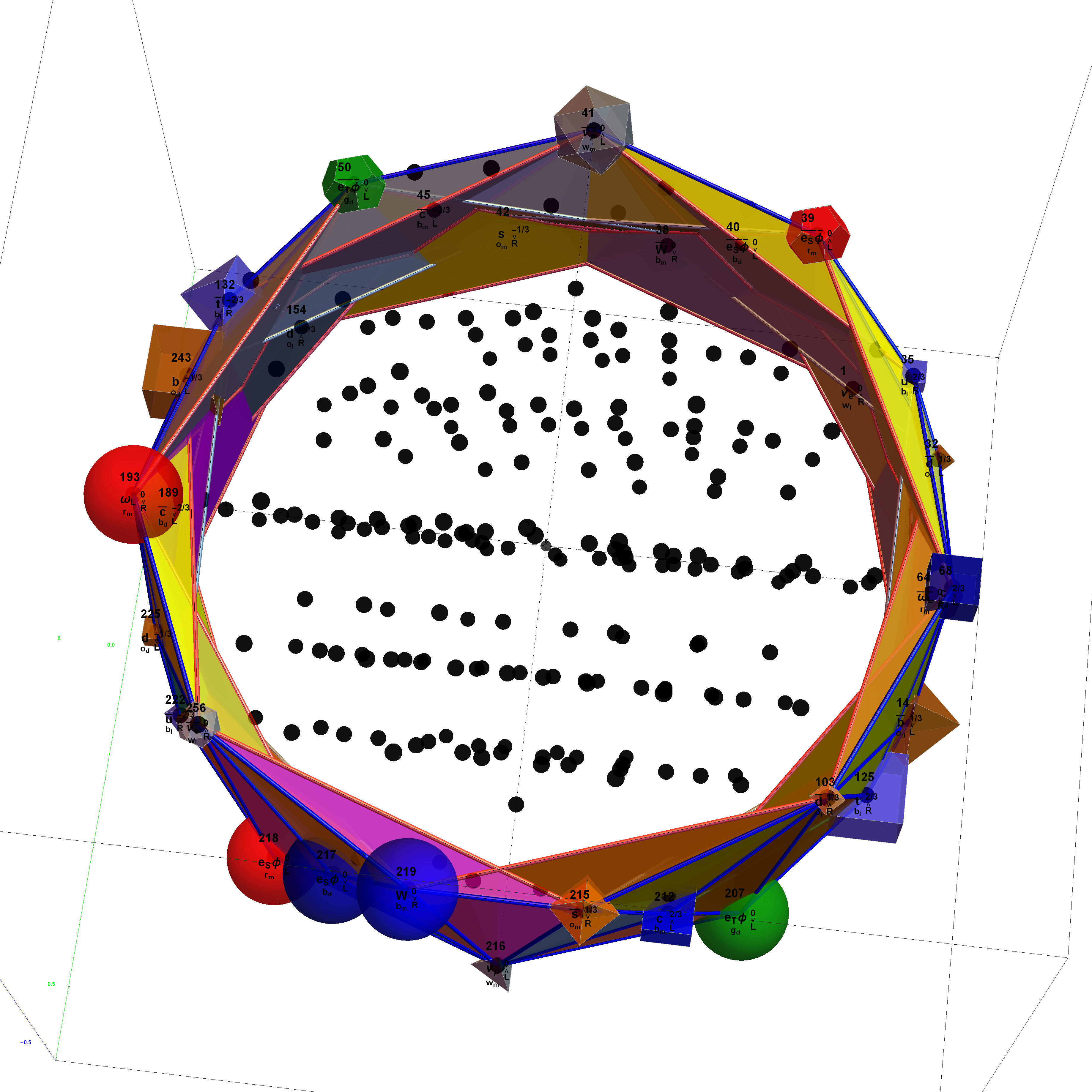
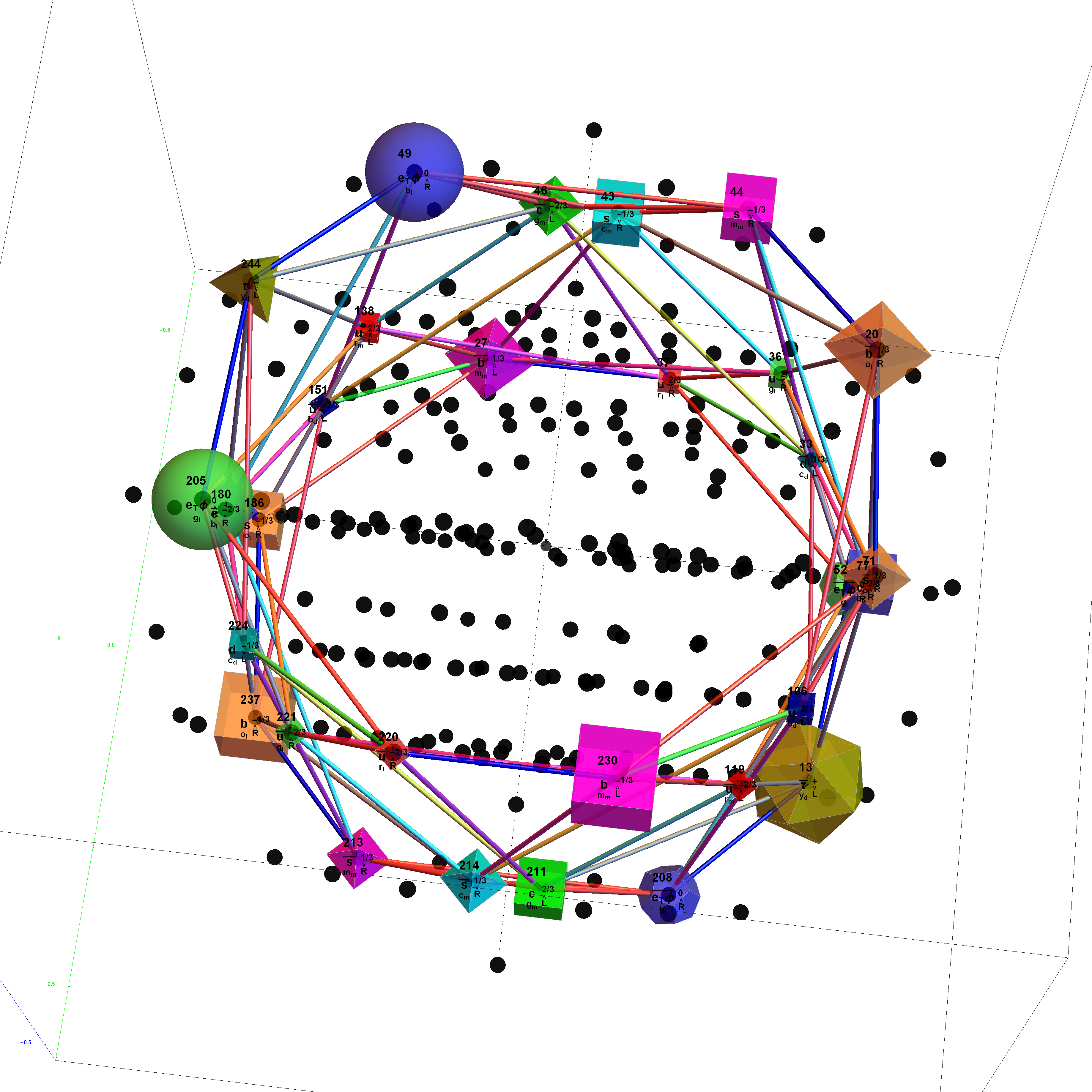
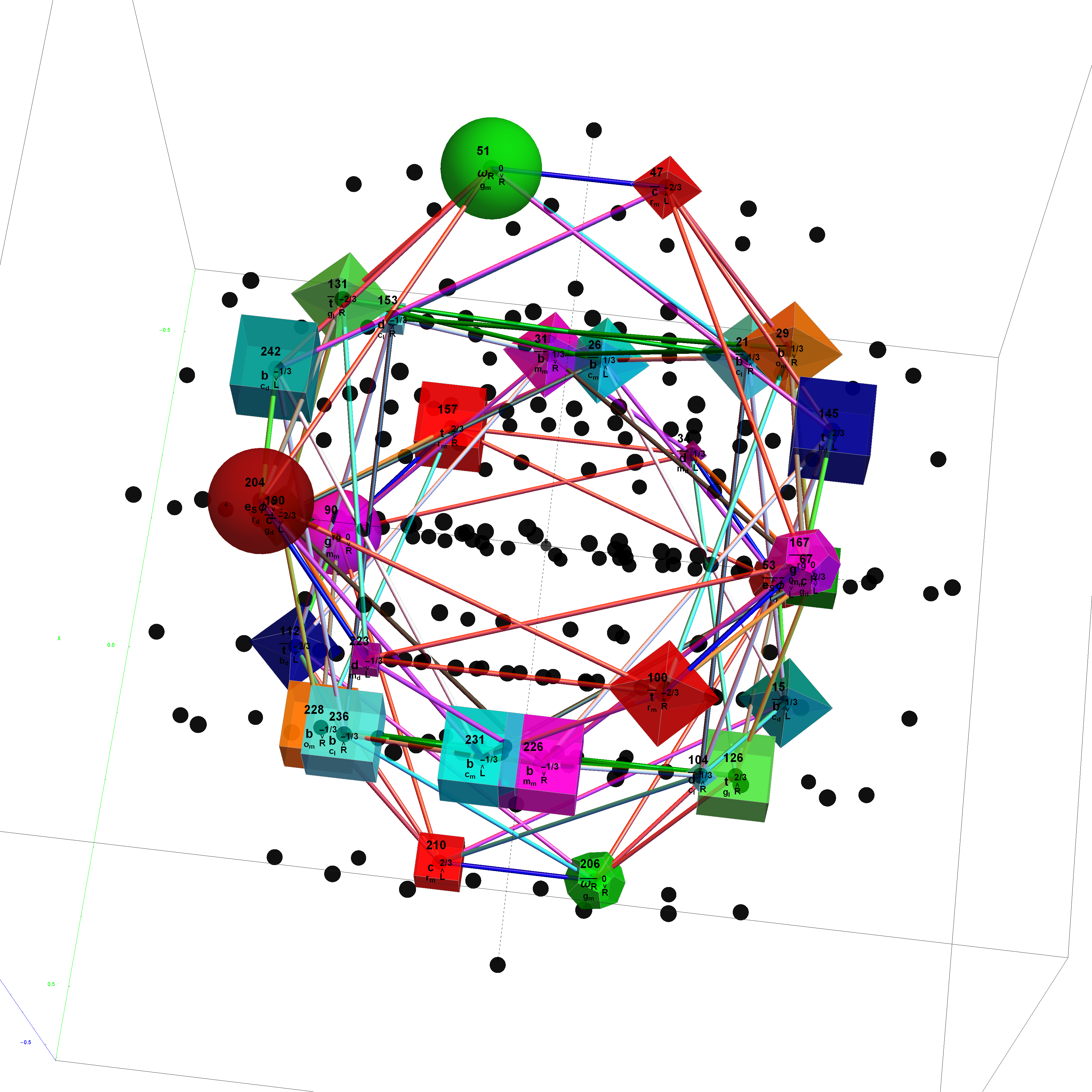
This paper will present various techniques for visualizing a split real even E8 representation in 2 and 3 dimensions using an E8 to H4 folding matrix. This matrix is shown to be useful in providing direct relationships between E8 and the lower dimensional Dynkin and Coxeter-Dynkin geometries contained within it, geometries that are visualized in the form of real and virtual 3 dimensional objects. A direct linkage between E8, the folding matrix, fundamental physics particles in an extended Standard Model GraviGUT, quaternions, and octonions is introduced, and its importance is investigated and described.

If you would like to cite this, you can use this BibTex format if you like (remove the LaTex href tag structure if you don’t use the hyperref package):


@article{Moxness2014:006,
title={{The 3D Visualization of E8 using an H4 Folding Matrix}},
author={Moxness, J. G.},
journal={href{http://vixra.org/abs/1411.0130}{www.vixra.org/abs/1411.0130}},
year={2014},
month = nov,
adsurl={http://vixra.org/abs/1411.0130}
}

paper

Fun with 8D rotations of E8

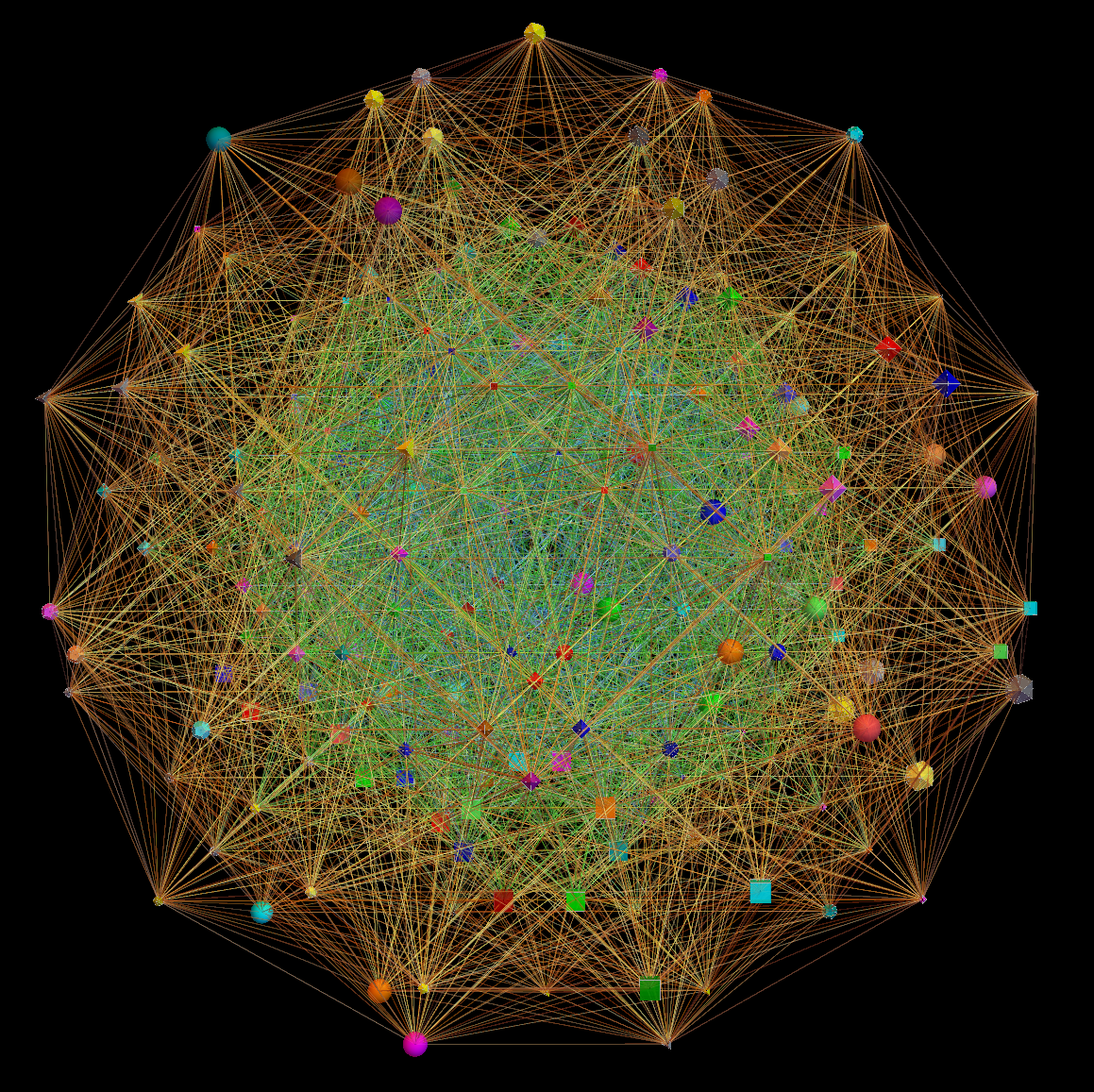
This is a little clip containing three different 8 dimensional rotations of E8. While it may seem like a simple rotation of an object in 3-space, if you look carefully (especially the first rotation), you can see sets of vertices moving in different directions.

The object (the 240 vertices of E8 along with 1220 of 6720 edges of 8D length Sqrt[2]) is not “moving”. It is the camera that is moving in an 8 dimensional space.
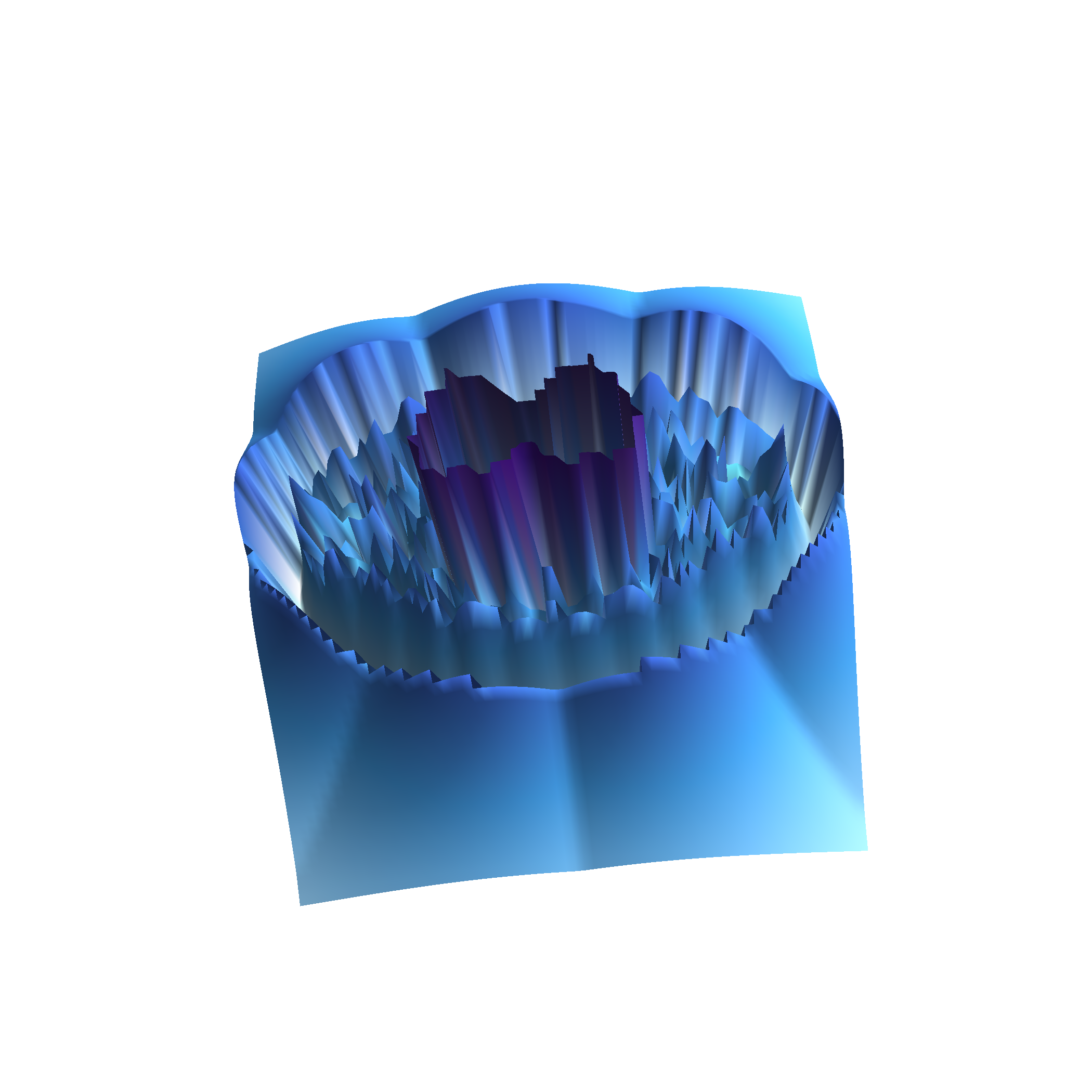
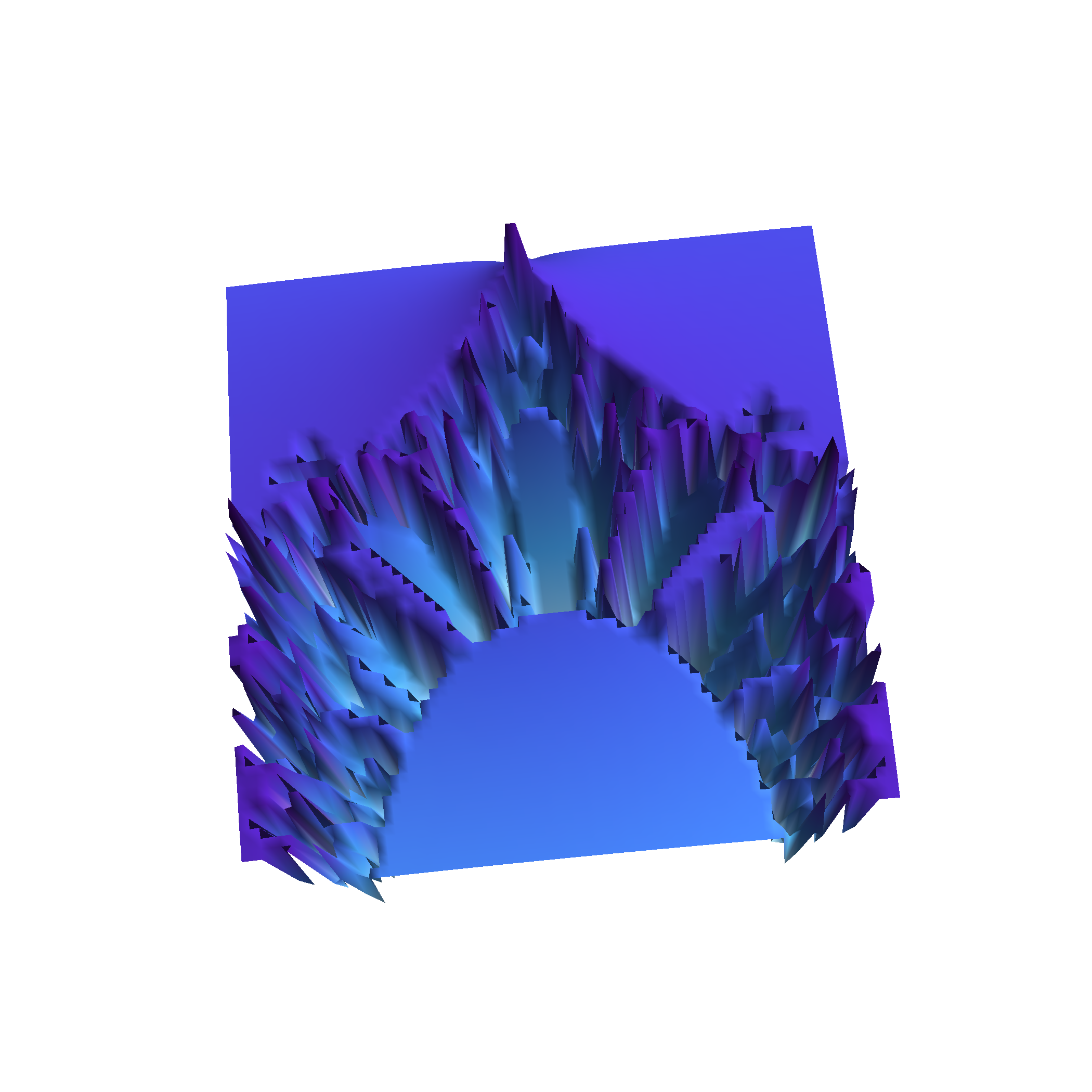

Best when viewed in HD!

The previous 3D animations here and here are created by projecting the 8 dimensional object of E8 into 3 and simply rotating (spinning) that object around in 3-space. I like to call those animations 4D, since animation visualizes changes over time – a 4D space-time object if you will…